What Is Peptide Purity?
Peptide purity describes the proportion of peptide material detected as the intended target peptide relative to peptide-related impurities under a specified analytical method.
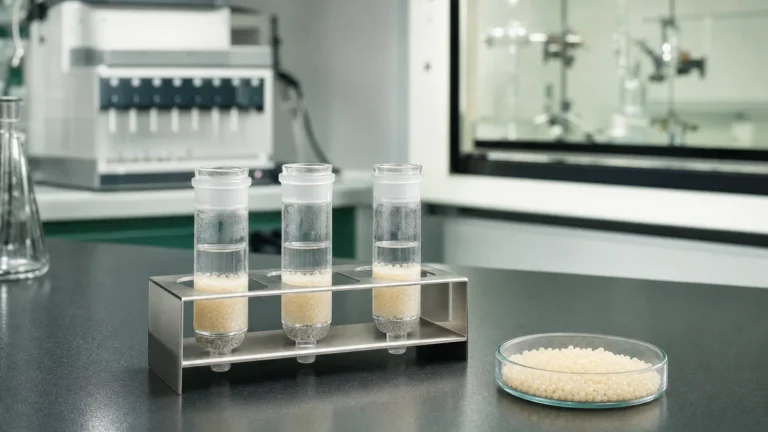
During peptide synthesis, incomplete sequences, truncated chains and other synthesis-related by-products may also be produced. Purification is therefore an important stage in preparing peptide material for laboratory research.
For researchers, the reported purity percentage provides one way to assess the composition of a peptide sample. It can also help when comparing batches, reviewing analytical documentation or determining whether a material meets the requirements of a particular experimental protocol.
At Peptide Works, stated purity varies by product; see each product page for its specification. Where available, analytical documentation can be reviewed for further information about an individual product or batch.
Purity is an important part of peptide characterization, but it should not be considered in isolation. Peptide identity, molecular characteristics, analytical method, batch information and other relevant specifications may also need to be considered when assessing research material.
Why Does Peptide Purity Matter?
Impurities can be introduced at different stages of peptide synthesis and processing.
These may include shortened sequences, incomplete reaction products and other peptide-related components.
In experiments it is important to know the composition of the material being studied since extra components may add another source of variability. This is especially so in the case of analytical assays and laboratory models in which researchers are trying to closely control the experimental conditions.
Higher reported purity indicates that a greater proportion of the peptide material detected by the analytical method corresponds to the target component. However, purity percentage alone does not determine how a peptide will behave in a particular experimental system or guarantee a particular research outcome.
For this reason, researchers may assess purity alongside other information such as peptide identity, sequence, molecular mass, analytical documentation and the requirements of the experimental model being used.
How Is Peptide Purity Measured?
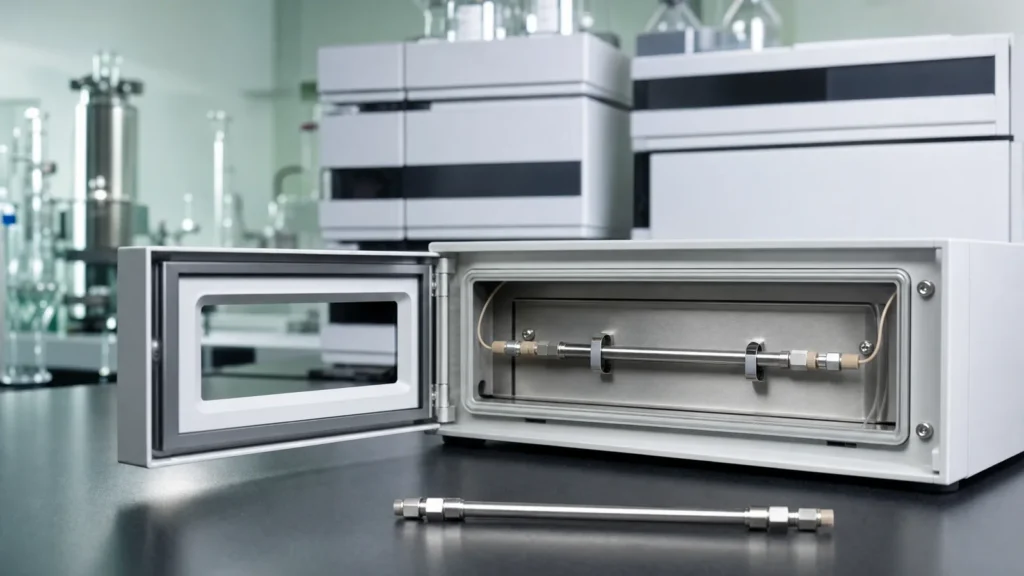
High-Performance Liquid Chromatography (HPLC) is commonly used to assess the chromatographic purity of synthetic peptides.
In a high-performance liquid chromatography analysis the various components of a sample are separated based on their interactions with the chromatographic system and as each component goes through the system it is detected and shown as a peak on the chromatogram.
The relative area of the target peptide peak can be compared with the total integrated peak area to calculate an HPLC area-purity percentage. This provides information about peptide-related components detectable under the particular analytical conditions used.
It is important to understand what this percentage represents. An HPLC purity result should not automatically be interpreted as meaning that the same percentage of everything physically present in a vial consists of the target peptide. Nor does the size of an HPLC peak, by itself, establish molecular identity.
Depending on the material and analytical requirements, HPLC may therefore be considered alongside other characterisation techniques. Researchers should review the available analytical documentation and the methods used when assessing a peptide sample.
Peptide Works products may include a Certificate of Analysis (COA), HPLC chromatogram or other analytical documentation where applicable. This gives researchers access to relevant information about the material and its reported specifications.
Understanding Peptide Purity Levels
Terms such as crude, desalted, high purity and ultra-high purity are commonly encountered when sourcing synthetic peptides.
However, these descriptions are not universally standardised across every manufacturer, synthesis laboratory or supplier.
For that reason, the reported analytical specification is generally more informative than the grade name alone.
Crude peptides have undergone little or no purification following synthesis. They may contain a comparatively high proportion of truncated sequences, deletion sequences and other synthesis-related components.
Desalted peptides have undergone processing intended to remove salts and certain low-molecular-weight components. Desalting should not be considered equivalent to full chromatographic purification.
Purified peptides undergo additional purification processes designed to separate the target peptide from peptide-related impurities. Different purity specifications may be available depending on the peptide and its intended laboratory application.
High-purity peptides are peptides with a high reported level of analytical purity. Since terms such as “high purity” are not standardised, the stated purity percentage and supporting test data provide a more useful measure.
A reported value such as 98% or 99% should also be interpreted in the context of the analytical method used to generate it.
Purity as Part of Research Material Assessment
Purity is one factor researchers may consider when evaluating peptide material, but it is not the only specification that matters.
Depending on the peptide and the requirements of a study, researchers may also review:
- Peptide identity: whether the analysed material corresponds to the intended peptide.
- Amino-acid sequence: the defined sequence associated with the peptide.
- Molecular mass: provides a reference point when checking a peptide’s identity.
- Purity: shows how much of the analysed sample corresponds to the target component under the test conditions.
- Testing method: identifies how the sample was analysed and, where relevant, the conditions applied.
- Batch details: connect the accompanying test data to the specific material supplied.
- Certificate of Analysis (CoA): brings together the available specifications and analytical findings in one document.
Looking at these characteristics together provides considerably more information than relying on a purity percentage alone.
HPLC Purity and Peptide Identity Are Not the Same Thing
The purity and identity are closely related elements of peptide characterisation, but the words refer to different things.
An HPLC chromatogram can show the relative proportions of components detected within a sample under the conditions of the analysis. A dominant chromatographic peak may therefore contribute to a high reported area-purity percentage.
That result does not, on its own, establish that the dominant peak is the intended peptide.
Identity assessment may require additional analytical information. Depending on the peptide and testing programme, techniques such as mass spectrometry may be used alongside chromatography to provide further information about molecular identity.
Researchers reviewing peptide documentation should therefore distinguish between a purity result and evidence used to establish peptide identity.
Why Analytical Documentation Matters
The percentage shown on a product page gives very limited information unless there is some context available.
By referring to analytical documentation, researchers are able to examine in more detail how a specified figure was arrived at.
An HPLC chromatogram, for example, can provide information about the chromatographic profile recorded during analysis. A Certificate of Analysis may provide additional information about the batch, reported specification and testing performed.
Where analytical documents are provided, researchers should check that they correspond to the relevant peptide and, where applicable, the batch or lot being assessed.
At Peptide Works, we aim to make relevant analytical information available so researchers can review product specifications when selecting materials for laboratory work.
Research use only
Peptide Works products are supplied strictly for laboratory and scientific research purposes. They are not intended for human or veterinary use, consumption, diagnosis, treatment or any other clinical application.
Frequently Asked Questions
A reported 99% HPLC purity generally means that the target peak accounts for approximately 99% of the total integrated peak area under the analytical conditions used. It should not automatically be interpreted as meaning that 99% of everything physically present in the vial is the target peptide.
No. Purity is one characteristic of research material and does not guarantee a particular experimental result. Study design, analytical methods, experimental conditions, material identity and other variables can also influence research findings.
HPLC can give useful information regarding a sample's chromatographic profile, but the purity figure obtained from HPLC alone is not sufficient to establish molecular identity; in cases where identity confirmation is required, other analytical techniques may be used in conjunction with HPLC.
Terms such as “high purity” and “ultra-high purity” are not necessarily defined in exactly the same way by every supplier or laboratory. Researchers should therefore review the stated purity specification, analytical method and available documentation for the individual material.