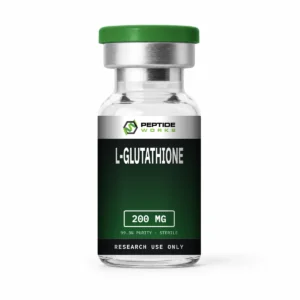
L-Glutathione (GSH) is mainly studied for its involvement in cellular redox chemistry and in biochemical reactions that depend on thiols. The cysteine residue in it has a reactive sulfhydryl group which can take part in electron-transfer reactions. When it is oxidized, reduced glutathione can become glutathione disulfide (GSSG), and glutathione reductase is able to catalyse the transformation of GSSG back into GSH by using reducing equivalents from NADPH. The reversible GSH/GSSG system is one that is extensively examined in the context of cellular redox regulation.
GSH also acts as a substrate or cofactor in a number of enzyme-driven pathways; glutathione peroxidases catalyse reactions in which GSH and peroxide substrates are involved, leading to the formation of GSSG, and glutathione S-transferases enable the conjugation of glutathione with different electrophilic compounds. These reactions have been widely studied using biochemical and cellular models.
Further research looks at protein S-glutathionylation, a reversible modification.
This involves the formation of mixed disulfides between glutathione and the cysteine residues of a protein. The purpose of studying this process is to examine its potential role in regulating protein function and in redox-sensitive signaling pathways.
When combined, these processes make L-glutathione a useful experimental substance for the controlled laboratory study of thiol chemistry, enzymatic conjugation, redox reactions, and protein modification.
This summary reflects findings reported in published preclinical and in vitro research. The original studies supporting this information are listed in the references.