PROMO!

First order? Get 10% OFF with this code: 1storder

Research hub

AMPK Research Hub

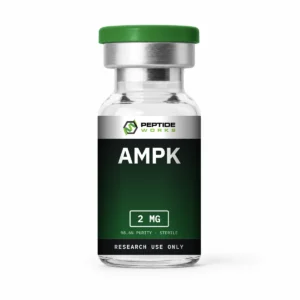
AMPK peptide is a research compound based on a synthetic peptide, which has been developed for use in controlled laboratory studies of the signaling and cellular energy-sensing pathways associated with AMP-activated protein kinase.

  • AMPK
  • AMP-activated protein kinase
  • Synthetic oligopeptide
  • Lyophilized powder
01

Technical Overview

AMP-activated protein kinase (AMPK) is a conserved serine/threonine kinase involved in sensing changes in cellular energy status. It differs from peptides, peptide analogues, and small molecules because it exists as a heterotrimeric protein complex. The complex contains one catalytic α-subunit and two regulatory subunits, β and γ. Together, these subunits detect changes in intracellular adenine nucleotides and regulate phosphorylation-dependent signaling within cells. This multimeric structure enables the kinase to integrate changes in intracellular adenine nucleotide concentrations and coordinate downstream signaling events in response to alterations in cellular energy status.

AMPK was first identified through studies investigating the regulation of key metabolic enzymes and has since become one of the most extensively characterized protein kinases in molecular biology. Its highly conserved structure and widespread expression across eukaryotic organisms have made it a fundamental research target for investigating signal transduction, phosphorylation networks and intracellular regulatory mechanisms. Structural and biochemical studies have characterized the organization of its individual subunits, nucleotide-binding domains, and activation sites, providing detailed insight into its molecular architecture.

The AMPK protein is frequently studied in experiments investigating cultured cell systems, pure protein preparations, and preclinical experimental models. Biochemical investigations, recombinant protein expression, structural biology methods, and phosphoproteomic analysis are frequently used in research methods to characterize intracellular signaling pathways, protein interactions, and kinase activity.

02

Chemical Classification

Chemical Name
L-Histidyl-L-methionyl-L-arginyl-L-seryl-L-alanyl-L-methionyl-L-serylglycyl-L-leucyl-L-histidyl-L-leucyl-L-valyl-L-lysyl-L-arginyl-L-arginine
Common Name(s)
AMPK, AMP-activated protein kinase
Molecular Formula
C74H131N29O18S2
Molecular Weight
1779.14 g/mol
Purity
98.6%
CAS Number
125911-68-4
Compound Class
Synthetic oligopeptide
Origin
Synthetic
03

Molecular Characteristics

The catalytic α-subunit with the regulatory β- and γ-subunits make up the heterotrimeric serine/threonine protein kinase known as AMP-activated protein kinase (AMPK). AMPK is a multi-domain protein complex that is expressed naturally in eukaryotic cells, in contrast to synthesized peptides or small-molecule research compounds. The kinase domain responsible for catalytic activity is located in the α-subunit, whereas the β-subunit serves as a structural scaffold that connects the complex. Four cystathionine β-synthase (CBS) domains found in the γ-subunit generate nucleotide-binding sites that can interact with ATP, ADP, and AMP.

The secondary and tertiary structures of AMPK have been extensively characterized through X-ray crystallography and cryo-electron microscopy, revealing a highly organized three-dimensional architecture that enables communication between the catalytic and regulatory domains. The protein complex undergoes conformational changes in response to nucleotide binding, and these structural transitions have been investigated as part of studies examining kinase regulation.

AMPK is a soluble intracellular protein with physicochemical properties typical of globular enzymes, including hydrophilic surface regions and a well-defined folded structure. The complex undergoes several post-translational modifications, most notably phosphorylation of threonine-172 within the activation loop of the α-subunit, together with additional phosphorylation events that have been characterized in experimental models. As a native cellular protein, AMPK is susceptible to proteolytic degradation following cell lysis; therefore, purified protein preparations are typically stored under buffered, refrigerated or frozen laboratory conditions to preserve structural integrity. Identity and structural characterization are routinely confirmed using techniques such as SDS-PAGE, Western blotting, mass spectrometry, X-ray crystallography and cryo-electron microscopy.

04

Mechanism Under Investigation

Current laboratory investigations have examined AMP-activated protein kinase (AMPK) as a central intracellular signaling protein that performs as a sensor of cellular energy status. Published experimental studies describe AMPK as a heterotrimeric serine/threonine kinase that is triggered through a combination of nucleotide binding and phosphorylation-dependent regulatory mechanisms. These processes have been extensively characterized using structural biology, biochemical assays and molecular biology techniques.

In vitro models have explored the interaction of AMP, ADP and ATP with the cystathionine β-synthase (CBS) domains located on the γ-subunit of AMPK. Structural studies have demonstrated that changes in intracellular adenine nucleotide concentrations influence the conformation of the kinase complex, altering its accessibility to upstream regulatory enzymes. Published investigations have also characterized phosphorylation of threonine-172 (Thr172) within the activation process of the catalytic α-subunit as a principal regulatory event associated with AMPK activity.

Experimental research has examined several upstream kinases responsible for AMPK regulation, including liver kinase B1 (LKB1), calcium/calmodulin-dependent protein kinase kinase β (CaMKKβ) and transforming growth factor-beta-activated kinase 1 (TAK1). Biochemical and cell-based studies have characterized how these kinases phosphorylate Thr172 in response to distinct intracellular signals, providing multiple regulatory pathways through which AMPK activity has been investigated.

Published studies have further examined downstream signaling pathways associated with AMPK activation. Experimental models have characterized phosphorylation of numerous substrate proteins involved in cellular metabolism, autophagy, protein synthesis and transcriptional regulation. These investigations have examined interactions with signaling networks that include mechanistic target of rapamycin complex 1 (mTORC1), acetyl-CoA carboxylase (ACC), unc-51-like kinase 1 (ULK1) and transcriptional co-regulators such as peroxisome proliferator-activated receptor gamma coactivator-1 alpha (PGC-1α). The molecular relationships between these pathways have been investigated using phosphoproteomics, kinase assays and genetic manipulation in cultured cells and preclinical models.

Current laboratory investigations continue to examine the structural regulation, substrate recognition and signaling networks associated with AMPK. Ongoing research has characterized its role as a signaling hub integrating nucleotide sensing, kinase activation and phosphorylation-dependent intracellular communication across diverse experimental systems.

This overview is based on findings from published preclinical and in vitro research. Key studies are included in the references.

05

Experimental Research Areas

01

Cellular Metabolism

Cellular metabolism represents one of the primary areas in which AMPK has been investigated. Published studies have examined its role in intracellular energy sensing using cultured cells and biochemical models. Experimental approaches have characterized changes in adenine nucleotide concentrations, metabolic flux and cellular bioenergetics through metabolomic profiling, isotope-tracing experiments and enzyme activity assays.

02

Molecular Biology

Molecular biology research has utilized AMPK to investigate gene regulation, protein expression and intracellular signaling networks. Experimental techniques such as quantitative PCR, Western blotting, RNA sequencing and transcriptomic analysis have been employed to characterize molecular responses associated with AMPK-regulated pathways in a range of cell types and preclinical models.

03

Signal Transduction

AMPK has been extensively investigated as a central component of intracellular signal transduction. Published research has examined its interaction with upstream regulatory kinases, downstream substrate proteins and phosphorylation-dependent signaling cascades. Laboratory studies have characterized these molecular interactions using kinase activity assays, phosphoproteomics and recombinant protein systems.

04

Structural Biology

Structural biology investigations have focused on the three-dimensional organization of the AMPK complex and the molecular basis of its regulation. X-ray crystallography, cryo-electron microscopy and computational modelling have been used to examine nucleotide binding, conformational changes and interactions between the α-, β- and γ-subunits under different experimental conditions.

05

Enzymology

Experimental enzymology studies have investigated the catalytic properties of AMPK and the biochemical mechanisms governing substrate recognition and phosphorylation. Research has employed purified protein preparations, enzyme kinetics and in vitro phosphorylation assays to characterise kinase activity, regulatory mechanisms and protein–substrate interactions.

06

Cell Biology

Cell biology research has examined AMPK localisation, intracellular trafficking and protein–protein interactions in cultured mammalian cells. Experimental methodologies including immunofluorescence microscopy, flow cytometry and live-cell imaging have been used to investigate the spatial distribution of AMPK and its association with intracellular organelles and signalling complexes.

07

Analytical Biochemistry

Analytical investigations have characterised AMPK using a range of biochemical and proteomic techniques. Western blotting, mass spectrometry, SDS-PAGE, immunoprecipitation and phosphoproteomic analyses are routinely employed to confirm protein identity, quantify phosphorylation events and investigate the composition of the AMPK complex during laboratory research.

06

Analytical Verification

As an endogenous protein kinase and recombinant research protein, AMPK is not manufactured using Solid Phase Peptide Synthesis (SPPS). Instead, recombinant AMPK proteins used in laboratory research are typically produced through recombinant DNA expression in bacterial, yeast, or mammalian expression systems, followed by purification using established protein chromatography techniques. Affinity chromatography, ion-exchange chromatography and size-exclusion chromatography are commonly employed to isolate the protein complex and remove host cell proteins and other process-related impurities.

Analytical verification of recombinant AMPK uses a number of complementary methods to verify purity, identity, and structural integrity. Protein expression and subunit composition are frequently confirmed by Western blotting and sodium dodecyl sulphate polyacrylamide gel electrophoresis (SDS-PAGE), whereas molecular identity and mass are confirmed by liquid chromatography–mass spectrometry (LC-MS). Size-exclusion high-performance liquid chromatography (SEC-HPLC) can also be used in purity assessment to evaluate sample homogeneity and identify protein clumps.

Certificate of Analysis
BatchP251013-LR186238
Document Download PDF
HPLC
BatchP251013-LR186238
Document Download PDF
07

Storage & Handling

To maintain the stability and structural integrity of recombinant AMPK, preparations should be stored according to the manufacturer's instructions. For long-term preservation, lyophilized material should be stored at 2–8°C or under frozen conditions and protected from light, moisture, and excessive heat.

To minimize denaturation and prevent excessive agitation or foaming, peptides should be handled carefully after reconstitution using the proper sterile laboratory buffer. When possible, it is advised to use the reconstituted solution in order to minimize the number of freeze-thaw cycles that could encourage protein aggregation and jeopardize sample integrity.

Maintaining batch traceability, tracking reconstitution dates throughout experimental usage, and recording storage conditions are other aspects of good laboratory practice.

Supplied as Lyophilized powder
Storage 2–8°C, away from light
Reconstitution Sterile diluent
After Reconstitution Refrigerate, limit freeze - thaw
08

Questions researchers ask

A key regulator of cellular energy sensing is AMPK (AMP-activated protein kinase), a serine/threonine protein kinase conserved throughout evolution. Studies into its primary function of tracking intracellular adenine nucleotide concentrations and coordinating phosphorylation-dependent signaling pathways in response to shifts in cellular energy status. Due to its widespread expression in eukaryotic tissues, AMPK has emerged as a key area of study in molecular biology and biochemistry.

AMP-activated protein kinase (AMPK) is supplied exclusively for research and laboratory use. It is not intended for human or animal consumption. It is not intended for use in the diagnosis, treatment, cure or prevention of any disease or condition.

Information presented on this page is provided solely for scientific and technical reference. Descriptions of AMPK structure, molecular characteristics, signaling pathways, analytical methods, and experimental research reflect laboratory and preclinical research and should not be interpreted as evidence of clinical use, safety, or efficacy.

Research involving AMPK should be conducted only by qualified research professionals in appropriate laboratory settings and in accordance with applicable institutional requirements and regulations.

Available now

AMPK from Peptide Works