PROMO!

First order? Get 10% OFF with this code: 1storder

Research hub

CJC-1295 No DAC (Modified GRF 1–29) Research Hub

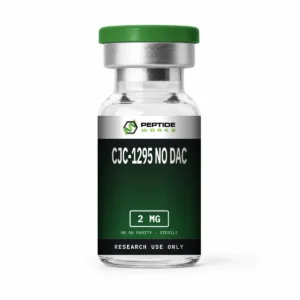
CJC-1295 No DAC is a synthetic modified peptide analogous to human growth hormone-releasing factor (hGRF 1–29), without having the albumin-binding DAC modification and has been studied as a well-defined molecular compound in controlled laboratory research.

  • CJC-1295 no DAC
  • Synthetic Peptide
  • GHRH Analogue
  • 29 Amino Acids
01

Technical Overview

The product name CJC-1295 No DAC is commonly used to market modified GRF (1–29), a synthetic 29-amino acid derivative of the physiologically active N-terminal part of growth hormone-releasing hormone (GHRH). It is classified as a synthetic peptide analog and contains amino acid modifications meant to change the enzymatic stability of native GRF (1–29) while maintaining structural features associated with the identification of the growth hormone-releasing hormone receptor (GHRHR).

Research on the structure-activity of shorter and more proteolytically stable GHRH analogs led to the development of modified GRF (1–29). The peptide lacks the Drug Affinity Complex (DAC) and its reactive albumin-conjugating ability, in contrast to CJC-1295 DAC. Because of their structural differences, the two compounds should not be used interchangeably in scientific nomenclature.

Within experimental research, Modified GRF (1–29) has been investigated in studies of GHRH receptor pharmacology, peptide stability, proteolytic degradation and receptor-mediated signal transduction. Laboratory characterisation may employ receptor-binding and cell-based signalling assays, while analytical HPLC and mass spectrometry can be used to evaluate peptide purity and molecular identity.

02

Chemical Classification

Chemical Name
Modified growth hormone-releasing factor 1-29
Common Name(s)
Modified GRF 1-29, Mod GRF 1-29, CJC-1295 without DAC
Molecular Formula
C152H252N44O42
Molecular Weight
3367.9 g/mol
Purity
98.9%
CAS Number
863288-34-0
Compound Class
Synthetic modified GHRH analogue
Origin
Synthetic peptide; derived from human GRF(1–29)
Amino Acid Sequence
H-DL-Tyr-DL-Ala-DL-Asp-DL-Ala-DL-xiIle-DL-Phe-DL-xiThr-DL-Gln-DL-Ser-DL-Tyr-DL-Arg-DL-Lys-DL-Val-DL-Leu-DL-Ala-DL-Gln-DL-Leu-DL-Ser-DL-Ala-DL-Arg-DL-Lys-DL-Leu-DL-Leu-DL-Gln-DL-Asp-DL-xiIle-DL-Leu-DL-Ser-DL-Arg-NH2
03

Molecular Characteristics

CJC-1295 No DAC, also known as Modified GRF (1–29), is a synthesized linear peptide with 29 residues of amino acids. The N-terminal 1–29 region of human growth hormone-releasing hormone (GHRH) serves as the basis for its main structure. To alter the original sequence's chemical and enzymatic stability, certain amino acid replacements were added.

As a relatively short peptide, Modified GRF (1–29) does not possess the complex tertiary architecture associated with full-length proteins. Its conformation in solution is influenced by pH, ionic strength, temperature and solvent environment, while receptor interaction can stabilise particular conformational states.

The molecule contains acidic, basic, polar and hydrophobic amino acid residues, giving it an amphipathic character and a pH-dependent net charge

Unlike CJC-1295 DAC, Modified GRF (1–29) contains no Drug Affinity Complex or maleimide-based albumin-binding group and does not undergo DAC-mediated covalent albumin conjugation. Its amino acid substitutions have instead been investigated for their contribution to resistance against enzymatic degradation, particularly N-terminal cleavage associated with DPP-4/DPP-IV. Analytical HPLC and mass spectrometry can be used to verify peptide purity, molecular mass and identity.

04

Mechanism Under Investigation

CJC-1295 No DAC, more accurately termed Modified GRF (1–29), has been investigated as a synthetic analogue of the biologically active N-terminal region of growth hormone-releasing hormone (GHRH). Published research on modified GHRH analogues has principally examined their interaction with the growth hormone-releasing hormone receptor (GHRHR), a class B G protein-coupled receptor expressed by pituitary somatotroph cells.

Receptor pharmacology studies describe GHRH-derived peptides as binding to the extracellular region of GHRHR and promoting receptor conformational changes associated with intracellular signal transduction. GHRHR couples predominantly to the stimulatory G protein Gαs, which has been characterised as activating adenylyl cyclase and generating the second messenger cyclic adenosine monophosphate (cAMP). Subsequent activation of protein kinase A (PKA) and associated phosphorylation-dependent pathways has been examined using biochemical and cell-based experimental systems.

Research has also investigated calcium-dependent signalling downstream of GHRHR. Changes in intracellular calcium concentrations and interactions between cAMP-dependent and calcium-associated signalling mechanisms have been characterised as components of the broader molecular response to GHRH receptor activation.

Proteolytic stability is a second important field of study. Dipeptidyl peptidase-4 (DPP-4/DPP-IV) can quickly cleave the N-terminal of native GHRH. Amino acid changes, especially at position 2, that have been studied for their capacity to modify sensitivity to this enzymatic pathway while maintaining receptor recognition are included into modified GRF (1–29).

Unlike CJC-1295 DAC, Modified GRF (1–29) does not contain a Drug Affinity Complex and therefore lacks the maleimide-mediated covalent albumin conjugation mechanism characteristic of CJC-1295.

The research summarised here is based on preclinical and laboratory studies of CJC-1295 No DAC and does not establish clinical efficacy or suitability for human use. Key studies are provided in the references.

05

Experimental Research Areas

01

GHRH Receptor Pharmacology

CJC-1295 No DAC, more accurately termed Modified GRF (1–29), has been investigated in relation to the growth hormone-releasing hormone receptor (GHRHR). Experimental studies of modified GHRH analogues have examined ligand recognition, receptor binding and receptor activation using cultured cells, recombinant receptor systems and biochemical assays.

02

GHRH Structure–Activity Relationships

A major research area concerns how modifications to the native GRF(1–29) sequence influence its molecular characteristics. Structure–activity studies have examined individual amino acid substitutions to determine their relationship with receptor recognition, peptide conformation and enzymatic stability. This research provides a framework for comparing Modified GRF (1–29) with native GHRH and other synthetic analogues.

03

DPP-4 and Peptide Degradation

Native GHRH is susceptible to N-terminal cleavage by dipeptidyl peptidase-4 (DPP-4/DPP-IV). Laboratory research has investigated modified GHRH sequences to characterise their susceptibility to this enzyme and other proteolytic processes. Enzyme assays and peptide degradation studies can be used to monitor the formation of cleavage products under controlled experimental conditions.

04

cAMP and PKA Signalling

GHRHR-mediated intracellular signalling represents another established area of investigation. Cell-based studies have examined Gαs activation, adenylyl cyclase activity, cyclic AMP (cAMP) formation and protein kinase A (PKA)-associated signalling following interaction with GHRH-derived ligands. Second-messenger assays and receptor-expression systems are commonly employed to characterise these molecular events.

05

Calcium-Dependent GHRH Signalling

Experimental research has also examined changes in intracellular calcium associated with GHRHR activation. Calcium imaging, electrophysiological techniques and biochemical assays have been used to investigate how calcium-dependent mechanisms interact with cAMP-associated signalling within experimental pituitary and recombinant cell systems.

06

Comparative GHRH Analogue Research

Modified GRF (1–29) provides a useful experimental comparator for investigating different GHRH-derived peptides. Research can compare native GHRH, modified GRF analogues and DAC-containing constructs to examine how sequence modifications and conjugation technologies alter receptor pharmacology, enzymatic stability and molecular behaviour.

07

Peptide Stability and Analytical Characterisation

Laboratory investigations also focus on the chemical stability and analytical identity of Modified GRF (1–29). HPLC, LC-MS and peptide mapping can be employed to examine purity, molecular mass, degradation products and batch consistency. Unlike CJC-1295 DAC, analytical studies of Modified GRF (1–29) do not involve DAC-mediated albumin conjugation.

Overall, research concerning Modified GRF (1–29) centres on GHRHR binding, Gαs/cAMP/PKA signalling, calcium-associated intracellular signalling and resistance to enzymatic degradation. These mechanisms are investigated using receptor-binding assays, recombinant receptor systems, second-messenger measurements and biochemical peptide stability studies.

06

Analytical Verification

Analytical testing confirms the identity, molecular mass, and purity of Modified GRF (1–29). Reverse-phase HPLC measures chromatographic purity and related substances. LC-MS confirms the expected molecular mass and supports peptide identification.

Batch testing should distinguish Modified GRF (1–29) from DAC-containing CJC-1295 by their different chemical structures. The batch-specific Certificate of Analysis (CoA) should state the peptide identity, purity, analytical method, batch or lot number, and applicable specification limits.

Certificate of Analysis
Batch20250930012
Document Download PDF
HPLC
Batch20250930012
Document Download PDF
Third Party Certificate
Batch12 May 2026
Document Download PDF
07

Storage & Handling

CJC-1295 No DAC (Modified GRF 1–29) should be stored according to the manufacturer’s specified conditions. The lyophilized material should remain in its original sealed container and be protected from light, heat, and moisture. The current batch specification lists storage at 2–8°C.

During laboratory handling, minimize unnecessary exposure to heat, moisture, and other environmental conditions that may affect peptide stability. Handle the material using appropriate laboratory practices and keep the container closed when not in use. Any prepared laboratory solution should be handled and stored according to validated laboratory conditions.

Supplied as Lyophilized Powder
Storage 2–8°C, away from light
Reconstitution Sterile diluent
After Reconstitution Refrigerate, limit freeze - thaw
08

Questions researchers ask

The term “CJC-1295 No DAC” is commonly used commercially to refer to Modified GRF (1–29), but the terminology is not strictly equivalent in the scientific literature. The original compound designated CJC-1295 incorporated a Drug Affinity Complex (DAC), whereas Modified GRF (1–29) is a separate, non-DAC GHRH analogue. For technical accuracy, Modified GRF (1–29) is the preferred designation.

CJC-1295 No DAC is provided for laboratory research and scientific investigation only. It is not for human consumption or veterinary use and is not intended for administration. It is not intended to diagnose, treat, cure, or prevent any disease or medical condition. Information on this page is provided for scientific research purposes only.

Available now

CJC-1295 no DAC from Peptide Works