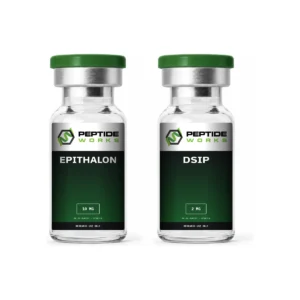
Delta sleep-inducing peptide (DSIP), an experimental neuropeptide with an unidentified molecular mechanism, has been the subject of recent laboratory studies. In contrast to neuropeptides that have known cognate receptors, the endogenous biosynthesis mechanism of a particular high-affinity DSIP receptor is yet unknown. As a result, rather than identifying a single receptor-mediated process, published experimental research have concentrated on characterizing possible connections with larger neurotransmitter and neuroendocrine systems.
Published experimental studies describe investigations into DSIP-associated GABAergic and glutamatergic neurotransmission. Electrophysiological and biochemical models have examined whether exposure to DSIP is associated with changes in neuronal excitability and inhibitory or excitatory signalling. Opioid-related mechanisms have also been explored experimentally, including interactions with endogenous opioid signalling systems; however, direct binding of DSIP to a specific opioid receptor has not been established as its primary mechanism.
In vitro and preclinical models have additionally explored monoaminergic pathways, including serotonergic and catecholaminergic signalling. These studies have examined neurotransmitter concentrations, turnover and receptor-associated responses following DSIP exposure. The findings remain heterogeneous, and no individual neurotransmitter pathway has been established as a definitive molecular target.
Neuroendocrine signaling is another important field of study. DSIP has been investigated experimentally in connection with hormone secretion or control related to neuroendocrine signaling, as well as hypothalamic-pituitary regulatory processes. Although the underlying molecular intermediates are still unclear, these discoveries have led to theories on interactions between DSIP and central peptide-regulatory networks.
Studies have also examined peptide transport, degradation and distribution as potential determinants of DSIP activity. As a small linear nonapeptide, DSIP is susceptible to enzymatic processing, and the relationship between intact DSIP, potential metabolites and experimentally observed molecular responses remains under investigation.
Overall, DSIP is best characterised as an investigational neuropeptide without a confirmed cognate receptor or singular intracellular signalling pathway. Its proposed mechanisms remain centred on experimentally observed interactions with neurotransmitter, neuroendocrine and peptide-regulatory systems rather than a fully established molecular mechanism.
The precise solubility of synthetic DSIP depends on formulation, pH, and counter-ion composition; however it is generally compatible with aqueous laboratory settings.
It can degrade hydrolytically or enzymatically in solution, just like a lot of unaltered linear peptides. Thus, HPLC and mass spectrometry can be used to confirm purity and molecular identification, whereas lyophilization and regulated storage are frequently utilized to maintain analytical integrity.
The information on this page is based on research carried out in the laboratory and in preclinical studies on DSIP and must not be regarded as proof of clinical effectiveness or as indicating that it is appropriate for use in humans. References are provided for the studies that support this.