PROMO!

First order? Get 10% OFF with this code: 1storder

Research hub

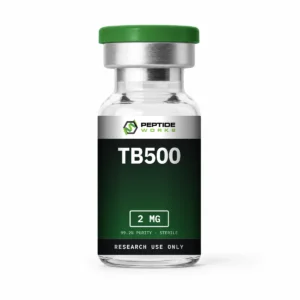
TB500 Research Peptide Hub

TB-500 is a synthetic, N-terminally acetylated peptide corresponding to residues 17–23 of human thymosin beta-4 (Ac-LKKTETQ), representing its central actin-binding domain.

  • Tβ4 Fragment
  • Thymosin Beta-4 Fragment
  • Synthetic Peptide Fragment
  • Thymosin Beta-4 Peptide Fragment
01

Technical Overview

TB-500 is a synthetic short peptide that corresponds to the central section of thymosin beta-4 (Tβ4). Analysis has shown that TB-500 is the N-terminally acetylated heptapeptide Ac-Lys-Lys-Thr-Glu-Thr-Gln (Ac-LKKTETQ), which is equivalent to residues 17 to 23 of human thymosin beta-4.

The parent protein, thymosin beta-4, is a peptide consisting of 43 amino acids and has a well-established actin-binding region which includes the LKKTETQ sequence. Since TB-500 is merely a short portion of the parent molecule, it must be clearly differentiated from full-length thymosin beta-4 in technical documentation and in the analytical specifications.

Research carried out in the laboratory on TB-500 has been directed towards the identification of the peptide, its molecular interactions with actin, the stability of the fragments, and analytical detection. Ac-LKKTETQ has been identified and characterised using high-performance liquid chromatography coupled with high-resolution mass spectrometry, whereas more recent UHPLC–Orbitrap MS/MS techniques have looked at the parent peptide and the related metabolites under controlled experimental conditions.

The peptide sequence of TB-500 must therefore be recorded precisely together with details regarding its N-terminal acetylation, molecular identity, chromatographic purity, and the batch-specific analytical data. This procedure also prevents the synthetic TB-500 fragment from being confused with full-length thymosin beta-4.

02

Chemical Classification

Chemical name
Thymosin Beta-4
Common name(s)
TB500
Molecular Formula
C₂₁₂H₃₅₀N₅₆O₇₈S
Molecular weight
4963.44 g/mol
Amino acid sequence
Ac-Ser-Asp-Lys-Pro-Asp-Met-Ala-Glu-Ile-Glu-Lys-Phe-Asp-Lys-Ser-Lys-Leu-Lys-Lys-Thr-Glu-Thr-Gln-Glu-Lys-Asn-Pro-Leu-Pro-Ser-Lys-Glu-Thr-Ile-Glu-Gln-Glu-Lys-Gln-Ala-Gly-Glu-Ser
Compound Class
Synthetic Peptide Fragment, Thymosin Beta-4 Peptide Fragment,
Origin
Endogenous human peptide
Purity
98.2%
03

Molecular Characteristics

TB-500 is a synthetic, linear heptapeptide which corresponds to the amino acid residues 17 to 23 of human thymosin beta-4 (Tβ4); its amino acid sequence is Ac-Leu-Lys-Lys-Thr-Glu-Thr-Gln-OH (Ac-LKKTETQ) and it has an acetyl group attached to the N-terminal leucine. Chromatography and high-resolution mass spectrometry have been used to analyse the material identified as TB-500 and have confirmed both its sequence and the modification at the N-terminus.

The peptide consists of seven amino acids and has no cysteine residues, which means that it cannot form intramolecular disulfide bonds that originate from cysteine. The free-base form of the peptide is stated in the FDA's documentation on chemical characterisation and has the molecular formula C₃₈H₆₈N₁₀O₁₄ and a molecular weight of 889.01 g/mol.

The sequence LKKTETQ is derived from the central area of full-length thymosin beta-4 and has been studied as an actin-associated peptide motif. It is important, however, not to regard TB-500 as chemically identical to full-length Tβ4, since the latter consists of 43 amino acids and is therefore a much larger and different molecular entity.

Laboratory records should therefore specify TB-500 in terms of its seven-amino-acid sequence, its N-terminal acetylation, its exact chemical form, its molecular identity and its batch-specific analytical specifications. In the case where an acetate or some other form is provided, the specifications given on the relevant Certificate of Analysis must be given precedence over the general reference values.

Mechanism Under Investigation

TB-500 is being studied as a synthetic peptide fragment that includes the LKKTETQ region of thymosin beta-4 (Tβ4). This region is the one known to bind with actin in the full-length peptide. Nevertheless, there is a key point to note since a large amount of the existing mechanistic literature refers to full-length Tβ4 rather than to the isolated TB-500 fragment, any mechanisms that are attributed specifically to TB-500 should be regarded as areas under investigation rather than as established equivalents.

Actin-Associated Interactions

The LKKTETQ region has been investigated for its relationship with actin, a major component of the cellular cytoskeleton. Full-length Tβ4 interacts with monomeric globular actin (G-actin) and participates in regulating the balance between unpolymerised actin and filamentous actin. Because TB-500 contains this conserved region, actin-associated molecular interactions represent a central area of research concerning the fragment.

Cytoskeletal Dynamics

The processes of actin polymerization and depolymerization are fundamental to the organization of the cytoskeleton and to cell movement. Studies of the LKKTETQ motif serve as a example of how short peptide sequences can play a role in actin recognition and in the regulation of the cytoskeleton. It is a significant question in experimental work to what extent the isolated Ac-LKKTETQ mimics the wider molecular behaviour of intact Tβ4.

Structure–Activity Research

There is also a specific fragment available for the study of structure–activity relationships in thymosin beta-4; by comparing the seven-amino-acid fragment with the 43-amino-acid parent peptide it is possible to tell apart the molecular interactions linked to the central actin-binding sequence from those that depend on other parts of Tβ4.

Continuing Mechanistic Investigation

The best mechanistic explanation of TB-500 should focus on the interactions between actin-associated peptides, changes in the cytoskeleton, and comparisons of the fragment with its parent molecule. It is not valid simply to assign findings from full-length thymosin beta-4 to TB-500 since the two are chemically different molecular entities and the body of evidence relating to the isolated fragment is considerably more limited.

04

Mechanism Under Investigation

TB-500 is being studied as a synthetic peptide fragment that includes the LKKTETQ region of thymosin beta-4 (Tβ4). This region is the one known to bind with actin in the full-length peptide. Nevertheless, there is a key point to note since a large amount of the existing mechanistic literature refers to full-length Tβ4 rather than to the isolated TB-500 fragment, any mechanisms that are attributed specifically to TB-500 should be regarded as areas under investigation rather than as established equivalents.

Actin-Associated Interactions

The LKKTETQ region has been investigated for its relationship with actin, a major component of the cellular cytoskeleton. Full-length Tβ4 interacts with monomeric globular actin (G-actin) and participates in regulating the balance between unpolymerised actin and filamentous actin. Because TB-500 contains this conserved region, actin-associated molecular interactions represent a central area of research concerning the fragment.

Cytoskeletal Dynamics

The processes of actin polymerization and depolymerization are fundamental to the organization of the cytoskeleton and to cell movement. Studies of the LKKTETQ motif serve as a example of how short peptide sequences can play a role in actin recognition and in the regulation of the cytoskeleton. It is a significant question in experimental work to what extent the isolated Ac-LKKTETQ mimics the wider molecular behaviour of intact Tβ4.

Structure–Activity Research

There is also a specific fragment available for the study of structure–activity relationships in thymosin beta-4; by comparing the seven-amino-acid fragment with the 43-amino-acid parent peptide it is possible to tell apart the molecular interactions linked to the central actin-binding sequence from those that depend on other parts of Tβ4.

Continuing Mechanistic Investigation

The best mechanistic explanation of TB-500 should focus on the interactions between actin-associated peptides, changes in the cytoskeleton, and comparisons of the fragment with its parent molecule. It is not valid simply to assign findings from full-length thymosin beta-4 to TB-500 since the two are chemically different molecular entities and the body of evidence relating to the isolated fragment is considerably more limited.
This summary reflects findings reported in published preclinical and in vitro research. The original studies supporting this information are listed in the references.

05

Experimental Research Areas

01

Actin-Associated Research

The Ac-LKKTETQ segment of thymosin beta-4, which includes amino acid residues 17 to 23 of the original peptide, is the TB-500. The LKKTETQ area has been studied as an actin-binding sequence and thus serves as a laboratory model for the examination of interactions between short peptide motifs and actin-associated processes.

02

Cytoskeletal Dynamics

Since actin polymerization and depolymerization are involved in the organization of the cytoskeleton, the LKKTETQ region has been examined with regard to actin-dependent cellular processes. Such experiments allow researchers to investigate how a specific peptide sequence contributes to the molecular interactions connected with cytoskeletal dynamics.

03

Cell-Migration Models

The LKKTETQ fragment was studied in controlled assays for cell-culture migration. Research involving peptides derived from Tβ4 has measured changes in cellular migration together with molecular endpoints such as protein phosphorylation, thus providing experimental systems for investigating the relationship between the actin-binding region and cell behaviour.

04

Fragment–Parent Comparisons

It is possible to experimentally compare TB-500 with full-length thymosin beta-4 in order to find out which molecular properties are specifically linked to the 17–23 region. It is important to make this distinction since Tβ4 has several functional regions and any results obtained with the entire 43-residue peptide cannot be automatically assigned to the shorter TB-500 fragment.

05

Peptide Metabolism Research

More recent research has looked into the in-vitro metabolism of Ac-LKKTETQ and has characterized the shorter peptide fragments produced from the parent fragment. The fragments identified have been Ac-LKKTE, Ac-LKKT and Ac-LKK, thus providing a basis for the study of fragment stability and peptide degradation pathways.

06

Analytical Detection and Characterization

The analytical aspects of TB-500 have been studied in great detail. In order to determine the identity of Ac-LKKTETQ in the material labelled TB-500, HPLC coupled with high-resolution mass spectrometry was employed, and later, UHPLC–Orbitrap MS/MS research allowed for the simultaneous characterisation of the parent peptide and its related metabolites.

06

Analytical Verification

The peptide identity, N-terminal acetylation, and chromatographic purity of TB-500 should be verified by analytical methods. Identification of TB-500 as the N-terminally acetylated thymosin beta-4 fragment Ac-LKKTETQ has been achieved using high-performance liquid chromatography (HPLC) together with high-resolution mass spectrometry (HRMS), and a synthetically prepared reference peptide has also been compared with the material in question to support the structural identification.

More detailed characterisation can be achieved by using tandem mass spectrometry (MS/MS). In a study from 2024, a UHPLC-Q-Exactive Orbitrap MS/MS method was developed and validated for the simultaneous analysis of TB-500 and other related peptide species, the identities of which were confirmed by means of synthesised reference standards and characteristic MS/MS spectra.

Analytical results should be compared with the batch-specific Certificate of Analysis for research purposes, paying special attention to peptide identity, sequence, purity, chemical form and the analytical methods employed.

Certificate of Analysis
Batch20251009003
MethodCOA 2026
Document Download PDF
HPLC
Batch20251009003
MethodHPLC 2026
Document Download PDF
Third Party Certificate
Batch11 August 2026
Document Download PDF
07

Storage & Handling

TB-500 Peptide research material should be stored according to the conditions specified for the particular batch and chemical form supplied. For characterized TB-500 (Ac-LKKTETQ) reference material, 2–8°C storage is specified for the solid peptide.

The material should be kept in a tightly sealed container and protected from unnecessary exposure to moisture and prolonged light. When handling lyophilized or solid peptide material, unnecessary temperature cycling should be minimized, as peptide stability can be influenced by humidity, temperature, and physical state.

When recording laboratory inventory and analytical results, it is important to clearly distinguish between TB-500 and the full-length thymosin beta-4. Since the short TB-500 fragment and the full-length Tβ4 are chemically different substances, the storage records must be associated with the correct lot number, chemical form, and Certificate of Analysis.

Where batch-specific storage instructions are available, these should take precedence over general peptide-handling guidance.

Supplied as Lyophilized Powder in Vial
Storage Store at 2–8°C
Handling Reconstitution Required
08

Questions researchers ask

TB-500 is a synthetic peptide fragment. Analytical research identified material labeled TB-500 as the N-terminally acetylated sequence Ac-LKKTETQ, corresponding to residues 17–23 of naturally occurring human thymosin beta-4.

TB-500 is supplied for laboratory research and analysis. It is intended for experimental work only and should not be administered to or consumed by humans or animals. The material is not supplied for medical, diagnostic or veterinary applications.

Information on this page is for scientific and technical reference only. References to molecular interactions, thymosin beta-4-associated sequences, actin-related processes or experimental pathways relate solely to laboratory research and should not be interpreted as evidence of clinical efficacy or therapeutic suitability.