
PROMO!
First order? Get 10% OFF with this code: 1storder


Written by
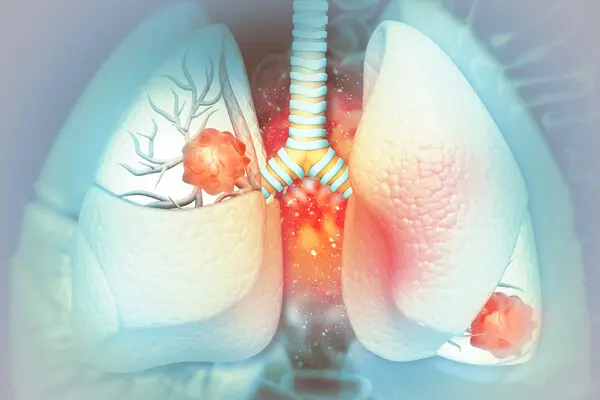
Research on pulmonary fibrosis has expanded as scientists work to understand why damaged lung tissue forms permanent scars. Instead of healing in a controlled way, lung cells send signals that drive thick tissue buildup and reduced flexibility. These changes limit airflow and place stress on bronchial structures over time.
To explore this process, researchers study peptides that influence bronchial cell signaling and tissue organization. Bronchogen Peptide appears in pulmonary research due to its connection with bronchial epithelial regulation. Scientists also examine peptides such as B7 33 and FOXO4-related compounds to compare how different signaling pathways affect fibrosis related activity.
To understand how this shift toward scarring begins, researchers increasingly focus on the behavior of bronchial epithelial cells during lung injury.
Explore Bronchogen Peptide from Peptide Works, a research peptide examined for its connection to bronchial tissue regulation and early lung repair balance.

Bronchial epithelial cells guide how lung tissue responds to injury and repeated stress. When these cells lose stability, they release signals that drive fibroblasts to produce excess collagen. This activity causes airway thickening and reduced lung flexibility, which marks early fibrosis development. Researchers now focus on epithelial disruption as a key starting point in lung scarring.
Bronchogen Peptide draws attention because studies link it to bronchial epithelial structure and cellular coordination. Research suggests this peptide helps maintain epithelial balance and supports organized repair signaling. By influencing how epithelial cells communicate during injury response, Bronchogen Peptide allows researchers to better understand early processes that shape fibrosis progression.
Early fibrosis signaling starts when lung cells shift from controlled repair toward signals that favor scarring. Research links Bronchogen Peptide to regulation of gene activity that controls cell structure and stress response in bronchial tissue. This regulation helps keep signaling pathways organized during early injury, when cells decide between repair and fibrosis.
By supporting balanced gene expression, Bronchogen Peptide helps limit the strength of signals that activate excessive collagen production. This influence occurs before visible scarring forms, which makes it useful for studying how fibrosis signaling begins. Researchers use this peptide to trace how early molecular decisions shape long term lung tissue changes.
Fibrosis causes lung tissue remodeling by driving excessive production and accumulation of extracellular matrix proteins, mainly collagen. Activated fibroblasts and myofibroblasts deposit this matrix between alveoli and airways, replacing flexible lung architecture with dense structural material. As collagen fibers accumulate and reorganize, lung tissue thickens and loses its normal alignment.
This altered matrix increases lung stiffness by reducing tissue compliance and elasticity. Stiff collagen networks resist stretch during breathing, which limits lung expansion and disrupts airflow. Research connected to Bronchogen Peptide helps clarify how early repair imbalance can progress toward these structural outcomes.
In addition to epithelial driven repair pathways, fibrosis progression is also shaped by mechanisms that regulate extracellular matrix balance..

B7-33 binds to the relaxin family peptide receptor 1, known as RXFP1. This receptor helps regulate tissue structure by controlling pathways involved in matrix balance and tissue flexibility. Unlike full length relaxin, B7-33 activates RXFP1 in a more selective way, which limits excessive downstream activity while preserving key regulatory signals.
When RXFP1 responds to B7-33, it influences processes linked to extracellular matrix turnover. This action supports controlled matrix regulation rather than unchecked buildup. Because fibrosis involves disrupted matrix balance, the RXFP1 interaction explains why B7-33 remains relevant when examining fibrotic tissue behavior and progression.
Discover B7-33 from Peptide Works, a relaxin-pathway peptide studied for its interaction with RXFP1 and its relevance to tissue structure and matrix regulation research.

FOXO4-DRI targets senescent cells that build up in fibrotic lung tissue and disrupt normal repair balance. This peptide blocks the interaction between FOXO4 and p53, which triggers programmed cell death in senescent cells. By removing these damaged cells, FOXO4-DRI reduces signals that promote ongoing inflammation and scarring in lung tissue.
Senescent cells release factors that encourage fibrosis and weaken tissue structure over time. FOXO4-DRI limits this effect by lowering the number of senescent cells present in the lungs. This reduction helps explain the connection between cellular senescence and the progression of pulmonary fibrosis.
Explore FOXO4-DRI from Peptide Works, a senolytic research peptide used to examine the role of senescent cells in fibrosis-related tissue changes.
Together, these peptides highlight how fibrosis research approaches lung damage through early repair balance, matrix regulation and senescent cell control.
| Peptide | Primary Focus | Key Role in Fibrosis-Related Research |
|---|---|---|
| Bronchogen Peptide | Bronchial tissue regulation | Helps examine how coordinated airway repair influences fibrosis direction during early stages and shapes long-term lung tissue outcomes. |
| B7-33 | Relaxin receptor (RXFP1) interaction | Supports exploration of pathways linked to tissue flexibility and extracellular matrix balance during fibrosis progression. |
| FOXO4-DRI | Senescent cell targeting | Removes senescent cells by disrupting FOXO4–p53 interaction, helping clarify how cellular aging contributes to persistent fibrosis. |
The future of Bronchogen Peptide points toward broader insight into how early lung repair processes influence fibrosis direction. Alongside B7-33 and FOXO4-DRI, this peptide helps frame fibrosis as a multi pathway process involving tissue balance, matrix control and cellular aging.
Together, these peptides support deeper understanding of fibrosis progression from different biological angles. At Peptide Works, we follow this evolving landscape and make these peptides available to support ongoing scientific exploration worldwide, helping advance clarity around complex fibrotic mechanisms.
All peptides and compounds mentioned are strictly for research purposes only and not for human use.
(1) Alam F, Gaspari TA, Kemp-Harper BK, Low E, et al The single-chain relaxin mimetic, B7-33, maintains the cardioprotective effects of relaxin and more rapidly reduces left ventricular fibrosis compared to perindopril in an experimental model of cardiomyopathy. Biomed Pharmacother. 2023 Apr;160:114370.
(2) Bhuiyan S, Shen M, Chelvaretnam S, Tan AY, et al. Assessment of renal fibrosis and anti-fibrotic agents using a novel diagnostic and stain-free second-harmonic generation platform. FASEB J. 2021 May;35(5):e21595.
(3) Han X, Yuan T, Zhang J, Shi Y, et al. FOXO4 peptide targets myofibroblast ameliorates bleomycin-induced pulmonary fibrosis in mice through ECM-receptor interaction pathway. J Cell Mol Med. 2022 Jun;26(11):3269-3280. doi: 10.1111/jcmm.17333. Epub 2022 May 5. Erratum in: J Cell Mol Med. 2024 Aug;28(16):e18502.
(4) Ye X, Li J, Liu Z, Sun X, Wei D, Song L, Wu C. Peptide mediated therapy in fibrosis: Mechanisms, advances and prospects. Biomed Pharmacother. 2023 Jan;157:113978.
(5) Li S, Li Y, Liu Y, Wu Y, Wang Q, Jin L, Zhang D. Therapeutic Peptides for Treatment of Lung Diseases: Infection, Fibrosis, and Cancer. Int J Mol Sci. 2023 May 12;24(10):8642.
ALL CONTENT AND PRODUCT INFORMATION AVAILABLE ON THIS WEBSITE IS FOR EDUCATIONAL PURPOSES ONLY.
DISCLAIMER: These products are intended solely as a research chemical only. This classification allows for their use only for research development and laboratory studies. The information available on our Peptide Works website: https://peptide-works.com/ is provided for educational purposes only. These products are not for human or animal use or consumption in any manner. Handling of these products should be limited to suitably qualified professionals. They are not to be classified as a drug, food, cosmetic, or medicinal product and must not be mislabelled or used as such.




Peptide Works
Related Articles
Vilon Peptide in Organ Research: Cardiac, Renal, and Gastrointestinal Impacts
Vilon Peptide shows measurable relevance in organ-focused research models. Researchers examine this peptide because it influences gene activity, immune signaling,

Understanding Vilon’s Influence on DNA Repair and Cellular Resilience
Vilon is a peptide that has drawn attention in research for its potential to support cellular health. Scientists study Vilon

How Pinealon Peptide Reduces Oxidative Stress and Supports Longevity
Pinealon Peptide appears in research focused on how cells handle oxidative stress over time. Oxidative stress happens when unstable molecules