

PROMO!
First order? Get 10% OFF with this code: 1storder


Written by
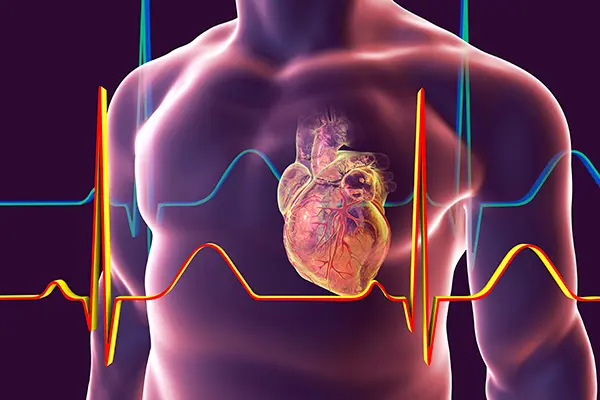
Vilon peptide demonstrates measurable relevance in organ-focused research models. Researchers investigate this peptide due to its influence on gene activity, immune signaling, and cellular regulation in controlled laboratory settings. These effects support its application in cardiac, renal, and gastrointestinal models for studying inflammation, tissue response, and cellular stability.
In cardiac research, vilon peptide supports cellular stress responses and immune balance at the tissue level. In renal research, it modulates pathways linked to fibrosis (e.g., TGF-β1) and kidney tissue homeostasis. In gastrointestinal research, Vilon aids immune signaling in models of gut inflammation and mucosal integrity. These organ-specific findings position vilon peptide as a targeted research tool across biological systems.
To illustrate its multi-organ effects, the table below summarizes key preclinical findings for the vilon peptide.
Discover Vilon Peptide at Peptide Works, studied for supporting cardiac, renal, and gastrointestinal cellular balance.
To provide a clear overview of its effects, the following table summarizes Vilon Peptide’s impact across key organ systems:
| Organ System | Key Effects of Vilon Peptide | Mechanisms |
|---|---|---|
| Heart (Cardiac) | Supports cellular stress response and immune balance | Modulates gene transcription, influences cytokine-related activity, affects chromatin activity for protein synthesis |
| Kidney (Renal) | Reduces fibrosis and promotes cellular resilience | Lowers TGF‑β1, limits extracellular matrix buildup, enhances cellular homeostasis under stress |
| Gut (Gastrointestinal) | Improves enzyme activity, nutrient transport, and mucosal health | Increases maltase, alkaline phosphatase, amino- and dipeptidases; enhances glucose uptake; maintains epithelial cell function and repair |
These summarized effects highlight the broad impact of Vilon Peptide across different organ systems and set the stage for a deeper examination of its mechanisms in cardiac, renal, and gastrointestinal research.
Vilon Peptide relates to cardiac research through shared molecular mechanisms active in heart biology. Studies demonstrate that it modulates gene transcription patterns and elevates specific cytokine-related gene activity. Researchers investigate these pathways as they mirror heart tissue responses to molecular stress signals.
It also influences chromatin activity, altering gene accessibility for protein synthesis. These effects are relevant to cellular-level heart studies, where gene expression and cytokine control drive adaptation to stress.
This mechanistic insight elucidates the role of peptides in preserving heart structure under stress conditions.
Vilon contributes through effects on cellular balance and signaling that influence how cells withstand stress. This activity helps preserve tissue stability and resilience during cellular strain, providing insight into how heart tissue responds to stress in experimental models.
While cardiac tissue benefits from these mechanisms, Vilon also plays a critical role in protecting the kidneys from structural damage.
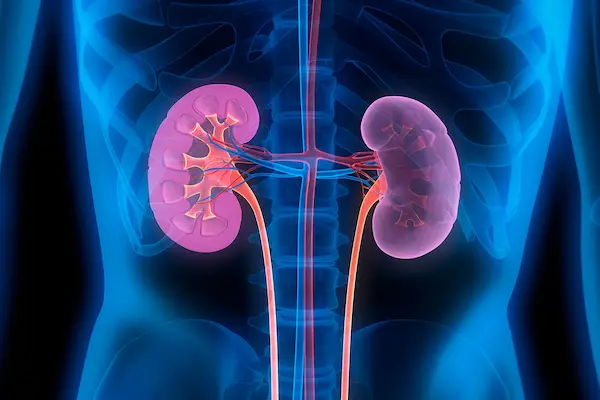
Vilon Peptide lowers TGF-β1 levels, a key driver of fibrotic pathways, in animal studies of chronic renal injury. It significantly decreases blood TGF-β1 concentration and reduces small-vessel permeability increases that contribute to tissue scarring and fibrosis development.
By reducing TGF-β1 activity, Vilon limits signaling that promotes extracellular matrix buildup and fibrotic tissue expansion in injured kidneys. This preserves structural balance and slows fibrosis progression in experimental kidney injury models.
Beyond fibrosis, kidney cells face inflammatory stress, which Vilon helps regulate.
Vilon Peptide promotes cellular homeostasis in kidney tissue, helping cells adapt to stress conditions. Its regulatory effects on key intracellular pathways enhance renal cell resilience and maintain function under experimental conditions.
Similarly, maintaining gastrointestinal health relies on cellular balance and nutrient processing.
Vilon peptide supports intestinal function by enhancing the activity of digestive enzymes and improving nutrient transport in the small intestine. Studies show that oral administration of Vilon increases the activity of key digestive enzymes, such as maltase, alkaline phosphatase, and amino- and dipeptidases, in the epithelial layer of the small intestine. These enzymes help break down complex nutrients, supporting efficient digestion and the cellular processing of absorbed substances.
Vilon also improves glucose transport in specific regions of the small intestine, indicating a role in enhancing nutrient uptake across the intestinal lining. In aged animal models, this enhanced transport helps maintain cellular function and energy supply in intestinal tissues.
Beyond nutrient absorption, protecting the intestinal lining from damage is essential for overall gut health.
Vilon peptide supports mucosal health by maintaining cellular balance and epithelial function. It enhances nutrient absorption and enzyme activity, providing epithelial cells with resources for repair and resilience. These effects help preserve gut lining integrity and offer insights into mucosal health in experimental studies.
Given these organ-specific effects, the Vilon peptide shows promising research potential across biological systems.
Vilon peptide is a versatile research compound used across cardiac, renal, and gastrointestinal studies. It supports cellular balance, enhances tissue resilience and maintains organ-specific cellular functions, offering valuable insights into tissue protection mechanisms.
Future studies may uncover additional mechanisms and applications in preclinical models, improving the understanding of tissue protection and functional maintenance. Although limited to experimental research, Vilon Peptide remains a promising tool for advancing peptide science and guiding innovative approaches in organ-focused studies.
All products discussed are supplied for research purposes only and are not intended for human use.
(1) Lezhava T, Khavison V, Monaselidze J, Jokhadze T, et al. Bioregulator Vilon-induced reactivation of chromatin in cultured lymphocytes from old people. Biogerontology. 2004;5(2):73-9.
(2) Gavrisheva NA, Malinin VV, Ses TP, Kozlov KL, et al. Effect of peptide Vilon on the content of transforming growth factor-beta and permeability of microvessels during experimental chronic renal failure. Bull Exp Biol Med. 2005 Jan;139(1):24-6.
(3) Khavinson VKh, Timofeeva NM, Malinin VV, Gordova LA, et al. Effect of vilon and epithalon on activity of enzymes in epithelial and subepithelial layers in small intestine of old rats. Bull Exp Biol Med. 2002 Dec;134(6):562-4.
ALL CONTENT AND PRODUCT INFORMATION AVAILABLE ON THIS WEBSITE IS FOR EDUCATIONAL PURPOSES ONLY.
DISCLAIMER: These products are intended solely as a research chemical only. This classification allows for their use only for research development and laboratory studies. The information available on our Peptide Works website: https://peptide-works.com/ is provided for educational purposes only. These products are not for human or animal use or consumption in any manner. Handling of these products should be limited to suitably qualified professionals. They are not to be classified as a drug, food, cosmetic, or medicinal product and must not be mislabelled or used as such.
Peptide Works
Related Articles
How can ARA-290 Peptide Help Diabetic Patients?
Diabetes affects millions of people around the world and leads to serious health problems. Research shows that the ARA-290 peptide

Can AICAR Peptide Improve Endurance?
AICAR peptide has shown promising results for improving endurance capacity in studies. Research shows that AICAR activates AMPK, increasing glucose

Enhancing Energy with NAD+ Supplements
Energy is the driving force behind focus, movement, and recovery. When cells have less energy to work with, the body