PROMO!

First order? Get 10% OFF with this code: 1storder

Research hub

BPC-157 Research Hub

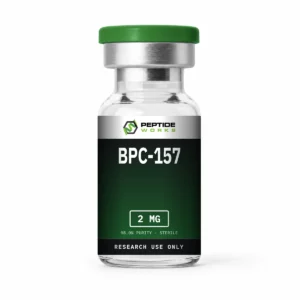
BPC-157 is a synthetic, linear pentadecapeptide which is based on a segment of the protein BPC found in human gastric juice and has been studied as a well-defined molecular compound in preclinical and laboratory research.

  • BPC-157
  • Synthetic Peptide
  • 15 Amino Acids
  • Linear Structure
  • Gastric BPC-Derived
01

Technical Overview

A synthetic peptide with 15 amino acid residues, BPC-157 (Body Protection Compound-157) is derived from a partial sequence of a natural protein found in human gastric juice. Solid Phase Peptide Synthesis (SPPS) is used to create this synthetic peptide counterpart for use in experimental research. BPC-157 is a short linear peptide with a known amino acid sequence, which makes it appropriate for analytical characterization and laboratory research in contrast to recombinant proteins.

The peptide originated from research investigating biologically active protein fragments isolated from gastric-derived proteins, leading to the identification of a stable 15-amino acid sequence for further experimental evaluation. Since its initial characterisation, BPC-157 has become widely recognised in preclinical research for investigations into peptide pharmacology, molecular signalling and cell biology. Although the peptide has been examined extensively in laboratory and animal studies, its precise molecular mechanism continues to be investigated.

In laboratory situations the compound BPC-157 is usually employed in order to establish intracellular signalling pathways and peptide-protein interactions in preclinical experimental models, in biochemical tests and in cultured cell systems.

02

Chemical Classification

Chemical Name
Pentadecapeptide BPC-157 (Body Protection Compound-157)
Common Name(s)
BPC-157; BPC 157; Body Protection Compound-157; Pentadecapeptide BPC-157; Gastric Pentadecapeptide BPC-157; Stable Gastric Pentadecapeptide BPC-157
Molecular Formula
C62H98N16O22
Molecular Weight
1419.5 g/mol
Purity
99.1%
CAS Number
137525-51-0
Compound Class
Synthetic linear pentadecapeptide
Origin
Synthetic; derived from a partial sequence of human gastric juice protein BPC
Amino Acid Sequence
Gly-Glu-Pro-Pro-Pro-Gly-Lys-Pro-Ala-Asp-Asp-Ala-Gly-Leu-Val
03

Molecular Characteristics

A synthetic linear peptide called BPC-157 (Body Protection Compound-157) is made up of 15 amino acid residues that are taken from a partial sequence of a protein found in human stomach juice. BPC-157 is a short peptide with a known amino acid sequence that does not go through intricate post-translational changes such as glycosylation, in contrast to bigger recombinant proteins.

Due to its relatively small size, BPC-157 does not possess a stable tertiary structure and is generally considered to exist as a flexible linear peptide in aqueous solution. Any transient secondary structural elements are influenced by environmental factors including pH, temperature, and solvent composition. The peptide is typically supplied as a lyophilised powder.

The physicochemical properties of BPC-157 are determined by its amino acid composition, which includes both hydrophilic and hydrophobic residues that influence its net charge, polarity and chromatographic behavior. The presence of multiple proline residues contributes to its conformational flexibility and has been investigated in relation to peptide stability.

04

Mechanism Under Investigation

Current laboratory investigations have examined BPC-157 as a synthetic 15-amino acid peptide with a molecular mechanism that has not yet been fully elucidated. Published experimental studies describe the peptide as interacting with multiple intracellular signalling pathways rather than a single, well-defined receptor target. Although numerous biochemical mechanisms have been investigated in vitro and in preclinical models, no primary molecular receptor has been conclusively identified.

In vitro models have explored the interaction of BPC-157 with signalling pathways associated with nitric oxide (NO) regulation. Experimental investigations have examined the peptide in relation to endothelial nitric oxide synthase (eNOS), nitric oxide production and downstream cyclic guanosine monophosphate (cGMP)-associated signalling using cultured cell systems and biochemical assays. These studies have characterised molecular interactions within nitric oxide signalling networks under controlled laboratory conditions.

Published experimental studies have also examined intracellular kinase pathways following exposure to BPC-157. Investigations have characterised signalling involving extracellular signal-regulated kinase (ERK1/2), focal adhesion kinase (FAK), phosphoinositide 3-kinase (PI3K)/Akt and related phosphorylation-dependent pathways using Western blotting, phosphoproteomic analysis and cell-based molecular techniques. These experiments have focused on defining changes in intracellular signal transduction rather than establishing physiological outcomes.

Current laboratory research has further investigated the interaction of BPC-157 with proteins involved in cytoskeletal organisation, cellular adhesion and extracellular matrix biology. Cell culture models have examined peptide-associated changes in protein expression, gene transcription and cell signalling using quantitative PCR, immunoblotting and fluorescence microscopy. Experimental studies have also investigated interactions with vascular endothelial growth factor (VEGF)-associated signalling pathways and angiogenesis-related molecular markers, although the precise relationship between BPC-157 and these signalling networks remains an active area of investigation.

The impact of BPC-157 on inflammatory signaling pathways, including molecular interactions involving nuclear factor kappa B (NF-κB) and cytokine-associated regulatory networks, has also been investigated in published studies. These studies, which have mostly been carried out in preclinical experimental systems, are still characterizing the intracellular signaling profile of the peptide.

Overall, the available literature characterises BPC-157 as a multifunctional investigational peptide whose molecular mechanism continues to be examined through biochemical assays, structural biology, molecular biology and preclinical research. The diversity of signalling pathways investigated suggests that its molecular activity has not yet been attributed to a single receptor or intracellular target.

This information comes from laboratory and preclinical studies of BPC-157 and must not be taken as proof of its clinical effectiveness or as indicating that it is appropriate for use in humans. Detailed supporting studies are included in the references.

05

Experimental Research Areas

01

Gastrointestinal Peptide Biology

BPC-157 has been extensively investigated in the field of gastrointestinal peptide biology owing to its origin as a synthetic fragment derived from a protein identified in human gastric juice. Published studies have examined its molecular characteristics, peptide stability and biochemical behavior using cell-based systems and preclinical experimental models. This research has contributed to a broader understanding of biologically active gastric-derived peptide fragments.

02

Angiogenesis and Vascular Signalling

Experimental investigations have examined BPC-157 in relation to molecular pathways involved in angiogenesis and vascular signaling. Published studies have characterized interactions with signalling networks associated with vascular endothelial growth factor (VEGF), endothelial nitric oxide synthase (eNOS) and nitric oxide-associated pathways using cultured endothelial cells, biochemical assays and molecular biology techniques. These studies have focused on defining signaling mechanisms rather than physiological outcomes.

03

Cell Migration and Cytoskeletal Biology

BPC-157 has been investigated in studies examining cellular migration, cytoskeletal organisation and cell–matrix interactions. In vitro models have utilized fibroblasts, endothelial cells and other cultured cell types to investigate focal adhesion dynamics, extracellular matrix-associated proteins and intracellular signaling involved in cellular movement. Experimental techniques have included fluorescence microscopy, immunocytochemistry and protein expression analyses.

04

Nitric Oxide Signalling Research

Published research has explored the interaction of BPC-157 with nitric oxide signaling pathways in experimental systems. Biochemical investigations have examined endothelial nitric oxide synthase (eNOS), cyclic guanosine monophosphate (cGMP)-associated signalling, and related molecular pathways using enzyme assays, phosphoproteomic analyses and gene expression studies to characterize intracellular signalling mechanisms.

05

Peptide Pharmacology

Preclinical pharmacology research has examined the biochemical and pharmacological characteristics of BPC-157 using in vitro systems and animal models. Experimental investigations have characterized peptide stability, tissue distribution, molecular interactions and pharmacokinetic properties under controlled laboratory conditions to further define the behaviour of the peptide during experimental use.

06

Signal Transduction and Molecular Biology

BPC-157 has been utilized as a research tool to investigate intracellular signaling pathways and transcriptional regulation. Published studies have examined kinase-mediated signalling networks, including ERK1/2, FAK and PI3K/Akt pathways, using techniques such as Western blotting, quantitative PCR, phosphoproteomics and transcriptomic analysis. These investigations have focused on characterizing molecular signaling events following peptide exposure.

07

Peptide Chemistry and Analytical Characterisation

Analytical research has focused on the synthesis, purification and quality assessment of BPC-157. Standard laboratory techniques, including high-performance liquid chromatography (HPLC), liquid chromatography–mass spectrometry (LC-MS), amino acid analysis and peptide mapping, have been employed to verify peptide identity, determine purity and assess batch-to-batch consistency prior to laboratory research.

06

Analytical Verification

Analytical verification of BPC-157 is carried out in order to determine if a research sample matches the molecular identity and purity specified. Techniques such as high-performance liquid chromatography (HPLC) can be used to assess the chromatographic purity and to identify any other detectable components in the sample.

Mass spectrometry (MS) offers additional molecular-mass data which can be used to assess the identity of peptides. When available, the batch-specific documentation such as a Certificate of Analysis (CoA) should be examined together with the analytical data in order to ensure traceability and to characterise the material supplied.

Certificate of Analysis
Batch20251007001
Document Download PDF
HPLC
Batch20251007001
Document Download PDF
Third Party Certificate
Batch12 May 2026
Document Download PDF
07

Storage & Handling

Store BPC-157 at 2–8°C, as specified on the supplied Certificate of Analysis. Keep the material protected from moisture, excessive heat, and direct light during storage.

Qualified laboratory personnel should handle BPC-157 with clean equipment and standard laboratory practices. Keep the container closed when not in use and take care to prevent contamination during handling. BPC-157 is intended for laboratory research use only.

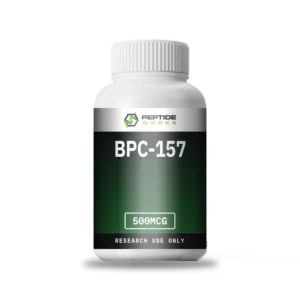
Supplied as Lyophilized Powder and Capsule
Capsule Storage Keep them dry and away from heat
Vial Storage 2–8°C, away from light
Reconstitution Sterile diluent
After Reconstitution Refrigerate, limit freeze - thaw
08

Questions researchers ask

A synthesized linear peptide with fifteen amino acid residues is called BPC-157. It is generated by SPPS for laboratory investigation and is characterized as a peptide analog synthesized from a partial sequence of a protein discovered in human stomach juice. BPC-157 is frequently utilized as a research peptide in biochemical and preclinical investigations because of its clearly defined amino acid sequence and compact size.

BPC-157 is supplied solely for laboratory research and scientific investigation. It is not intended for human or veterinary use and should not be ingested or administered. It is not intended to diagnose, treat, cure, or prevent any disease or condition. All information on this page is provided for scientific and technical research purposes only.