
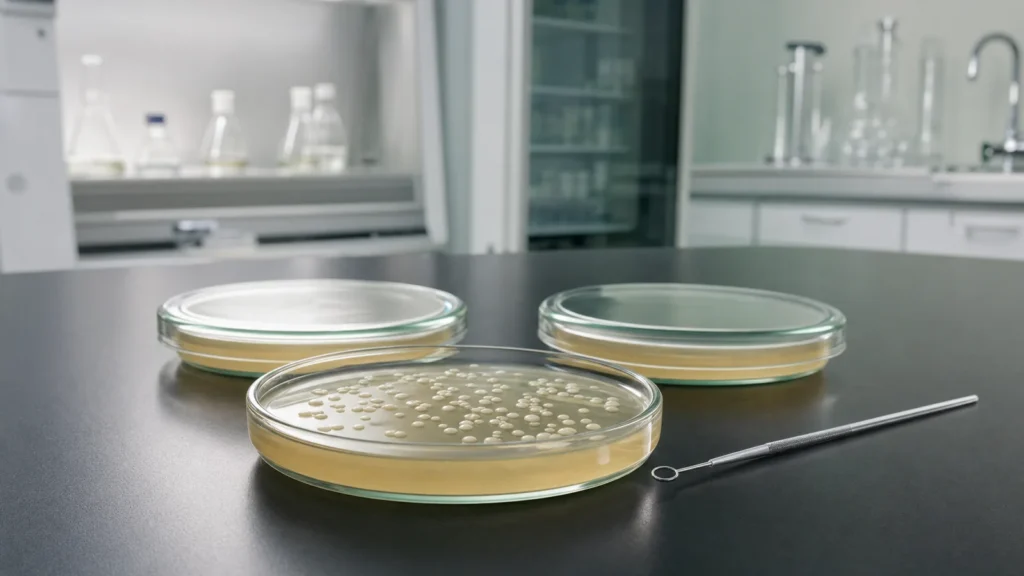
Fungal immunology involves more than examining the microorganism itself. Researchers also investigate how immune cells recognize fungal structures and coordinate signaling responses after exposure.
Thymosin Alpha-1 (Tα1) has been examined experimentally in this context because of its interactions with several components of immune signaling, particularly dendritic cells and pathways associated with innate and adaptive immune responses.
Studies involving organisms such as Aspergillus fumigatus and Candida albicans have therefore used Tα1 as an experimental tool for investigating how immune signaling changes during fungal challenge.
Importantly, these studies do not establish Tα1 as an antifungal treatment. Much of the relevant evidence comes from cellular and animal models, and the findings should be interpreted within their experimental context.
Why Are Dendritic Cells Important in Antifungal Immune Signaling Research?
Dendritic cells are important in antifungal research because they recognise fungal components and help coordinate innate and adaptive immune signalling through antigen presentation and cytokine production.
Dendritic cells act as an important connection between innate recognition of microorganisms and subsequent adaptive immune signaling.
When dendritic cells encounter fungal components, researchers can measure variables such as cell maturation, cytokine production and signaling-pathway activation.
A 2004 study by Romani and colleagues investigated Tα1 in dendritic cells exposed to A. fumigatus. The researchers reported changes involving dendritic-cell maturation and interleukin-12 (IL-12) production.
This makes dendritic cells a useful experimental model for studying how Tα1 may modify immune-cell responses following fungal exposure.
Toll-Like Receptor Signaling and Thymosin Alpha-1
Toll-like receptors (TLRs) are pattern-recognition receptors that enable cells of the innate immune system to recognize molecular features associated with microorganisms.
Experimental work with Tα1 and A. fumigatus has implicated Toll-like receptor signaling and the adaptor protein MyD88. Researchers also observed involvement of the p38 MAPK and NF-κB pathways.
These pathways are significant because they connect extracellular microbial recognition with intracellular changes in gene expression and cytokine signaling.
Rather than demonstrating direct antifungal activity by Tα1, these experiments primarily investigate how the peptide affects the host-cell signaling response to fungal material.
What Is the Connection Between Tα1 and Th1 Signaling?
Another area investigated experimentally is T-helper type 1 (Th1)-associated signaling.
Th1 responses are characterized by particular patterns of immune-cell activation and cytokine signaling. In fungal models, researchers can examine whether manipulation of dendritic-cell activity changes subsequent T-cell responses.
In experimental A. fumigatus research, Tα1-associated dendritic-cell changes were linked with Th1-dependent responses.
This provides researchers with a model for examining the relationship between innate fungal recognition, antigen-presenting cells and downstream adaptive signaling.
Tα1 and the Regulation of Inflammatory Signaling
Fungal immune research is not limited to measuring immune activation. Regulation of the response is equally important.
Subsequent experimental work has examined Tα1 in relation to indoleamine 2,3-dioxygenase (IDO), an enzyme involved in tryptophan metabolism and immune regulation.
Research found that Tα1 influenced IDO-associated signaling, involving TLR9 and type-I interferon receptor pathways. The experiments also examined IL-10 production and regulatory T-cell responses.
These findings show why Tα1 research cannot be described as simply “stimulating” the immune system. Experimental observations suggest interactions with pathways involved in both immune activation and regulation.
What Has Candida Research Examined?
Candida research has examined how Thymosin Alpha-1 influences immune-cell responses to *Candida albicans*, including leukocyte activity and experimentally measured antifungal immune signalling.
Tα1 has also appeared in older experimental research involving Candida albicans.
A 1982 study investigated Tα1 in mice experimentally challenged with C. albicans. The results differed according to the experimental conditions and timing used, demonstrating the importance of study design when interpreting peptide research.
Separate experimental work subsequently examined polymorphonuclear leukocytes and measured variables including cell numbers and candidacidal activity in vitro. Again, different experimental conditions produced different observations.
These studies are useful from a research perspective because they demonstrate that observed immune responses can depend substantially on the model, experimental conditions and endpoints being measured.
What Does Current Research Tell Us?
Experimental research indicates that Tα1 can interact with several immune pathways relevant to the cellular response to fungi. Dendritic-cell maturation, Toll-like receptor signaling, cytokine production, Th1-associated responses and regulatory pathways have all been investigated.
However, the evidence depends heavily on the experimental model and conditions. Findings from cultured cells and animal models should therefore be interpreted as mechanistic observations rather than evidence of therapeutic efficacy.
For researchers, the more useful question is not whether Tα1 “fights fungal infections,” but how Tα1-associated signaling alters measurable immune responses during controlled fungal challenge experiments.
Frequently Asked Questions about Thymosin Alpha-1
The studies discussed here primarily examine Tα1-associated immune signaling rather than showing the peptide as a direct fungicidal compound.
Experimental studies have included fungal organisms such as Aspergillus fumigatus and Candida albicans.
Dendritic cells provide a model for examining how Tα1 may influence fungal recognition, cytokine signaling, and subsequent adaptive immune responses.
MyD88 is an intracellular adaptor protein involved in signaling from several Toll-like receptors, and MyD88-dependent signaling has been investigated in Tα1 fungal-response experiments.
Experimental studies have measured signaling molecules including IL-12 and IL-10 when examining Tα1-associated dendritic-cell responses.
No. The studies discussed include cellular and animal experiments designed to investigate immune mechanisms and should not be interpreted as establishing Tα1 as a treatment for fungal infection.
Scientific references
- 1 Romani L, Bistoni F, Gaziano R, Bozza S, Montagnoli C, Perruccio K, Pitzurra L, Bellocchio S, Velardi A, Rasi G, Di Francesco P, Garaci E. Thymosin alpha 1 activates dendritic cells for antifungal Th1 resistance through toll-like receptor signaling. Blood. 2004 Jun 1;103(11):4232-9. doi: 10.1182/blood-2003-11-4036. Epub 2004 Feb 24. PMID: 14982877. https://pubmed.ncbi.nlm.nih.gov/14982877/
- 2 Bistoni F, et al. Modulation of polymorphonucleate-mediated cytotoxicity against Candida albicans by thymosin alpha 1. Thymus. 1985;7(2):69–84. https://pubmed.ncbi.nlm.nih.gov/3892779/
Research-use disclaimer: For research and laboratory use only. Not for human or animal consumption.