
PROMO!
First order? Get 10% OFF with this code: 1storder


Written by

Copper peptides are short sequences of amino acids that bind with copper ions to form biologically active compounds. They have attracted growing interest for their potential roles in skin care research and broader regenerative studies. Current findings suggest they may contribute to tissue repair, stimulate collagen production, enhance skin texture, and support overall skin renewal across different skin types.
One of the most extensively studied copper peptides is GHK-Cu. Research highlights its promising role in wound healing and tissue regeneration. GHK activity is associated with key biological functions, including collagen synthesis, which is essential for maintaining skin structure and minimizing the visible appearance of fine lines.
Ongoing scientific investigation continues to examine the regenerative properties of GHK. Studies also explore its potential to help defend against oxidative stress triggered by free radicals, a factor that can contribute to uneven skin tone and the development of wrinkles over time.
This brings forward an important question: what are the precise cellular mechanisms through which copper peptides promote healing?
Explore GHK-Cu from Peptide Works, a copper-binding peptide that supports collagen production, skin regeneration, and accelerated wound healing in research studies.
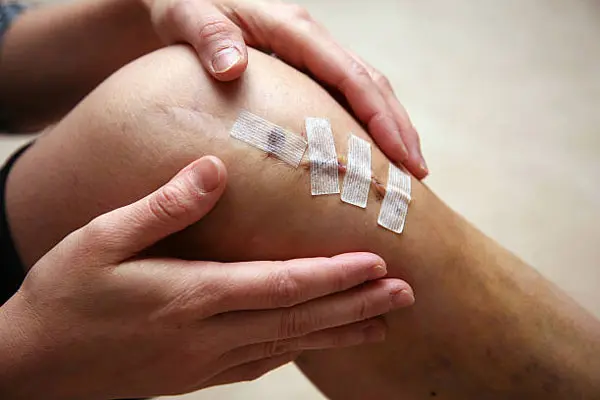
Copper peptides aid wound healing by signaling skin cells, including fibroblasts, to increase collagen production and support new blood vessel growth. They help repair damaged tissue by directing healthy cells to injury sites, lowering inflammation, and assisting wound contraction in research studies.
GHK-Cu is a well-studied copper peptide linked to faster wound recovery, stronger skin, and more even tone. Another peptide, BPC-157, has been shown in research to support cell migration and tissue regeneration. Together, these actions help create conditions for quicker healing and improved skin strength.
Research also examines how these peptides interact with molecules like hyaluronic acid, which contributes to tissue structure and hydration.
Since collagen production is central to this repair process, an important question remains: how do these peptides influence collagen at the cellular level?
Discover BPC-157 from Peptide Works, a research peptide known for promoting tissue repair, angiogenesis and cellular migration ideal for exploring regenerative healing.
GHK-Cu helps the body make more collagen by activating skin cells called fibroblasts. These fibroblasts build collagen and elastin, two important proteins that help keep skin strong, elastic, and youthful in appearance.
Multiple studies highlight BPC-157, another peptide, known for supporting tissue strength, faster healing, and wound recovery in research studies. Together, these peptides support skin repair and growth, which may help reduce visible signs of aging.
This natural process supports skin texture, elasticity, firmness, and resilience without relying on harsh chemicals or invasive treatments.
To fully appreciate this process, it’s important to understand the unsung heroes behind collagen production: fibroblasts.
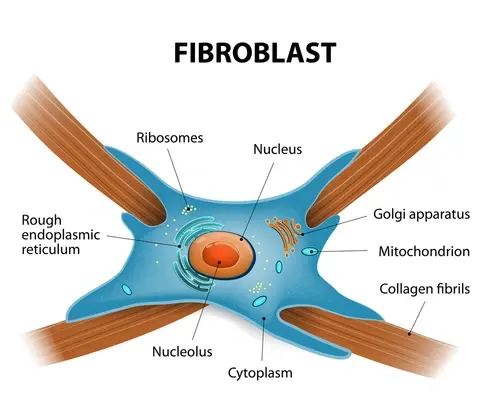
Fibroblasts are specialized skin cells responsible for building and maintaining the extracellular matrix, which provides skin with structure, strength, and elasticity. Copper peptides such as GHK-Cu support the repair process by activating fibroblasts to increase production of collagen, elastin, cytokines, and growth factors involved in skin renewal.
During injury, fibroblasts migrate to the damaged area and generate matrix components that aid wound contraction and new tissue formation. Peptides like GHK-Cu encourage these cells to boost collagen synthesis and growth factor signaling.
BPC-157 has also been shown in research settings to support fibroblast function and healing-related pathways. Together, these processes play an important role in proper tissue recovery and overall skin health.
Fibroblasts do not function in isolation. They work within the extracellular matrix, a dynamic environment that strongly influences skin aging, repair, and regeneration.
The extracellular matrix (ECM) plays a crucial role in skin aging and repair. It provides structural support and helps regulate how skin cells behave. Copper peptides such as GHK-Cu help support the ECM by encouraging the production of collagen and elastin.
This supports skin strength and elasticity. Other peptides, including BPC-157, have been studied for their role in tissue repair and wound healing by promoting regenerative processes. Key components of the ECM include collagen, elastin, glycosaminoglycans, and proteoglycans.
Together, these elements give skin its structure and resilience. As aging occurs, the ECM gradually breaks down, reducing firmness and causing wrinkles. Taken together, these changes highlight the role copper peptides may play in supporting overall skin health.
Since collagen is central to this process, it’s helpful to take a closer look at how it directly influences the skin.

Collagen production plays a crucial role in skin health and aging. It provides essential structural support, helping preserve skin firmness and elasticity. Over time, the body’s natural collagen production decreases, which contributes to common aging signs such as wrinkles and loss of skin firmness.
GHK-Cu activates fibroblasts, encouraging increased collagen synthesis. In addition, BPC-157 has been studied for its role in tissue repair, supporting collagen formation and assisting wound healing processes.
Together, these peptides contribute to smoother skin texture, improved elasticity and reduced visible signs of aging, helping promote healthier-looking, more youthful skin.
Greater elasticity and firmness do more than enhance appearance, they help maintain long-term skin strength. Here’s how copper peptides contribute to that process as well.
Copper peptides help make more collagen and elastin. These proteins are important for the skin’s strength and stretch. They also make skin firmer by boosting fibroblast activity and helping it stay strong.
GHK-Cu and BPC-157 peptides support tissue repair and wound healing, which helps the skin renew itself. Clinical studies confirm that these peptides reduce wrinkles and fine lines, providing anti-aging benefits.
Ongoing research with copper peptides continues to reveal their potential to improve skin texture and vitality supporting long-term skin health and a more youthful appearance.
The field is evolving fast and what’s next for copper peptides is just as exciting as what’s already known.
Copper peptides show real promise in the future of skincare. New research highlights their ability to support skin repair and reduce signs of aging.
While they are still used mostly in labs, these peptides are on track to become key ingredients in smart, personalized skincare.
Peptide Works focuses on supplying high-quality peptides to researchers worldwide. As an online retailer, we make it easier for scientists to access what they need helping move the field forward with products that aim to keep skin healthier, firmer, and more resilient.
All products discussed are supplied for research purposes only and are not intended for human use.
[1] Pickart L, Margolina A. Regenerative and Protective Actions of the GHK-Cu Peptide in the Light of the New Gene Data. Int J Mol Sci. 2018 Jul 7;19(7):1987.
[2] Pickart L, Vasquez-Soltero JM, Margolina A. GHK Peptide as a Natural Modulator of Multiple Cellular Pathways in Skin Regeneration. Biomed Res Int. 2015;2015:648108.
[3] Seiwerth S, Milavic M, Vukojevic J, Gojkovic S, et al. Stable Gastric Pentadecapeptide BPC 157 and Wound Healing. Front Pharmacol. 2021 Jun 29;12:627533.
[4] Huang T, Zhang K, Sun L, Xue X, et al. Body protective compound-157 enhances alkali-burn wound healing in vivo and promotes proliferation, migration, and angiogenesis in vitro. Drug Des Devel Ther. 2015 Apr 30;9:2485-99.
ALL CONTENT AND PRODUCT INFORMATION AVAILABLE ON THIS WEBSITE IS FOR EDUCATIONAL PURPOSES ONLY.
DISCLAIMER: These products are intended solely as a research chemical only. This classification allows for their use only for research development and laboratory studies. The information available on our Peptide Works website: https://peptide-works.com/ is provided for educational purposes only. These products are not for human or animal use or consumption in any manner. Handling of these products should be limited to suitably qualified professionals. They are not to be classified as a drug, food, cosmetic, or medicinal product and must not be mislabelled or used as such.
Peptide Works
Related Articles

What are the Best Cognitive Peptides?
Cognitive peptides are short chains of amino acids that researchers are exploring for their potential effects on brain function. They

Achieving increased skin pigmentation without prolonged sun exposure has been demonstrated with Melanotan peptides in research. Two commonly studied options,
Can PTD-DBM Hair Growth Peptide Stop Balding?
Hair thinning and balding affect millions worldwide, often leading to frustration and limited options. This challenge has driven researchers to