
PROMO!
First order? Get 10% OFF with this code: 1storder


Written by

Skin changes as we age. Collagen levels decrease. Fine lines, wrinkles, and loss of firmness become more common. Effective Anti-Aging Peptides are being studied because they may help support skin pathways linked to collagen production, skin structure, and repair.
Effective Anti-Aging Peptides work by sending signals to skin cells. Some peptides help support collagen production. Others are studied for their effects on skin hydration, barrier strength, and cellular stress responses.
Researchers continue to study how these peptides may help support healthy skin as it ages.
Explore GHK-Cu from Peptide Works, a copper-binding peptide studied for collagen renewal, antioxidant support, and improvements in skin firmness and elasticity.

Anti-aging peptides support collagen production by sending signals to skin cells. These signals can activate fibroblasts which are the cells that make collagen. Research shows that certain peptides may increase collagen synthesis and support the extracellular matrix, which helps maintain skin firmness and structure.
Some peptides also influence pathways linked with collagen repair and skin remodeling. Studies show that peptide-based compounds may support the production of collagen and other skin proteins. These effects help researchers understand how peptides may support collagen levels during the aging process.
Several peptides have gained attention in research on skin aging and collagen support. The three peptides listed below are among the most studied compounds.
Each peptide has distinct biological actions and is studied for different roles in skin structure, cellular signaling, and aging-related pathways.
Discover PTD-DBM from Peptide Works, a synthetic peptide researched for its activation of Wnt/β-catenin signaling to support fibroblast activity and structural protein synthesis.
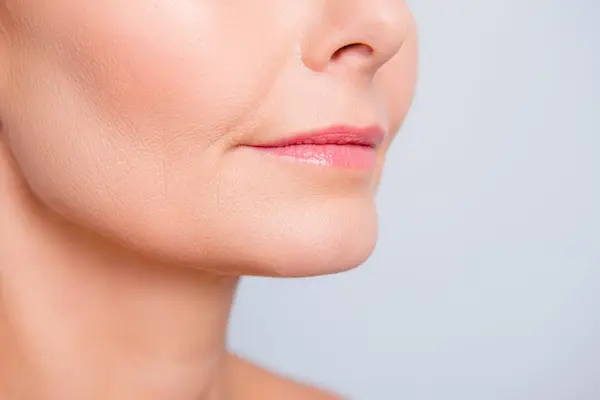
Research shows GHK-Cu may activate fibroblasts and support collagen and elastin production. These effects may help maintain the extracellular matrix, which supports skin firmness and elasticity. Clinical studies have also reported improvements in skin density, hydration, and the appearance of wrinkles after topical GHK-Cu use.
GHK-Cu has also been studied for its effects on skin texture and remodeling pathways. Research suggests it may regulate matrix metalloproteinases and support extracellular matrix components that help maintain skin structure. These effects may help improve skin texture and reduce the appearance of fine lines. Research continues to study its role in skin aging.
Laboratory studies show PTD-DBM activates Wnt/β-catenin signaling by disrupting CXXC5 interactions. This activation has been associated with increased β-catenin, collagen I, and extracellular matrix proteins in fibroblast models, which are linked to structural skin support.
Pre clinical wound-healing studies report that blocking CXXC5 and activating Wnt/β-catenin signaling promotes fibroblast activation, collagen deposition, and tissue regeneration. However, most available data come from wound-repair and experimental models rather than direct wrinkle-reduction studies.
SNAP-8 has also been studied in cosmetic research for its neurotransmitter-modulating mechanism derived from SNAP-25. Research indicates SNAP-8 inhibits acetylcholine release and reduces muscle contraction, which has been associated with reduced appearance of expression lines and wrinkle depth.
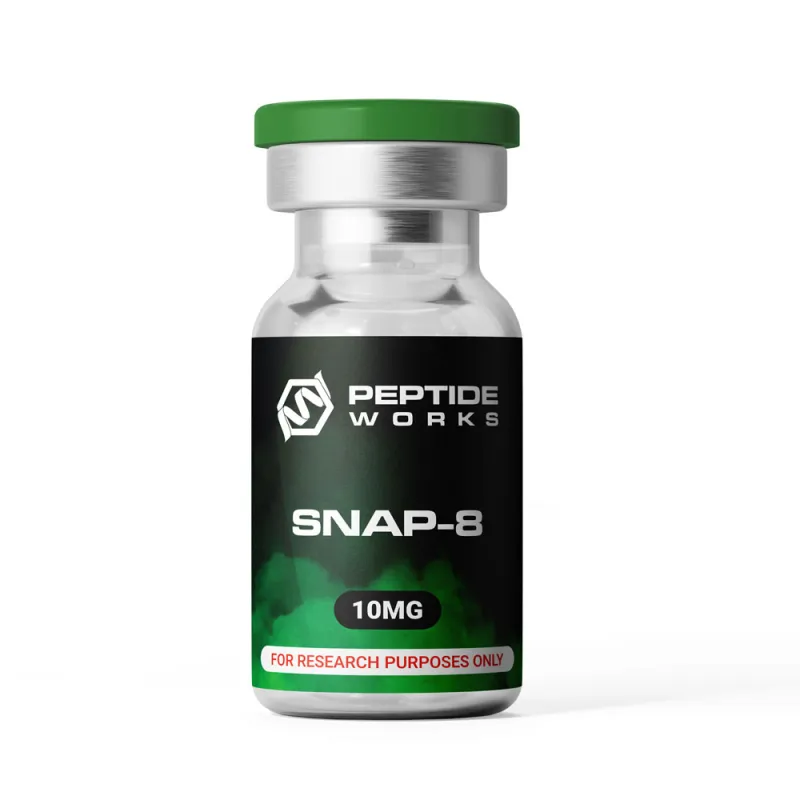
SNAP-8 is a topical peptide studied for its Botox-like mechanism. It targets the SNARE complex, which plays a role in neurotransmitter release and facial muscle movement. Research suggests SNAP-8 may reduce signals involved in muscle contraction, which can help improve the appearance of expression lines.
Studies show that SNAP-8 may support smoother-looking skin and reduce the appearance of wrinkles. However, its effects are generally milder than injectable botulinum toxin treatments. SNAP-8 is studied as a non-invasive cosmetic peptide for fine lines, but current research does not show that it can replace Botox.
Shop SNAP-8 from Peptide Works, a cosmetic peptide examined for its Botox-like mechanism that may help soften expression lines and reduce wrinkle depth.
Researchers study many peptides for skin aging. Three peptides often discussed are GHK-Cu, PTD-DBM and SNAP-8. Each peptide works in a different way. GHK-Cu is studied for collagen support and skin repair pathways. PTD-DBM is studied for Wnt/β-catenin signaling and tissue repair. SNAP-8 is studied for its effects on pathways linked with facial muscle movement and expression lines.
Comparing these anti-aging peptides helps show how each one may affect skin firmness, texture, and elasticity. It also helps explain the differences in research findings, possible benefits, and current limitations. The table below provides a simple overview of their studied roles.
| Peptide | Benefits (Research Context) | Side Effects / Limitations |
|---|---|---|
| GHK-Cu | Shown in laboratory and cosmetic studies to stimulate collagen synthesis, support wound repair, and exhibit antioxidant activity | Topical use may cause mild irritation in some individuals; long-term clinical data remain limited |
| PTD-DBM | Activates Wnt/β-catenin signaling in cell and animal models; increases markers such as collagen I and β-catenin | Primarily studied in preclinical settings; limited human safety and efficacy data |
| SNAP-8 | Studied in cosmetic formulations for modulating neuromuscular signaling and reducing the appearance of expression lines | Effects are generally modest and temporary; possible redness or skin sensitivity depending on formulation |
Understanding how these anti-aging peptides compare helps highlight their potential while showing why more research is needed to confirm long-term outcomes and address the effects of aging caused by the natural aging process.
Research on anti-aging peptides is growing. Scientists are studying peptides like GHK-Cu, PTD-DBM, and SNAP-8 to understand how they affect skin aging.
Studies are looking at how these peptides may support collagen, skin repair, and wrinkle appearance. This research helps scientists learn how peptides may support smoother, firmer, and healthier-looking skin.
At Peptide Works, we provide high-quality peptides for research applications worldwide. As peptide research advances, future studies may reveal more about how these compounds affect skin structure and aging-related processes. This ongoing research may help guide new approaches for supporting healthier-looking, smoother skin.
All products discussed are supplied for research purposes only and are not intended for human use.
(1) Pickart L, Margolina A. Regenerative and Protective Actions of the GHK-Cu Peptide in the Light of the New Gene Data. Int J Mol Sci. 2018 Jul 7;19(7):1987.
(2) Chen Y, Ding X, Ma Z, Shao S, et al. CXXC5 function blockade promotes diabetic wound healing through stimulating fibroblast and vascular endothelial cell activation. Cell Commun Signal. 2025 Feb 25;23(1):108.
(3) Lee SH, Kim MY, Kim HY, Lee YM, et al. The Dishevelled-binding protein CXXC5 negatively regulates cutaneous wound healing. J Exp Med. 2015 Jun 29;212(7):1061-80.
(4) Errante F, Ledwoń P, Latajka R, Rovero P, Papini AM. Cosmeceutical Peptides in the Framework of Sustainable Wellness Economy. Front Chem. 2020 Oct 30;8:572923.
ALL CONTENT AND PRODUCT INFORMATION AVAILABLE ON THIS WEBSITE IS FOR EDUCATIONAL PURPOSES ONLY.
DISCLAIMER: These products are intended solely as a research chemical only. This classification allows for their use only for research development and laboratory studies. The information available on our Peptide Works website: https://peptide-works.com/ is provided for educational purposes only. These products are not for human or animal use or consumption in any manner. Handling of these products should be limited to suitably qualified professionals. They are not to be classified as a drug, food, cosmetic, or medicinal product and must not be mislabelled or used as such.
Peptide Works
Related Articles

How can ARA-290 Peptide Help Diabetic Patients?
Diabetes affects millions of people around the world and leads to serious health problems. Research shows that the ARA-290 peptide

Can AICAR Peptide Improve Endurance?
AICAR peptide has shown promising results for improving endurance capacity in studies. Research shows that AICAR activates AMPK, increasing glucose

Enhancing Energy with NAD+ Supplements
Energy is the driving force behind focus, movement, and recovery. When cells have less energy to work with, the body