

PROMO!
First order? Get 10% OFF with this code: 1storder


Written by

L-Glutathione supports metabolism by improving how cells manage oxidative stress and energy balance, but it does not directly produce weight loss. L-Glutathione Peptide plays a central role in cellular redox control, which influences insulin signaling, glucose handling and mitochondrial energy output. These metabolic functions affect how the body regulates fat storage and energy use over time.
When metabolic pathways operate efficiently, the body maintains better control over fuel utilization instead of excess fat accumulation. L-Glutathione contributes to this efficiency by stabilizing cellular environments under metabolic demand.
This role places L-Glutathione within broader metabolic research that also examines peptides such as AOD 9064 and FTPP which connect to fat regulation and energy related signaling pathways. To understand how these benefits occur at the cellular level, it helps to examine how the L-Glutathione peptide directly influences metabolic processes.
Discover L-Glutathione Peptide from Peptide Works, a peptide that helps maintain cellular redox balance and supports energy regulation in metabolic research.

L-Glutathione Peptide influences metabolic function by supporting enzyme activity involved in nutrient processing and energy conversion. Many metabolic reactions depend on a stable intracellular environment to function correctly. Glutathione helps maintain the conditions enzymes need to break down carbohydrates, fats and amino acids into usable energy forms during normal metabolic activity.
Metabolic efficiency depends on how well cells convert nutrients into energy without disruption. L-Glutathione Peptide supports this process by helping cells sustain consistent biochemical conditions during metabolic demand. This support allows metabolic pathways to operate smoothly, which contributes to balanced energy utilization and controlled fuel processing rather than inefficient energy handling.
Oxidative stress affects weight gain by disrupting how cells regulate energy production and fuel use. When oxidative imbalance increases, cells lose efficiency in managing glucose and fatty acids, which shifts metabolic activity toward energy storage. L-Glutathione Peptide plays an important role in controlling oxidative conditions inside cells, which helps maintain proper energy regulation and metabolic stability.
Energy regulation depends on balanced cellular environments to direct calories toward metabolic demand instead of fat accumulation. When oxidative stress rises, energy signaling loses accuracy and metabolic flexibility declines. L-Glutathione Peptide supports energy regulation by helping maintain intracellular balance. Which allows metabolic pathways to function more efficiently and reduces the tendency toward weight gain driven by disrupted energy handling.
Understanding this connection naturally leads into examining other peptides that support metabolic function and fat breakdown, such as AOD‑9064 and FTPP.
Metabolic research also examines other peptides alongside L-Glutathione to better understand energy balance and fat regulation. Alongside glutathione, AOD-9064 appears in research that focuses on lipid metabolism and pathways connected to energy utilization, both of which influence how the body manages stored fat loss.
FTPP peptide appears in research that examines metabolic signaling and energy regulation under metabolic demand. This peptide connects to pathways involved in fuel handling and metabolic coordination, which helps researchers explore how energy balance shifts during metabolic stress and weight related processes.

AOD‑9064 influences fat metabolism by activating pathways that break down stored fat. It increases lipolysis in fat cells, helping the body release fatty acids for energy. The peptide affects β‑3 adrenergic receptors, which signal enzymes to convert fat into usable energy. These pathways support fat oxidation and reduce fat accumulation in research studies.
AOD‑9064 also supports energy use from fat instead of storage. It boosts lipolytic enzyme activity and encourages triglyceride breakdown. By acting on these fat metabolism signals, AOD‑9064 helps regulate energy balance and supports pathways that manage how the body handles stored fat.
Explore AOD‑9064 from Peptide Works, a peptide studied for its role in fat metabolism, lipolysis, and energy utilization pathways.
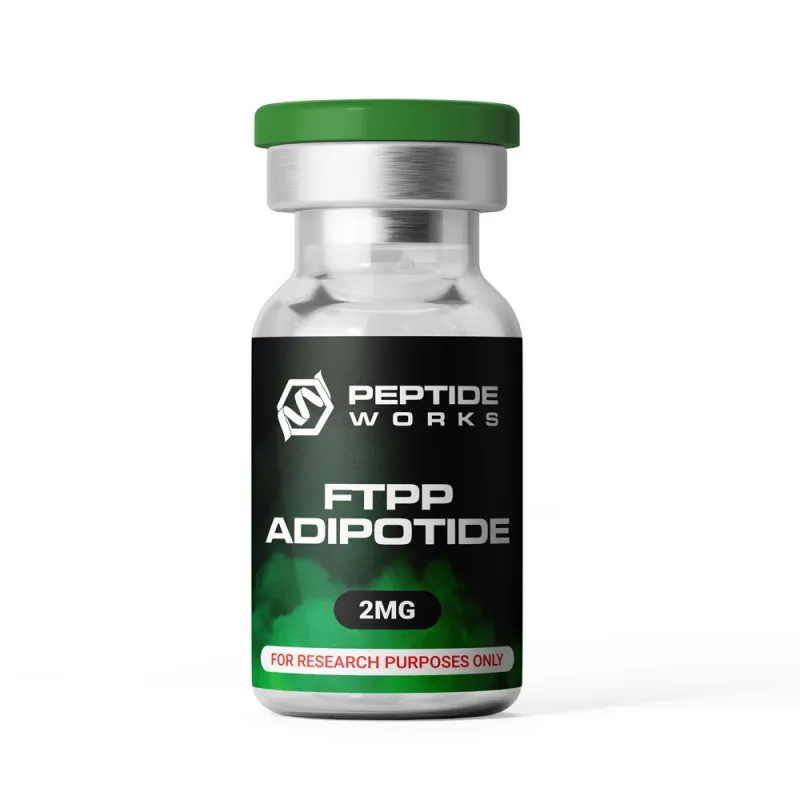
FTPP, also called adipotide, reduces fat by targeting blood vessels that supply white adipose tissue. It binds to specific receptors on the vasculature surrounding fat cells, which disrupts blood flow and triggers fat cell breakdown. This mechanism lowers adipose tissue volume and supports fat reduction in research studies.
By affecting how fatty tissue receives nutrients and oxygen, FTPP shifts energy use and influences fat metabolism. In research models, this process reduces white fat mass and helps the body process stored energy more efficiently. FTPP connects directly to pathways that regulate fat breakdown and energy handling at the cellular level.
Together with AOD‑9064 and L-Glutathione, it provides a more complete picture of how different peptides regulate fat and energy pathways.
Check out FTPP from Peptide Works, a peptide that targets adipose tissue vasculature to study fat breakdown and energy handling.
No single peptide covers every metabolic research goal. Scientists select peptides based on the specific pathway they want to study, such as energy control, fat breakdown, or metabolic signaling. The table below summarizes the primary focus of each peptide and how it is used in metabolism research.
| Peptide | Main Research Focus | Research Application |
|---|---|---|
| L‑Glutathione Peptide | Supports energy regulation and metabolic balance | Redox control, insulin signaling, stabilization of cellular metabolic processes |
| AOD‑9064 | Enhances fat breakdown and lipolysis | β‑3 adrenergic receptor activation, stimulation of enzymes that convert stored fat into energy |
| FTPP | Targets fat tissue and energy use | Disrupts fat tissue vasculature, triggers fat cell breakdown, improves fuel utilization |
The future of L-Glutathione Peptide in metabolic research remains promising, as studies continue to examine energy regulation, oxidative balance and nutrient processing pathways. It helps researchers understand how cells manage fuel, maintain metabolic stability, and influence fat breakdown.
Alongside L-Glutathione, peptides such as AOD 9064 and FTPP provide additional context by targeting fat metabolism and energy signaling pathways. Researchers using peptides supplied by Peptide Works can explore these mechanisms further, supporting studies on metabolic efficiency, fat regulation and energy utilization to deepen understanding of how cellular pathways influence metabolism and weight management.
All products discussed are supplied for research purposes only and are not intended for human use.
(1) Goutzourelas N, Orfanou M, Charizanis I, Leon G, Spandidos DA, Kouretas D. GSH levels affect weight loss in individuals with metabolic syndrome and obesity following dietary therapy. Exp Ther Med. 2018 Aug;16(2):635-642.
(2) Dalle Grave R, Calugi S, Centis E, Marzocchi R, El Ghoch M, Marchesini G. Lifestyle modification in the management of the metabolic syndrome: achievements and challenges. Diabetes Metab Syndr Obes. 2010 Nov 2;3:373-85.
(3) Heffernan M, Summers RJ, Thorburn A, Ogru E, Gianello R, Jiang WJ, Ng FM. The effects of human GH and its lipolytic fragment (AOD9604) on lipid metabolism following chronic treatment in obese mice and beta(3)-AR knock-out mice. Endocrinology. 2001 Dec;142(12):5182-9.
(4) Astrup A, Madsbad S, Breum L, Jensen TJ, Kroustrup JP, Larsen TM. Effect of tesofensine on bodyweight loss, body composition, and quality of life in obese patients: a randomised, double-blind, placebo-controlled trial. Lancet. 2008 Nov 29;372(9653):1906-1913.
(5) Hristov BD. The Role of Glutathione Metabolism in Chronic Illness Development and Its Potential Use as a Novel Therapeutic Target. Cureus. 2022 Sep 28;14(9):e29696.
ALL CONTENT AND PRODUCT INFORMATION AVAILABLE ON THIS WEBSITE IS FOR EDUCATIONAL PURPOSES ONLY.
DISCLAIMER: These products are intended solely as a research chemical only. This classification allows for their use only for research development and laboratory studies. The information available on our Peptide Works website: https://peptide-works.com/ is provided for educational purposes only. These products are not for human or animal use or consumption in any manner. Handling of these products should be limited to suitably qualified professionals. They are not to be classified as a drug, food, cosmetic, or medicinal product and must not be mislabelled or used as such.
Peptide Works
Related Articles

Which Fat Burning Peptides Work Best for Weight Loss?
Fat burning peptides are studied for their potential to support fat loss through different biological mechanisms. Tesamorelin, AOD-9604, and FTPP

Can Ibutamoren Supplements Increase Growth Hormone?
Growth hormone is essential for many processes in the body, including protein synthesis and cell growth. But how can researchers

Immunity Peptides from Peptide Works
From fighting infections to keeping the body in balance, the immune system never stops working, and scientists never stop uncovering