
PROMO!
First order? Get 10% OFF with this code: 1storder


Written by
Have you ever considered why certain peptides are receiving growing attention in research for their potential effects? This is where Glow Peptides come into focus. These compounds are more than just a scientific trend, as they are being actively explored for the ways they may support healing, regeneration, and overall cellular function.
Among these regenerative peptides, researchers have shown strong interest in TB-500, along with widely studied compounds like BPC-157 and GHK-Cu. These short chains of amino acids serve as fundamental components being investigated for a range of biological activities.
Each peptide has been examined for distinct roles, yet they are often grouped under the Glow Peptides category due to the promising outcomes observed in controlled research environments.
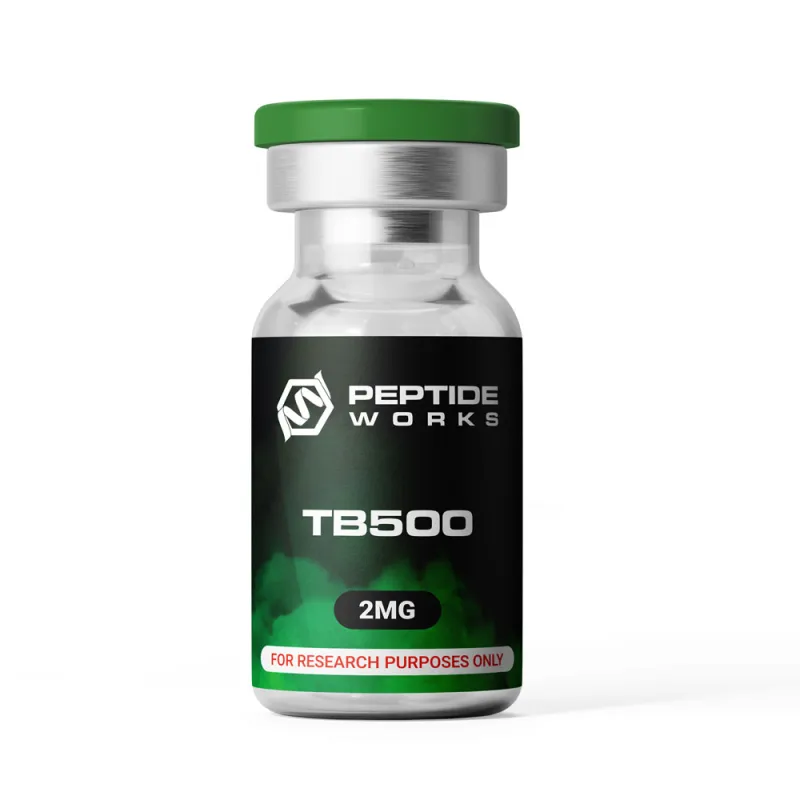
Explore TB500 from Peptide Works, a Glow Peptide studied for its role in cell migration, tissue repair, and vascular support.

TB-500 is considered a Glow Peptide because of its strong link to healing and tissue repair in research studies. It is derived from thymosin beta-4, a natural peptide known to support cell movement to injured areas, which plays a key role in recovery.
Studies show that thymosin beta-4 is involved in angiogenesis, the formation of new blood vessels. This process improves the flow of oxygen and essential nutrients to injured areas, supporting repair in experimental models.
Preclinical research also suggests it may reduce inflammation and assist in the recovery of tissues like skin and muscle.
Because of these combined effects on repair, regeneration, and cellular activity, TB-500 is grouped under Glow Peptides in research contexts.
One of the most discussed effects of Glow Peptides is their potential connection to angiogenesis, the process where the body develops new blood vessels. In research, this process is important because new vascular networks help support tissue repair by improving nutrient and oxygen supply to affected areas. TB500 has been studied in this context, as it appears to influence pathways linked to new vessel growth.
By supporting angiogenesis, TB500 may contribute to improved recovery and cellular function in controlled studies. Other peptides like BPC-157 have also been examined for similar roles, with some studies suggesting potential effects on vascular function during healing.
Blood flow is only one part of recovery. Inflammation also plays a major role, and this is where BPC-157 becomes especially important.
Researchers often examine BPC-157 among Glow Peptides for its role in healing. Inflammation is a natural defense, but when it continues for too long, it can harm tissue and slow recovery. Preclinical studies show that BPC-157 has anti-inflammatory effects and may help regulate cytokines, which are key signals involved in swelling and tissue stress.
This may help tissues like muscles, tendons, and the gut lining recover under more stable conditions. Studies also suggest it supports healing across different tissues, though most evidence comes from animal models.
Its connection to tissue repair is another reason it stands out. Findings describe faster recovery of soft tissues and greater stability in blood vessels, helping nutrients reach areas in need of repair. While BPC-157 is studied in relation to deeper tissue structures, GHK-Cu has been explored more for surface-level repair, such as skin health and collagen production.
Together, they represent different angles of how Glow Peptides are linked to regeneration. To see why GHK-Cu is often connected with structural repair, it helps to look at how it affects collagen synthesis and elastin.
Discover BPC-157 at Peptide Works, a Glow Peptide linked to reduced inflammation and faster recovery in connective tissues.

GHK-Cu, a well-known regenerative peptide, has been examined in laboratory and preclinical models. Findings show it can activate fibroblasts, the cells responsible for producing collagen and elastin.
These proteins are key for firmness and elasticity, and their decline is a hallmark of aging skin in research observations. Studies have shown GHK-Cu can support improved skin structure and tissue quality in controlled settings, rather than directly claiming visible effects.
At the molecular level, GHK-Cu influences enzymes called MMPs, which break down collagen, while also increasing TIMPs, their natural inhibitors. This helps maintain balanced collagen turnover and supports skin structure.
This balance helps preserve existing fibers while supporting new production, which is why GHK-Cu remains an important focus in peptide regeneration studies.
In skin biology, MMPs (matrix metalloproteinases) break down collagen and elastin, while TIMPs (tissue inhibitors of metalloproteinases) slow that process. In peptide regeneration research, GHK-Cu has been studied for how it interacts with this balance.
Research suggests it can lower MMP activity and raise TIMP expression, helping preserve existing fibers in the dermal matrix. By shifting the MMP/TIMP ratio, GHK-Cu reduces tissue breakdown and allows fibroblasts to rebuild collagen I and III and elastin more effectively.
Controlled models have shown increases in dermal thickness, improved skin elasticity, and reduced markers of matrix loss. With each peptide targeting a different level of repair, comparing them side by side shows how they complement one another in skin rejuvenation and structural renewal.
Shop GHK-Cu at Peptide Works, a Glow Peptide noted for stimulating collagen and elastin production to support skin and matrix strength.
The main difference among these Glow Peptides lies in how they influence recovery in research settings. TB-500 acts across multiple tissue types by supporting cell movement and contributing to vascular growth pathways. This is supported by studies on thymosin beta-4, which show roles in angiogenesis and tissue repair.
The difference between TB-500 and BPC-157 is that BPC-157 shows more focused effects on connective tissues, where preclinical studies suggest it supports healing in tendons, ligaments, and gut tissue. GHK-Cu works in the extracellular matrix, where it is linked to collagen production and tissue remodeling in skin models.
| Peptide | Area of Action | Distinct Focus |
|---|---|---|
| TB500 | Multiple tissue systems | Cell movement, angiogenesis support |
| BPC-157 | Connective tissues | Tissue healing, inflammation pathways |
| GHK-Cu | Extracellular matrix | Collagen support, tissue remodeling |
Looking ahead, the future of Glow Peptides shows why these compounds continue to attract attention in regenerative research, especially in preclinical studies.
Research on Glow Peptides continues to grow, compounds like TB500, BPC-157, and GHK-Cu are gaining attention for their different roles in repair and regeneration.
Each offers a distinct pathway of action, and together they highlight the broad potential of this peptide category. Ongoing studies suggest that Glow Peptides will remain an important focus for discovery in the years ahead.
At Peptide Works, we provide high-quality research peptides, including Glow Peptides, with worldwide shipping to support advanced study.
All peptides and compounds mentioned are strictly for research purposes only and not for human use.
(1) Pickart L, Margolina A. Regenerative and Protective Actions of the GHK-Cu Peptide in the Light of the New Gene Data. Int J Mol Sci. 2018 Jul 7;19(7):1987.
(2) Pickart L, Vasquez-Soltero JM, Margolina A. The human tripeptide GHK-Cu in prevention of oxidative stress and degenerative conditions of aging: implications for cognitive health. Oxid Med Cell Longev. 2012;2012:324832.
(3) Maar K, Hetenyi R, Maar S, Faskerti G, et al. Utilizing Developmentally Essential Secreted Peptides Such as Thymosin Beta-4 to Remind the Adult Organs of Their Embryonic State-New Directions in Anti-Aging Regenerative Therapies. Cells. 2021 May 28;10(6):1343.
(4) Huang T, Zhang K, Sun L, Xue X, et al. Body protective compound-157 enhances alkali-burn wound healing in vivo and promotes proliferation, migration, and angiogenesis in vitro. Drug Des Devel Ther. 2015 Apr 30;9:2485-99.
(5) Seiwerth S, Milavic M, Vukojevic J, Gojkovic S, et al. Stable Gastric Pentadecapeptide BPC 157 and Wound Healing. Front Pharmacol. 2021 Jun 29;12:627533.
ALL CONTENT AND PRODUCT INFORMATION AVAILABLE ON THIS WEBSITE IS FOR EDUCATIONAL PURPOSES ONLY.
DISCLAIMER: These products are intended solely as a research chemical only. This classification allows for their use only for research development and laboratory studies. The information available on our Peptide Works website: https://peptide-works.com/ is provided for educational purposes only. These products are not for human or animal use or consumption in any manner. Handling of these products should be limited to suitably qualified professionals. They are not to be classified as a drug, food, cosmetic, or medicinal product and must not be mislabelled or used as such.
Peptide Works
Related Articles
How can ARA-290 Peptide Help Diabetic Patients?
Diabetes affects millions of people around the world and leads to serious health problems. Research shows that the ARA-290 peptide

Can AICAR Peptide Improve Endurance?
AICAR peptide has shown promising results for improving endurance capacity in studies. Research shows that AICAR activates AMPK, increasing glucose

Enhancing Energy with NAD+ Supplements
Energy is the driving force behind focus, movement, and recovery. When cells have less energy to work with, the body