
PROMO!
First order? Get 10% OFF with this code: 1storder


Written by
Have you ever wondered how the body begins to repair itself after injury or stress? Researchers are asking the same question, and one peptide that continues to draw attention is Thymalin.
Thymalin was first isolated from the thymus gland, where it plays a role in immune system regulation and cellular balance. In scientific studies, it has shown promise for its potential impact on recovery processes. Researchers exploring tissue repair peptide therapy suggest that Thymalin may influence regeneration, strengthen immune responses, and support faster recovery.
With ongoing studies uncovering new insights, Thymalin stands out as a key subject in peptide research aimed at understanding how tissues renew and repair. To understand this better, researchers compare Thymalin with other peptides that affect tissue repair in different ways.
Explore Thymalin from Peptide Works, a peptide studied for immune balance and its potential role in tissue repair research.
Researchers studying tissue repair peptide often highlight Thymalin for its role in immune regulation. A balanced immune response is essential for recovery, as controlled inflammation supports proper healing.
Thymalin has been reported in studies to influence T-cell activity, which plays an important role in guiding how tissues respond to damage. By supporting immune signaling and regulation, it may help create conditions that promote more controlled and efficient recovery processes within the body.
These properties make Thymalin a subject of interest in research focused on immune-mediated aspects of tissue repair. Its connection to T-cell function is particularly important, as these cells are central to how the body regulates healing and recovery. function is particularly important as these cells are central to how the body regulates healing and recovery.
T-cells play a key role in how the body responds to injury and regulatory T cells (Tregs) help control this response. They release regulatory cytokines such as TGF-β, which contribute to limiting excessive inflammation and supporting controlled tissue repair. This immune balance is important, as effective healing depends on a regulated immune response.
In research, BPC-157 has been studied mainly in preclinical models for its potential effects on angiogenesis and immune-related processes. TB-500, derived from thymosin beta-4 is associated with actin regulation and cell migration, which are processes involved in tissue repair. These findings suggest that peptides influencing immune and cellular responses are being explored in tissue recovery research.
Since circulation is critical for healing, research also examines peptides linked to blood vessel formation, such as BPC-157.
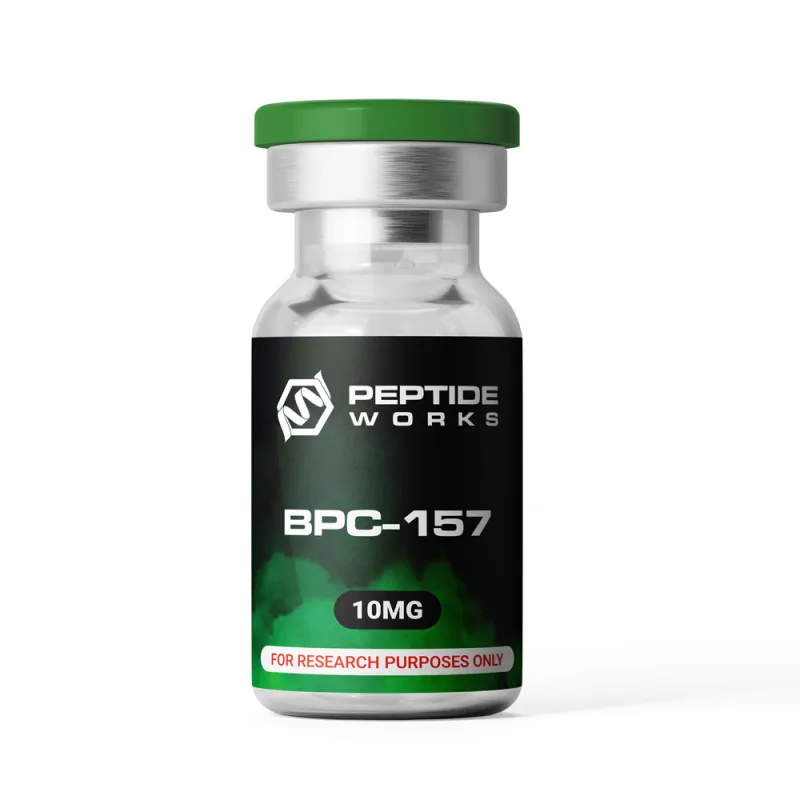
BPC-157 has drawn research interest for its potential role in angiogenesis, which involves the growth of new blood vessels. Studies in animal models suggest this peptide may activate VEGFR2 and eNOS pathways, which guide endothelial cells to migrate and create fresh vascular networks. With improved blood flow, damaged tissue receives more oxygen and nutrients, allowing the repair process to move forward more efficiently.
Within the field of tissue repair peptide therapy, BPC-157 is viewed as a strong candidate for studying how vascular health supports recovery. By helping blood vessels grow in injured areas, it adds another layer to understanding how peptides could influence regeneration and long-term tissue strength.
Focusing on blood vessels naturally highlights the role of endothelial cells, which are at the core of how circulation affects recovery.
Discover BPC-157 from Peptide Works, a peptide researched for promoting blood vessel growth and nutrient delivery during healing.
Endothelial cells line blood vessels and guide how tissues heal. They release nitric oxide (NO) to regulate blood flow and trigger new capillary growth at sites of injury. When endothelial cells function well, oxygen and nutrients reach damaged tissue faster, creating the right conditions for repair and regeneration.
In tissue repair peptide therapy, peptides like Thymalin and TB-500 are being studied for their influence on this process. Thymalin may support endothelial health through immune balance, while TB-500 is linked with enhanced cell migration that complements vascular repair. Together, they highlight different ways peptides could aid recovery in research.
Once endothelial health is considered, attention often shifts to the actual movement of repair cells into injured areas, a process linked with TB-500.
TB-500 is studied for its role in helping repair cells reach injured tissue. By acting on the actin network inside cells it may improve movement and allow healing to begin faster. Research also links TB-500 with blood vessel support, which improves circulation and gives damaged areas the oxygen and nutrients they need to recover.
In tissue repair peptide therapy, TB-500 works on cell movement, while Hexarelin adds support through growth hormone release that may aid recovery signals.
Thymalin stays central by guiding immune balance. Together, these peptides highlight different angles researchers explore when studying tissue repair.This brings the focus to Hexarelin, which is being studied for a different but complementary role in recovery.
Check out TB-500 from Peptide Works, a peptide investigated for supporting cell migration and aiding recovery in tissue repair studies.

Researchers study Hexarelin for its role in stimulating growth hormone secretion. This action may improve the way cells use energy, support protein repair and reduce strain on muscles and tendons during recovery. Early findings suggest it could help soft tissues adapt and heal more effectively under stress.
In tissue repair peptide therapy, Hexarelin brings a hormonal pathway that differs from Thymalin’s immune-based role. Researchers view it as another angle to explore how peptides may influence regeneration with growth signals adding depth to studies on muscle and tendon recovery.
Beyond these pathways, research also explores peptides linked to structural tissues, particularly those connected to cartilage and connective tissue function.
Explore Hexarelin from Peptide Works, a growth hormone secretagogue studied in tissue repair peptide therapy for muscle, tendon, and soft tissue recovery
Cartalax is a short synthetic peptide made of three amino acids (Ala-Glu-Asp). It belongs to a group of small peptides studied for how they affect cells and tissues.
Research shows that short peptides can enter cells and help control gene expression and protein production by interacting with DNA and related structures.
In cartilage research, peptides are studied for their role in chondrocyte activity and the formation of the extracellular matrix, which includes key structural proteins.
Peptides are also used as functional molecules in cartilage repair models, where they influence cell behavior and tissue processes. Within tissue repair peptide therapy, Cartalax is studied within this peptide framework for cartilage related cellular regulation and matrix processes.
Because each peptide targets a different aspect of recovery, comparing them side by side helps clarify their roles in tissue repair research.
Explore Cartalax from Peptide Works, a cartilage-focused peptide studied in tissue repair peptide therapy for connective tissue and extracellular matrix research
Peptides studied for tissue repair often target different parts of the healing process. Thymalin takes the lead role because of its strong link to immune balance, but it is not the only peptide being explored. TB-500, BPC-157, Hexarelin and Cartalax each bring their own focus, from cell movement to blood vessel support to growth hormone signaling.
The table below highlights the differences between these peptides in research and shows how their potential actions may complement one another within the broader field of tissue repair peptide therapy.
| Peptide | Primary Focus | Mechanism in Research | Unique Role in Tissue Repair |
|---|---|---|---|
| Thymalin | Immune balance | Regulates T-cells and supports inflammation control | Central peptide guiding immune-driven repair processes |
| TB-500 | Cell migration | Interacts with actin and supports cellular movement | Helps repair cells reach injury sites more efficiently |
| BPC-157 | Blood vessel growth | Promotes angiogenesis and supports endothelial function | Enhances circulation and nutrient delivery to damaged tissue |
| Hexarelin | Hormonal recovery | Stimulates growth hormone and IGF-1 signaling | Supports muscle and tendon adaptation during recovery |
| Cartalax | Cartilage support | Linked to gene regulation and extracellular matrix activity | Focuses on cartilage structure and connective tissue integrity |
Taken together, these findings show that peptides approach healing from different directions yet often complement one another in research. Thymalin remains the central focus for its immune balance, while other peptides expand the picture through structural, vascular, and hormonal pathways.
At Peptide Works, we provide researchers worldwide with access to high-quality peptides to advance this growing field. Although all results remain within research, current progress offers real hope for a deeper understanding of regeneration. As studies continue, tissue repair peptide therapy shows increasing promise.
All peptides and compounds mentioned are strictly for research purposes only and not for human use.
(1) Khavinson VK, Linkova NS, Chalisova NI, Ivko OM. The Use of Thymalin for Immunocorrection and Molecular Aspects of Biological Activity. Biol Bull Rev. 2021;11(4):377–82.
(2) Khavinson VK, Kuznik BI, Trofimova SV, Volchkov VA, et al. Results and Prospects of Using Activator of Hematopoietic Stem Cell Differentiation in Complex Therapy for Patients with COVID-19. Stem Cell Rev Rep. 2021 Feb;17(1):285-290.
(3) Cushman CJ, Ibrahim AF, Smith AD, Hernandez EJ, et al. Local and Systemic Peptide Therapies for Soft Tissue Regeneration: A Narrative Review. Yale J Biol Med. 2024 Sep 30;97(3):399-413. doi: 10.59249/TKNM3388. PM
(4) Hosoyama K, Lazurko C, Muñoz M, McTiernan CD, Alarcon EI. Peptide-Based Functional Biomaterials for Soft-Tissue Repair. Front Bioeng Biotechnol. 2019 Aug 23;7:205.
(5) Doessing S, Heinemeier KM, Holm L, Mackey AL, et al. Growth hormone stimulates the collagen synthesis in human tendon and skeletal muscle without affecting myofibrillar protein synthesis. J Physiol. 2010 Jan 15;588(Pt 2):341-51.
ALL CONTENT AND PRODUCT INFORMATION AVAILABLE ON THIS WEBSITE IS FOR EDUCATIONAL PURPOSES ONLY.
DISCLAIMER: These products are intended solely as a research chemical only. This classification allows for their use only for research development and laboratory studies. The information available on our Peptide Works website: https://peptide-works.com/ is provided for educational purposes only. These products are not for human or animal use or consumption in any manner. Handling of these products should be limited to suitably qualified professionals. They are not to be classified as a drug, food, cosmetic, or medicinal product and must not be mislabelled or used as such.
Peptide Works
Related Articles

Which Fat Burning Peptides Work Best for Weight Loss?
Fat burning peptides are studied for their potential to support fat loss through different biological mechanisms. Tesamorelin, AOD-9604, and FTPP

Can Ibutamoren Supplements Increase Growth Hormone?
Growth hormone is essential for many processes in the body, including protein synthesis and cell growth. But how can researchers
Immunity Peptides from Peptide Works
From fighting infections to keeping the body in balance, the immune system never stops working, and scientists never stop uncovering