

PROMO!

First order? Get 10% OFF with this code: 1storder

Our Blog

Explore Peptide Works Blog Posts

Discover the latest blog posts from Peptide Works

PW-icon
PW-icon
PW-icon-two

Featured Post

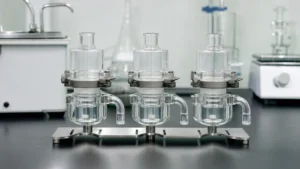
A stereo dissecting microscope over a culture dish holding a stainless mesh insert above clear medium on a laboratory bench
Comparative Peptide Research

Vilon in Tissue Research: A Review of Experimental Laboratory Studies

The examination of Vilon has been carried out in controlled laboratory tissue models in order to find out how the various experimental preparations react to the short dipeptide. This review considers the results obtained from organotypic culture, the measured tissue responses, and the limitations of the existing evidence.
Read More »
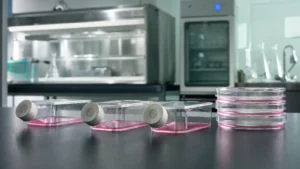
Three cell culture flasks holding pink culture medium beside a stack of culture dishes on a laboratory bench
Biological Mechanisms

How Is AICAR Used in AMPK Research?

Exploring how AICAR is used as an experimental tool to investigate AMPK-associated signalling, while highlighting its conversion to ZMP, AMPK-independent effects, and the importance of appropriate controls when interpreting laboratory findings

Read More »

Article & News

Stay Informed with Our Latest Articles

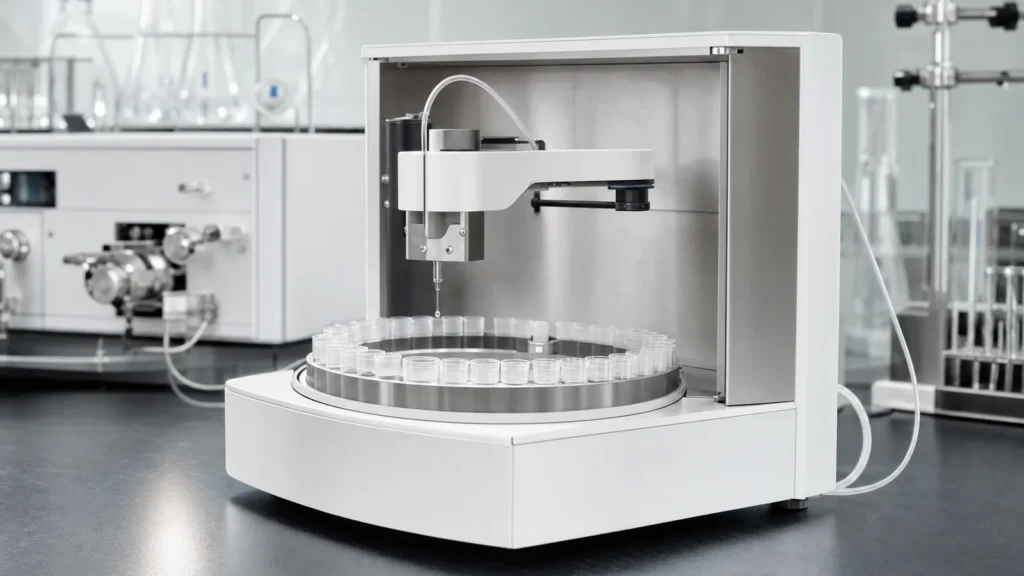
An open fraction collector with a carousel of small collection tubes and a droplet forming at the delivery arm on a laboratory bench

CJC-1295 DAC and the Endocrine System: Understanding the GHRH-GH-IGF-1 Axis

CJC-1295 DAC belongs to a particular branch of endocrine research that focuses on GHRH signaling. In this account, we examine the way in which the GHRH-GH-IGF-1 axis is arranged, the position that CJC-1295 DAC occupies within that biological system, and the reason why this pathway should not be mistaken for testosterone regulation.

Read More
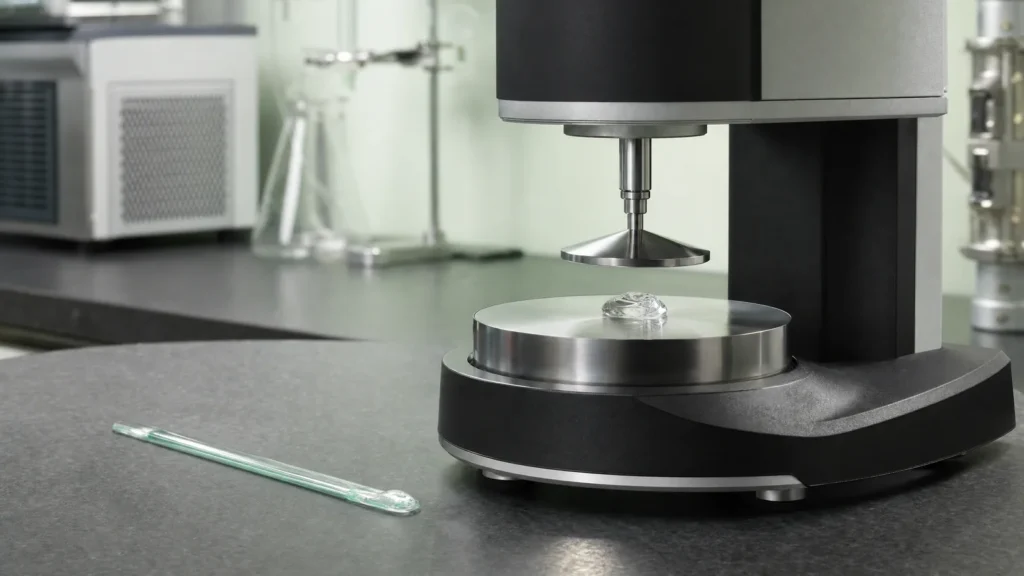
The measuring head of a cone-and-plate rheometer with a bead of clear viscous gel on its polished plate on a laboratory bench

AOD-9604 in Experimental Cartilage Research

Preclinical research on AOD-9604 in cartilage has been limited, including work using an experimental cartilage-defect model. This review examines the various measures that researchers took, what the experiments actually found, and the areas in which the evidence is still limited.

Read More
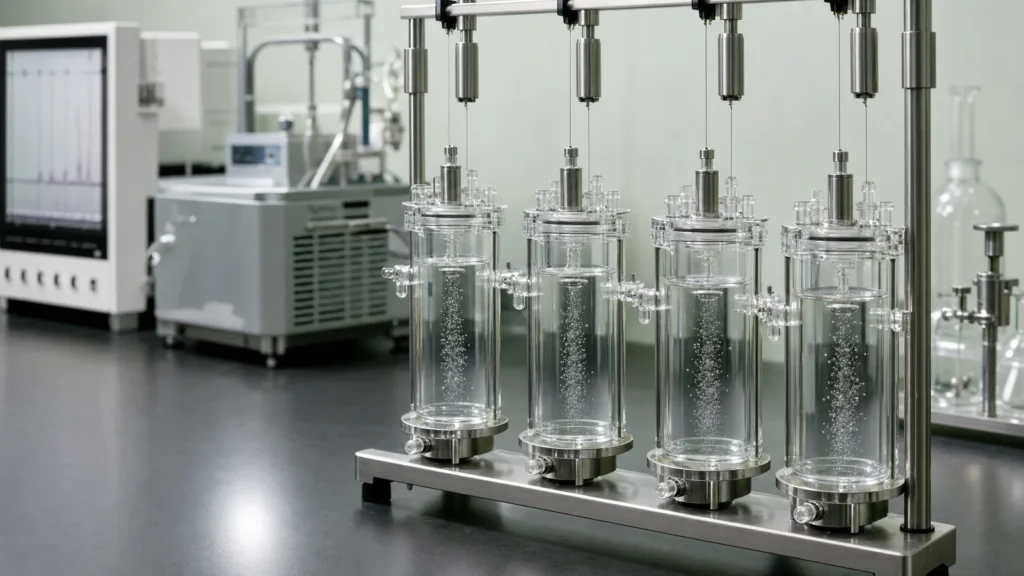
A row of tall water-jacketed glass organ bath chambers with bubbling buffer and force transducers above on a laboratory bench

VIP and Gastrointestinal Motility: Mechanisms in Experimental Research

The review looks at the way in which researchers have studied VIP-associated signalling in gastrointestinal motility, with a particular focus on enteric motor circuits, the responses of smooth muscle, interactions between neurotransmitters, and the experimental models employed to identify these mechanisms.

Read More