

PROMO!
First order? Get 10% OFF with this code: 1storder


Written by
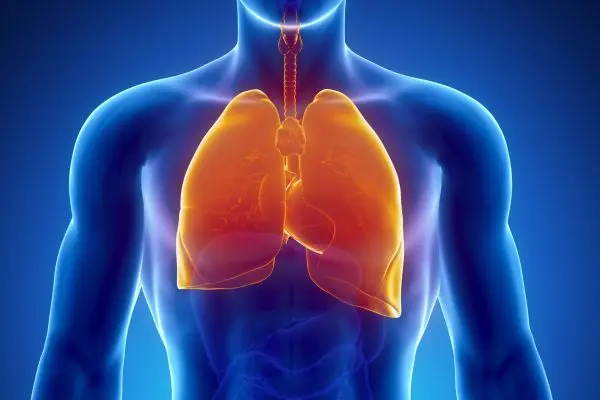
Bronchogen is a short peptide with the sequence Ala-Glu-Asp-Leu (AEDL) studied for its effects on lung tissue structure and airway function. Research in chronic obstructive pulmonary disease models shows that Bronchogen influences the balance of epithelial cells lining the airways. In these models, peptide treatment normalized cell composition, reduced excessive mucus-producing cells, and restored populations of ciliated cells that clear particles from the lungs. These changes correlate with improved airway barrier function.
Studies also report that Bronchogen reduces local neutrophilic inflammation and shifts pro-inflammatory cytokine profiles in lung fluid toward normal levels. These outcomes matter to COPD research because chronic inflammation and epithelial remodeling drive disease progression. The peptide’s small size and targeted activity make it a subject of interest for continuing lung-focused peptide research.
To appreciate why Bronchogen’s effects draw attention, it is important to understand one of the core challenges that defines COPD at the airway level.
Explore Bronchogen from Peptide Works, a short peptide that supports airway cell balance and epithelial health to aid lung tissue function in COPD research.
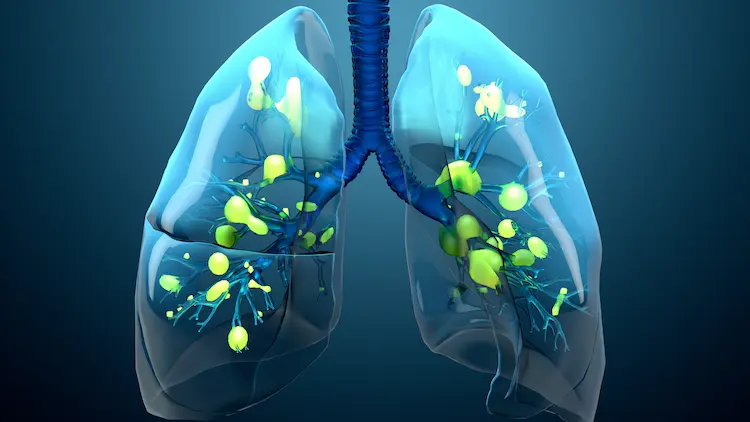
In COPD research, scientists find that mucus overproduction results from changes in airway secretion control. Chronic exposure to smoke and irritants triggers goblet cell hyperplasia, which increases the number of mucus-secreting cells along the airway surface. At the same time, submucosal glands enlarge and release higher levels of mucin proteins such as MUC5AC, making mucus thicker and more abundant. These changes cause mucus to accumulate in the airway lumen and restrict airflow.
Research models that incorporate Bronchogen investigate how lung-targeted peptides behave in airway environments characterized by persistent mucus accumulation. These conditions allow researchers to study peptide activity in COPD-like conditions, where excessive mucus plays a central role in airway dysfunction.
Mucus buildup does not remain a static problem. When retention continues over time, it begins to influence how COPD advances and worsens.
Persistent mucus retention in COPD creates airway conditions that promote disease progression. Studies show that thick, poorly cleared mucus supports bacterial colonization and sustained airway inflammation, contributing to repeated exacerbations and progressive structural damage. Impaired mucociliary clearance further increases airway obstruction and respiratory stress over time.
Chronic mucus accumulation is also associated with faster decline in lung function, including reductions in FEV₁ and increased hospitalization risk. These findings highlight mucus retention as an important factor influencing COPD severity and progression.
While Bronchogen research focuses on epithelial regulation and mucus-related pathways, COPD research also considers additional peptides to better understand broader respiratory and immune interactions in chronic airway disease.
COPD research discussions sometimes reference other peptides alongside Bronchogen when examining broader respiratory and immune-related pathways.
These peptides appear in COPD-related literature as part of wider research contexts and are often discussed independently of airway structure, mucus dynamics, or epithelial regulation.
Shop VIP Peptide from Peptide Works, a neuropeptide that helps regulate airway tone and immune signaling for improved respiratory function.
Vasoactive Intestinal Peptide (VIP) has been studied in COPD because of its involvement in airway smooth muscle activity and immune regulation. Research indicates that VIP binds to VPAC1 and VPAC2 receptors located on airway smooth muscle and various immune cells. Activation of these receptors is associated with relaxation of airway muscles and modulation of inflammatory signaling. These effects contribute to airway stability and are relevant to airflow limitation observed in COPD.
Studies also explore how changes in VIP signaling may influence airway responsiveness and inflammatory activity. Altered receptor expression and peptide signaling have been linked to airway constriction and persistent immune responses, both of which contribute to COPD severity.
Because immune imbalance plays a central role in disease progression, research continues to examine additional peptides involved in respiratory and immune regulation.
Thymosin Alpha-1 (Tα1) is studied in COPD for its effects on immune regulation and inflammatory responses associated with chronic airway disease. Clinical research shows that adding Thymosin Alpha-1 to standard treatment during acute COPD exacerbations increases CD4+ T lymphocyte levels, improves the CD4+/CD8+ ratio, and reduces CD8+ counts, indicating improved cellular immune balance.
These immune changes are also associated with improvements in pulmonary function, including FEV1 and FEV1/FVC, along with better arterial oxygen levels compared with routine therapy alone. These immune-related improvements are linked with reduced inflammatory markers and lower exacerbation frequency in study populations.
Together, these findings suggest that Thymosin Alpha-1 may support immune regulatory pathways involved in COPD, reflecting growing interest in peptide-based approaches for understanding respiratory disease at the molecular level.
Explore Thymosin Alpha-1 from Peptide Works, a peptide studied for its role in immune regulation and its involvement in pathways associated with inflammatory responses in chronic respiratory conditions.
Research involving Bronchogen highlights a growing focus on targeted peptide strategies in COPD studies. Early investigations suggest that lung-directed peptides may interact with specific cellular and signaling pathways associated with airway dysfunction, providing researchers with a more refined approach for examining complex respiratory disease mechanisms.
As COPD research advances, interest in peptides such as Bronchogen, VIP, and Thymosin Alpha-1 continues to grow. Ongoing studies aim to better understand how molecular-level regulation may influence airway structure, immune responses, and disease progression. This expanding area of research reflects increasing attention toward peptide-based approaches for studying chronic respiratory conditions.
All products discussed are supplied for research purposes only and are not intended for human use.
(1) Titova ON, Kuzubova NA, Lebedeva ES, Preobrazhenskaya TN, et al. [ANTIINFLAMMATORY AND REGENERATIVE EFFECT OF PEPTIDE THERAPY IN THE MODEL OF OBSTRUCTIVE LUNG PATHOLOGY]. Ross Fiziol Zh Im I M Sechenova. 2017 Feb;103(2):201-8.
(2) Wu D, Lee D, Sung YK. Prospect of vasoactive intestinal peptide therapy for COPD/PAH and asthma: a review. Respir Res. 2011 Apr 11;12(1):45.
(3) Jia Z, Feng Z, Tian R, Wang Q, Wang L. Thymosin α1 plus routine treatment inhibit inflammatory reaction and improve the quality of life in AECOPD patients. Immunopharmacol Immunotoxicol. 2015;37(4):388-92.
ALL CONTENT AND PRODUCT INFORMATION AVAILABLE ON THIS WEBSITE IS FOR EDUCATIONAL PURPOSES ONLY.
DISCLAIMER: These products are intended solely as a research chemical only. This classification allows for their use only for research development and laboratory studies. The information available on our Peptide Works website: https://peptide-works.com/ is provided for educational purposes only. These products are not for human or animal use or consumption in any manner. Handling of these products should be limited to suitably qualified professionals. They are not to be classified as a drug, food, cosmetic, or medicinal product and must not be mislabelled or used as such.
Peptide Works
Related Articles
How can ARA-290 Peptide Help Diabetic Patients?
Diabetes affects millions of people around the world and leads to serious health problems. Research shows that the ARA-290 peptide

Can AICAR Peptide Improve Endurance?
AICAR peptide has shown promising results for improving endurance capacity in studies. Research shows that AICAR activates AMPK, increasing glucose

Enhancing Energy with NAD+ Supplements
Energy is the driving force behind focus, movement, and recovery. When cells have less energy to work with, the body