

PROMO!
First order? Get 10% OFF with this code: 1storder


Written by

visceral belly fat remains one of the hardest fat types to influence because it forms deep inside the abdomen and surrounds vital organs. Research links this fat to metabolic slowdown, insulin resistance, and poor body composition markers. This explains why current fat metabolism studies focus heavily on compounds that affect energy pathways at a cellular level.
5-Amino-1MQ stands out in research for its action on NNMT, an enzyme connected to how the body manages energy and stores fat. Laboratory data shows that reducing NNMT activity may support higher metabolic efficiency and lower fat accumulation. These findings push 5-Amino-1MQ into the spotlight for researchers studying visceral belly fat and targeted metabolic pathways.
To understand why researchers focus so strongly on this peptide, it helps to start with how NNMT affects energy use inside fat cells.
Explore 5-Amino-1MQ from Peptide Works, a research peptide studied for its role in NNMT inhibition and metabolic pathways linked to visceral belly fat regulation.
5-Amino-1MQ blocks the activity of nicotinamide N-methyltransferase (NNMT), a key enzyme that affects energy use in fat cells and other tissues. In research models, when NNMT activity drops, cells preserve more nicotinamide adenine dinucleotide (NAD+), a molecule that supports many energy-related processes including fuel oxidation.
Higher NAD+ levels help tissues use energy more efficiently instead of storing it as fat. Laboratory data show 5-Amino-1MQ lowers NNMT activity and increases NAD+ in adipocyte cells, shifting metabolic balance toward greater energy use and reduced lipogenesis.
Preclinical studies also report lower body weight and reduced adipose mass in diet-induced obesity models without changes in food intake, suggesting the metabolic impact comes from improved cellular efficiency rather than appetite suppression.

NAD+ signaling controls how fat cells use energy, including cells that store visceral belly fat. Higher NAD+ levels activate metabolic enzymes such as sirtuins, which support fatty acid oxidation and limit fat storage. Research models show that obesity lowers NAD+ inside fat tissue. This decline slows metabolic activity and increases deep abdominal fat buildup.
As NAD+ availability improves inside fat cells, mitochondrial function and fuel oxidation also improve. These shifts support greater energy use and reduced lipid accumulation. Preclinical findings show reduced adipose mass without changes in food intake, reinforcing the link between improved cellular energy signaling and visceral belly fat regulation.
Metabolism explains a lot, but fat also behaves differently depending on where it sits in the body.
Yes. Research shows visceral fat reacts faster than subcutaneous fat because it behaves differently inside the body. Deep abdominal fat has higher blood flow and faster fat turnover, which makes visceral belly fat respond sooner to metabolic changes.
Subcutaneous fat stores energy more slowly and releases fatty acids less often. Studies also show visceral fat sits closer to the liver and portal circulation, which increases its response to metabolic signals. Because of these structural differences, research often reports larger changes in visceral belly fat than in surface fat when metabolic balance shifts, similar to patterns seen with compounds like Tesamorelin.
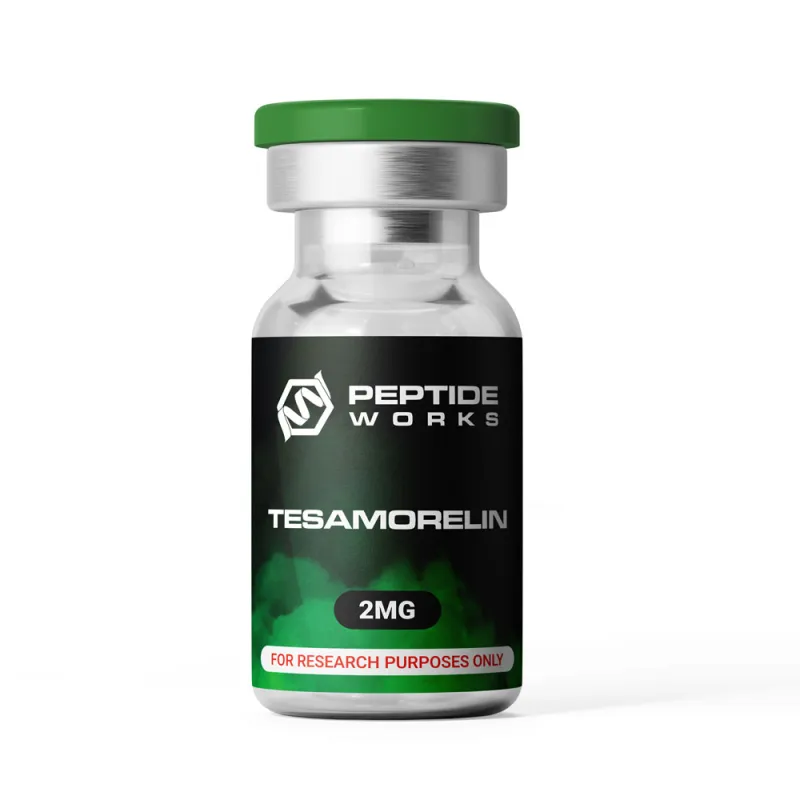
Tesamorelin works by stimulating natural growth hormone release, which plays a direct role in fat breakdown, especially in deep abdominal areas. Growth hormone supports lipolysis, the process that helps fat cells release stored fatty acids for energy.
Visceral belly fat responds more strongly to this signal than surface fat, which explains why studies often show greater reductions in deep abdominal fat compared to subcutaneous fat. Clinical data also link Tesamorelin to lower visceral adipose tissue and reduced liver fat, with little change in surface fat.
This selective response happens because growth hormone signaling favors visceral depots, making Tesamorelin especially relevant in studies focused on abdominal fat distribution and metabolic improvement.
Along with understanding how Tesamorelin works, many readers also want to know when visible changes usually appear.
Explore Tesamorelin from Peptide Works, a growth hormone–releasing peptide researched for its selective impact on visceral adipose tissue and fat distribution.
Research shows visceral belly fat changes do not happen overnight. Most studies report early shifts within the first 12 to 16 weeks of consistent Tesamorelin use, with clearer reductions appearing by 24 to 26 weeks. Imaging results often show steady decreases in visceral fat over this period, while surface fat changes remain limited.
Several trials also note that visceral fat continues to decline with ongoing treatment, but the most reliable results appear around the six-month mark. This timeline suggests Tesamorelin works gradually by changing fat distribution over time, not through rapid weight loss. Researchers measure progress using scans rather than scale weight, since visceral fat reduction usually comes before visible body changes.
After reviewing both peptides on their own, placing them side by side helps clarify how each supports visceral belly fat research.
Both 5-Amino-1MQ and Tesamorelin appear in research focused on visceral belly fat, but studies describe different strengths. Research on 5-Amino-1MQ centers on metabolic regulation inside fat tissue. Findings suggest it supports internal energy balance that may help limit deep fat buildup over time.
Tesamorelin research shows more direct reductions in visceral adipose tissue measured through imaging. Clinical studies report selective decreases in deep abdominal fat, while surface fat often remains stable. The comparison below highlights the key differences seen in research.
| Feature | 5-Amino-1MQ | Tesamorelin |
|---|---|---|
| Primary Research Focus | Metabolic regulation inside fat tissue | Growth hormone signaling and fat distribution |
| Visceral Belly Fat Findings | Linked to metabolic shifts tied to deep fat regulation | Clinical trials show measurable visceral fat reduction |
| Subcutaneous Fat Impact | Limited change reported | Little to no significant change reported |
As peptide research continues to progress, attention increasingly turns toward more precise and measurable approaches.
Research on visceral belly fat continues to shift toward targeted fat regulation instead of general weight loss. Studies on 5-Amino-1MQ highlight metabolic balance inside fat tissue, while Tesamorelin research shows measurable reductions in deep abdominal fat through growth hormone signaling.
These findings point toward a future where peptide research focuses on fat distribution, cellular energy use, and imaging-based outcomes rather than scale weight alone. Moving forward, studies will likely examine longer timelines, combined research strategies, and deeper links between visceral fat, liver fat, and metabolic markers.
The goal remains to improve understanding of how peptides influence visceral belly fat and develop research tools that support precise, pathway-based fat regulation with consistent, measurable results.
All products discussed are supplied for research purposes only and are not intended for human use.
(1) House BT, Cook LT, Gyllenhammer LE, Schraw JM, Goran MI, Spruijt-Metz D, Weigensberg MJ, Davis JN. Meal skipping linked to increased visceral adipose tissue and triglycerides in overweight minority youth. Obesity (Silver Spring). 2014 May;22(5):E77-84.
(2) Neelakantan H, Vance V, Wetzel MD, Wang HL, McHardy SF, Finnerty CC, Hommel JD, Watowich SJ. Selective and membrane-permeable small molecule inhibitors of nicotinamide N-methyltransferase reverse high fat diet-induced obesity in mice. Biochem Pharmacol. 2018 Jan;147:141-152.
(3) Liu JR, Deng ZH, Zhu XJ, Zeng YR, Guan XX, Li JH. Roles of Nicotinamide N-Methyltransferase in Obesity and Type 2 Diabetes. Biomed Res Int. 2021 Jul 27;2021:9924314.
(4) Stanley TL, Feldpausch MN, Oh J, Branch KL, Lee H, Torriani M, Grinspoon SK. Effect of tesamorelin on visceral fat and liver fat in HIV-infected patients with abdominal fat accumulation: a randomized clinical trial. JAMA. 2014 Jul 23-30;312(4):380-9.
ALL CONTENT AND PRODUCT INFORMATION AVAILABLE ON THIS WEBSITE IS FOR EDUCATIONAL PURPOSES ONLY.
DISCLAIMER: These products are intended solely as a research chemical only. This classification allows for their use only for research development and laboratory studies. The information available on our Peptide Works website: https://peptide-works.com/ is provided for educational purposes only. These products are not for human or animal use or consumption in any manner. Handling of these products should be limited to suitably qualified professionals. They are not to be classified as a drug, food, cosmetic, or medicinal product and must not be mislabelled or used as such.



Peptide Works
Related Articles

What is the Difference Between Protirelin and Thyrogen?
When comparing Protirelin and Thyrogen, researchers focus on how each peptide influences thyroid signaling pathways. Both are used in thyroid-related

How Does Vitamin B12 for Brain Function Complement BDNF Peptides, Selank and Semax?
Brain function relies on a constant balance of nutrients and signaling molecules. Among these, Vitamin B12 for brain function its

L-Glutathione for Brain Health: Antioxidant Protection and Cognitive Support
L-Glutathione supports brain health by protecting neural cells from oxidative stress and helping maintain cognitive function. The brain consumes large