

PROMO!
First order? Get 10% OFF with this code: 1storder


Written by

The cartalax peptide stands out in cartilage health research due to its defined tripeptide structure and its use as a regulatory peptide in connective tissue studies. Cartilage integrity depends on precise cellular control of collagen and the extracellular matrix. Cartalax is used in laboratory models to study these control processes at a narrow, tissue-specific level.
Most cartilage-related compounds act broadly or indirectly. Cartalax differs by serving as a small, sequence-specific peptide that allows focused investigation of cartilage-associated cellular activity. This specificity explains its continued use in cartilage focused peptide research models aimed at understanding tissue stability and structural maintenance.
This cellular level focus connects directly to the structural framework that gives cartilage its strength, flexibility, and resistance to mechanical stress.
Explore Cartalax Peptide from Peptide Works, a cartilage specific regulatory peptide studied for its role in cellular signaling, matrix balance, and cartilage tissue research.

Cartilage cells produce key structural proteins such as type II collagen and proteoglycans, which form the bulk of the extracellular matrix. This matrix provides cartilage with strength, flexibility and load-bearing capacity by creating a dense structural network around cartilage cells. Proper matrix formation depends on regulated cellular pathways that control how these proteins are synthesized, organized, and maintained.
In laboratory research, cartalax peptide is used as a short regulatory peptide to examine how small, sequence-specific peptides interact with cartilage cell pathways involved in matrix protein organization. Researchers apply cartalax in controlled cell and preclinical models to study cellular activity associated with extracellular matrix maintenance, structural balance, and tissue organization during experimental observation.
While matrix proteins define cartilage structure, the signals that control their production originate at a deeper biological level.
Gene activity in cartilage cells determines how these cells control the production of structural and regulatory proteins that maintain the extracellular matrix. Chondrocytes activate and suppress specific genes that encode type II collagen, proteoglycans, and other matrix components. This gene regulation controls synthesis rates and helps cells adjust to mechanical load and biochemical signals in experimental models.
Cartalax peptide serves as a research tool for examining gene activity linked to matrix balance and cellular signaling in controlled models. Researchers apply cartalax to study how short peptides influence gene expression pathways that affect cartilage cell behavior and matrix stability. These observations occur in preclinical research, where cartalax interacts with cellular mechanisms that regulate gene expression and other processes associated with cartilage structure.
Cartilage-focused research often expands beyond a single peptide to better understand how multiple pathways interact.
Researchers also explore other peptides when studying cartilage-related cellular activity and tissue behavior in controlled research models.
These peptides appear in cartilage and connective tissue research discussions that examine different cellular pathways linked to cartilage structure and stability.
Among these peptides, AOD-9604 is most often discussed in regeneration-focused research models.
Checkout AOD-9604 from Peptide Works, a synthetic peptide examined in preclinical models for cartilage regeneration and structural repair pathways.
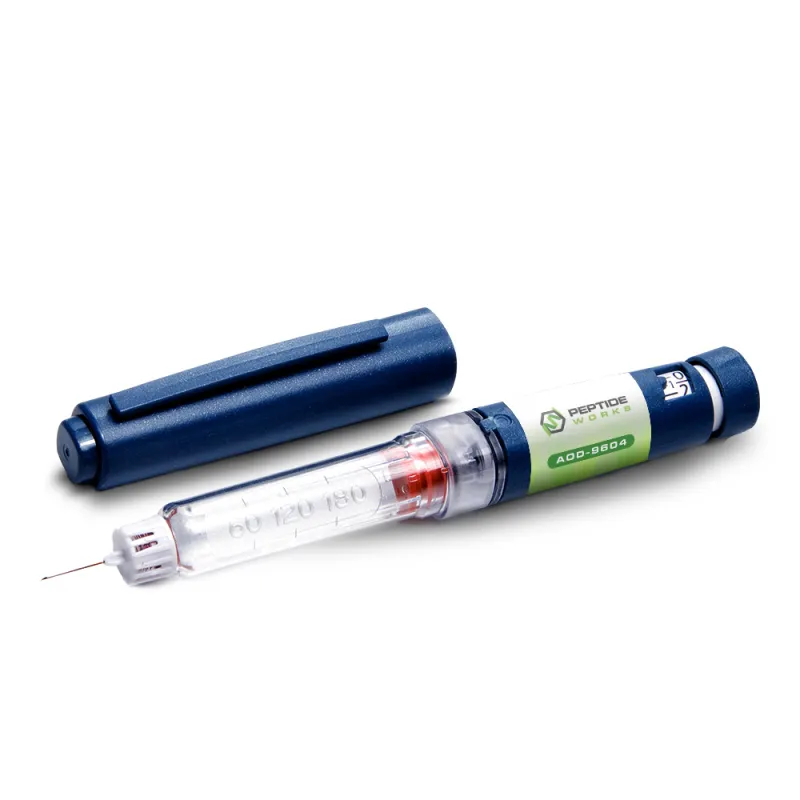
Preclinical research shows that AOD-9604 supports cartilage regeneration in controlled animal models of joint damage. In a rabbit osteoarthritis model, intra-articular administration of AOD-9604 improved cartilage structure and repair markers compared with untreated controls. Researchers measured these effects by histologically evaluating cartilage tissue during the study period.
Researchers also observed stronger cartilage regeneration when AOD-9604 was used alongside hyaluronic acid in the same experimental model. These findings position AOD-9604 as a peptide of interest in cartilage regeneration research, where scientists study its influence on cartilage structure and tissue repair processes under controlled laboratory conditions.
While AOD-9604 centers on regeneration, BPC-157 enters cartilage research through a broader repair-focused pathway.

Pre clinical studies show that BPC-157 promotes healing and tissue repair in musculoskeletal injury models that include cartilage-related damage. In animal experiments involving intra-articular injection, BPC-157 improved structural outcomes in joint tissues and showed potential to repair cartilage tears and build cartilage tissue in those controlled settings.
Research also shows that BPC-157 supports tissue repair by promoting new blood vessel growth, modulating inflammatory responses, and enhancing cell migration into injured areas during experimental healing processes. These mechanisms help researchers observe effects on cartilage and surrounding connective tissues in laboratory and animal models.
Because these peptides act through distinct biological mechanisms, direct comparison helps clarify their research roles.
Discover BPC-157 from Peptide Works, a research peptide widely studied for tissue repair, angiogenesis, and joint-related recovery mechanisms.
There is no single peptide that fits every cartilage research goal. Researchers choose peptides based on the specific cartilage process they want to study, such as cellular regulation, structural regeneration or tissue repair. The table below compares peptides commonly discussed in cartilage-focused research models.
| Peptide | Primary Research Focus | Cartilage-Related Research Use |
|---|---|---|
| Cartalax Peptide | Cartilage-specific cellular regulation | Studied for gene activity, cellular signaling, and matrix stability within cartilage tissue models |
| AOD-9604 | Structural repair and regeneration | Used in preclinical models examining cartilage regeneration and improvements in cartilage structure |
| BPC-157 | Tissue repair and recovery pathways | Examined for joint tissue repair, angiogenesis, and support of cartilage and surrounding connective tissue |
Researchers do not rank these peptides as better or worse overall. Instead, they select each peptide based on whether the research targets matrix stability, regeneration, or tissue repair mechanisms related to cartilage health.
Cartalax peptide continues to stand out in cartilage research due to its focused role in cellular regulation and cartilage specific study models. Researchers value its targeted nature when exploring gene activity, matrix balance, and tissue stability in controlled environments. This focus keeps Cartalax peptide relevant as cartilage research shifts toward precision and mechanism based approaches.
Alongside Cartalax, peptides such as AOD-9604 and BPC-157 expand the research landscape by addressing regeneration and tissue repair pathways. Together, these peptides support continued progress in cartilage focused peptide research and reinforce the importance of targeted, pathway driven investigation.
All products discussed are supplied for research purposes only and are not intended for human use.
[1] Liu Q, Jia Z, Duan L, Xiong J, Wang D, Ding Y. Functional peptides for cartilage repair and regeneration. Am J Transl Res. 2018 Feb 15;10(2):501-510.
[2] Ellman MB, Yan D, Ahmadinia K, Chen D, An HS, Im HJ. Fibroblast growth factor control of cartilage homeostasis. J Cell Biochem. 2013 Apr;114(4):735-42.
[3] Kwon DR, Park GY. Effect of Intra-articular Injection of AOD9604 with or without Hyaluronic Acid in Rabbit Osteoarthritis Model. Ann Clin Lab Sci. 2015 Summer;45(4):426-32.
[4] Vasireddi N, Hahamyan H, Salata MJ, Karns M, Calcei JG, Voos JE, Apostolakos JM. Emerging Use of BPC-157 in Orthopaedic Sports Medicine: A Systematic Review. HSS J. 2025 Jul 31:15563316251355551.
ALL CONTENT AND PRODUCT INFORMATION AVAILABLE ON THIS WEBSITE IS FOR EDUCATIONAL PURPOSES ONLY.
DISCLAIMER: These products are intended solely as a research chemical only. This classification allows for their use only for research development and laboratory studies. The information available on our Peptide Works website: https://peptide-works.com/ is provided for educational purposes only. These products are not for human or animal use or consumption in any manner. Handling of these products should be limited to suitably qualified professionals. They are not to be classified as a drug, food, cosmetic, or medicinal product and must not be mislabelled or used as such.
Peptide Works
Related Articles

What are the Best Cognitive Peptides?
Cognitive peptides are short chains of amino acids that researchers are exploring for their potential effects on brain function. They

Achieving increased skin pigmentation without prolonged sun exposure has been demonstrated with Melanotan peptides in research. Two commonly studied options,

Can PTD-DBM Hair Growth Peptide Stop Balding?
Hair thinning and balding affect millions worldwide, often leading to frustration and limited options. This challenge has driven researchers to