
PROMO!
First order? Get 10% OFF with this code: 1storder


Written by

Perimenopause can bring more than just physical changes it often affects how women feel about intimacy, confidence, and connection. Many women in this stage notice a decline in sexual desire, which can lead to stress, relationship strain, and reduced quality of life.
Recent research into PT-141 for Women highlights a new approach to this challenge. PT-141, sometimes referred to as Bremelanotide, is a peptide under study for its potential role in improving sexual desire.
PT-141 acts directly on brain circuits linked to motivation and pleasure rather than working only through hormone levels. Early findings suggest it may help women in perimenopause regain a sense of sexual well-being. In this article, we explore PT-141 for women, its role in health and related peptides such as oxytocin and kisspeptin.
Explore PT-141 from Peptide Works, a melanocortin peptide studied for its role in stimulating brain pathways linked to sexual desire and motivation.

Perimenopause is a transition phase where hormone levels change in uneven ways. Research shows that falling estrogen levels can affect brain function, mood, energy, and sexual response. Changes in testosterone may also affect sexual desire, although its role can vary between women.
Research also shows clear physical effects. Lower estrogen is linked to vaginal dryness, thinner tissue, and pain during sex. These changes can make intimacy less comfortable and less enjoyable. Other symptoms, such as poor sleep, hot flashes, and night sweats, can lead to fatigue. This can further reduce interest in sex.
Because these hormonal, physical, and emotional changes happen at the same time, many women notice a drop in sexual desire. This has led to growing interest in whether PT-141 for women could help support sexual function differently.
PT-141 for women, also called bremelanotide, works by acting on melanocortin receptors in the brain rather than changing estrogen or testosterone levels. This helps affect brain pathways linked to sexual desire and arousal, but the exact process is not fully understood.
Research in women with hypoactive sexual desire disorder (HSDD) has shown improvements in desire scores when PT-141 was compared with a placebo, supporting its role in sexual health studies.
Unlike hormone-based treatments, PT-141 works on the central nervous system and is used on demand before sexual activity in clinical settings. Studies report side effects such as nausea, flushing, and headache.
Because sexual desire is influenced by more than arousal alone, researchers have also explored oxytocin and its role in emotional connection and intimacy.
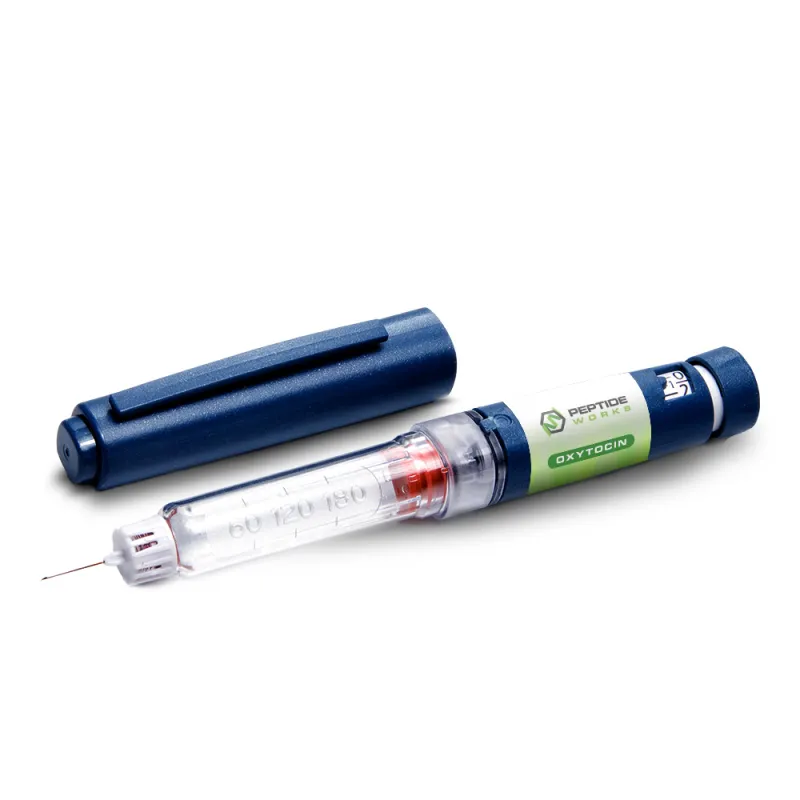
Oxytocin is a neuropeptide best known for its role in bonding and emotional connection. Research shows that levels of oxytocin rise during sexual activity, where it supports arousal, trust and intimacy between partners. In women, oxytocin also interacts with dopamine systems in the brain, which are closely linked to sexual motivation and desire.
During perimenopause, shifts in estrogen and other hormones may reduce oxytocin activity, which researchers believe can contribute to lower libido and less sexual satisfaction. While oxytocin highlights the role of bonding, another peptide, kisspeptin, has drawn attention for its influence on reproductive signaling and attraction.
Discover Oxytocin from Peptide Works, a neuropeptide researched for its effects on bonding, intimacy, and emotional connection in women’s health.
Kisspeptin is a peptide that regulates reproductive hormones through stimulation of gonadotropin-releasing hormone (GnRH). Research also shows it influences brain regions linked with sexual motivation, mood and attraction.
Clinical studies in women with low desire have reported that kisspeptin administration increases activity in brain areas tied to arousal and emotional processing, suggesting it plays a role in sexual response beyond reproduction.
For women in perimenopause, shifting hormone levels often disturb both reproductive signaling and brain pathways related to desire. With kisspeptin highlighting another layer of complexity, researchers are also focusing on safety considerations around PT-141 for Women in research.
Shop Kisspeptin from Peptide Works, a reproductive peptide under study for its influence on hormone release, attraction and sexual brain responses.

Research on PT-141 for Women shows a pattern of short-term side effects. Nausea and flushing are the most common reactions, often appearing soon after dosing. Some participants in trials have also experienced brief increases in blood pressure.
While these effects usually pass, long-term safety has not been established. Because women in perimenopause often face cardiovascular changes and hormone shifts, researchers track these responses closely. To place PT-141 in context, studies often compare it with peptides like oxytocin and kisspeptin.
Researchers are studying PT-141 for Women, oxytocin, and kisspeptin side by side to see how each addresses low libido during perimenopause. Instead of focusing on one cause, this approach highlights that sexual desire can be influenced by hormone regulation, brain signaling, and emotional bonding. By comparing peptides, scientists can identify which pathways may be most relevant for women in midlife.
| Peptide | Main Action | Pathway Focus | Research Angle |
|---|---|---|---|
| PT-141 | Stimulates arousal | Melanocortin + dopamine | Motivation and desire |
| Oxytocin | Supports bonding | Social/emotional circuits | Intimacy and trust |
| Kisspeptin | Regulates hormones | GnRH + sexual brain areas | Hormone signaling + attraction |
With these pathways compared, attention now turns to where this research is heading and what it could mean for the future.
The study of PT-141 for Women in perimenopause is still in its early stages, but it reflects a broader shift in how science views this transition. Instead of focusing only on replacing hormones, researchers are now examining brain pathways that shape sexual desire, motivation and well-being. This approach may help explain how perimenopause affects intimacy and quality of life, guiding new directions in sexual health research.
More studies are needed to confirm safety and define PT-141’s role within peptide science. Alongside it, oxytocin and kisspeptin are also being investigated for their unique effects on bonding, attraction, and hormone regulation.
At Peptide Works, we supply research-grade peptides to laboratories and researchers worldwide and support them with reliable, high-quality materials that advance studies in women’s health.
All products discussed are supplied for research purposes only and are not intended for human use.
(1) Edinoff AN, Sanders NM, Lewis KB, Apgar TL, et al. Bremelanotide for Treatment of Female Hypoactive Sexual Desire. Neurol Int. 2022 Jan 4;14(1):75-88.
(2) Clayton AH, Althof SE, Kingsberg S, DeRogatis LR, et al. Bremelanotide for female sexual dysfunctions in premenopausal women: a randomized, placebo-controlled dose-finding trial. Womens Health (Lond). 2016 Jun;12(3):325-37.
(3) Blaicher W, Gruber D, Bieglmayer C, Blaicher AM, et al. The role of oxytocin in relation to female sexual arousal. Gynecol Obstet Invest. 1999;47(2):125-6.
(4) Thurston L, Hunjan T, Ertl N, Wall MB, et al. Effects of Kisspeptin Administration in Women With Hypoactive Sexual Desire Disorder: A Randomized Clinical Trial. JAMA Netw Open. 2022 Oct 3;5(10):e2236131.
(5) Mills EG, Ertl N, Wall MB, Thurston L, et al. Effects of Kisspeptin on Sexual Brain Processing and Penile Tumescence in Men With Hypoactive Sexual Desire Disorder: A Randomized Clinical Trial. JAMA Netw Open. 2023 Feb 1;6(2):e2254313.
ALL CONTENT AND PRODUCT INFORMATION AVAILABLE ON THIS WEBSITE IS FOR EDUCATIONAL PURPOSES ONLY.
DISCLAIMER: These products are intended solely as a research chemical only. This classification allows for their use only for research development and laboratory studies. The information available on our Peptide Works website: https://peptide-works.com/ is provided for educational purposes only. These products are not for human or animal use or consumption in any manner. Handling of these products should be limited to suitably qualified professionals. They are not to be classified as a drug, food, cosmetic, or medicinal product and must not be mislabelled or used as such.
Peptide Works
Related Articles
How can ARA-290 Peptide Help Diabetic Patients?
Diabetes affects millions of people around the world and leads to serious health problems. Research shows that the ARA-290 peptide

Can AICAR Peptide Improve Endurance?
AICAR peptide has shown promising results for improving endurance capacity in studies. Research shows that AICAR activates AMPK, increasing glucose

Enhancing Energy with NAD+ Supplements
Energy is the driving force behind focus, movement, and recovery. When cells have less energy to work with, the body