

PROMO!
First order? Get 10% OFF with this code: 1storder


Written by

Low energy, poor focus, and mental fatigue affect many people. As interest in cellular health grows, researchers are exploring new compounds that may support the body’s natural energy pathways. One compound attracting attention is 5-Amino-1MQ, a small molecule researchers are investigating for its involvement in cellular metabolism and energy regulation.
This article explains what current research says about 5-Amino-1MQ, how it may support cellular energy, and why scientists are also studying compounds like Selank and Semax for cognitive performance.
Explore 5-Amino-1MQ Peptide from Peptide Works, a metabolic research peptide that supports cellular energy pathways tied to NAD+ production and mental focus.

5-Amino-1MQ works by inhibiting nicotinamide N-methyltransferase (NNMT), an enzyme that converts nicotinamide into 1-methylnicotinamide (1-MNA). When NNMT is blocked, more nicotinamide remains available for the NAD⁺ salvage pathway.
This increases intracellular NAD⁺ levels in preclinical models. NAD⁺ is a coenzyme that promotes cellular metabolism and mitochondrial function. Based on the observations, researchers are studying how NNMT inhibition influences cellular energy pathways.
Higher NAD⁺ availability supports metabolic reactions that produce ATP. The cell’s main energy source. Studies have also shown that 5-Amino-1MQ influences pathways involved in energy expenditure and fat metabolism.
These cellular effects have made 5-Amino-1MQ an important research compound for studying metabolism, mitochondrial function, and NAD⁺ biology.
Inside each cell, mitochondria make most of the ATP that powers the cell. NAD+ is an essential coenzyme in this process. When cells break down glucose or fat, NAD+ accepts electrons and becomes NADH.
NADH then delivers these electrons to the electron transport chain inside the mitochondria. As the electrons move through the chain, protein complexes pump protons across the inner mitochondrial membrane. The proton gradient drives ATP synthase to produce ATP.
Without enough NAD+ cells produce less NADH. This can reduce the flow of electrons through the electron transport chain and lower ATP production. Research also shows that NAD+ helps maintain normal mitochondrial function and cellular energy metabolism.
Laboratory studies suggest that restoring NAD+ levels can support ATP production in some experimental models, particularly when NAD+ levels are reduced.

Yes. Studies suggest Selank peptide may help improve attention and focus. It influences neurotransmitters such as GABA, serotonin and dopamine. These brain chemicals help regulate attention, mood, and cognitive function. They also help nerve cells communicate with each other. In animal studies, Selank improved attention and memory after stress disrupted normal neurotransmitter activity.
While 5-Amino-1MQ Peptide is being studied for its effects on cellular metabolism, Selank works at the signaling level by modulating neurotransmitter systems involved in attention and cognition. Together, these findings highlight different areas of research.
5-Amino-1MQ is focused on cellular metabolism and Selank is focused on the brain signaling pathways that support mental focus. Beyond attention control learning and mental drive also influence sustained focus.
Explore Selank Peptide from Peptide Works, a neuroactive peptide studied for its role in supporting attention, calm focus, and balanced brain signaling.
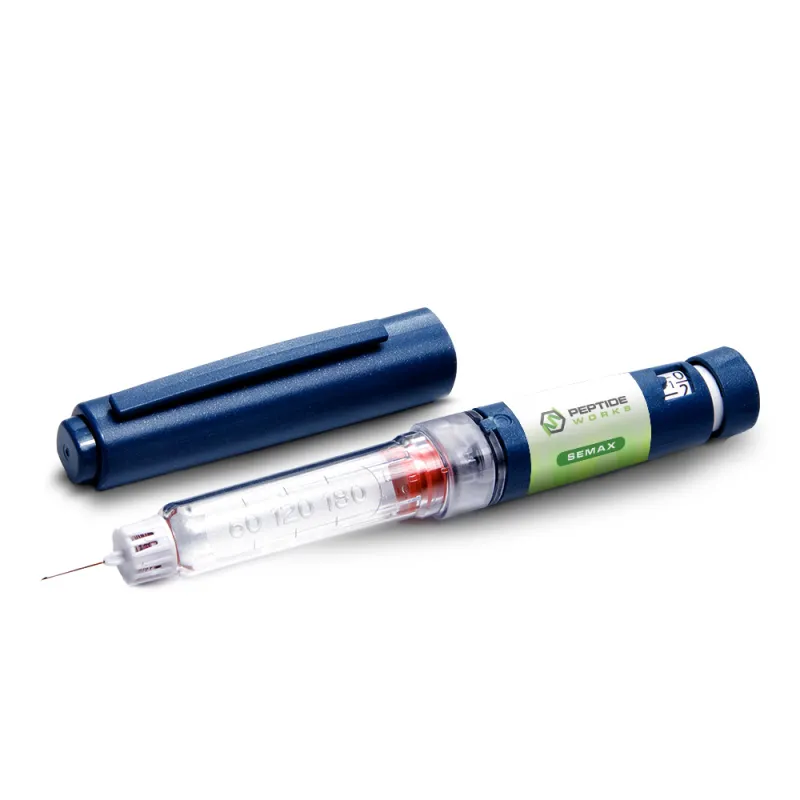
Yes. Studies show that Semax increases brain-derived neurotrophic factor (BDNF), a protein that supports neuron growth, communication and adaptation. Research also shows that Semax influences dopamine and serotonin signaling, which play important roles in attention, motivation, and learning. In animal studies, these effects improved focus and memory, especially during stress.
Semax works differently from 5-Amino-1MQ. Semax mainly supports brain signaling and neuroplasticity. In contrast 5-Amino-1MQ is studied for its effects on cellular energy metabolism. Together, these compounds are being researched for different aspects of cognitive performance.
With these mechanisms in mind, it becomes easier to see how each peptide contributes in a distinct way.
Explore Semax Peptide from Peptide Works, a cognitive research peptide known for supporting learning pathways, mental drive, and neurotrophic activity.
5-Amino-1MQ is different because it does not primarily target brain signaling. It is a small-molecule inhibitor of nicotinamide N-methyltransferase (NNMT). Preclinical studies show that blocking NNMT preserves more nicotinamide for the NAD+ salvage pathway. This increases intracellular NAD+ and supports cellular energy metabolism. Research has also shown higher NAD+ levels after 5-Amino-1MQ treatment in cell models.
Most cognitive peptides, including Semax and Selank, are studied for how they affect neurotransmitter signaling and neuronal function. 5-Amino-1MQ works in a different way. It targets cellular metabolism. It helps support NAD+ homeostasis, mitochondrial function and ATP production. Instead of acting directly on brain signaling pathways, it works by supporting the cellular processes that produce energy.
Each compound supports energy and focus in a different way. 5-Amino-1MQ supports cellular metabolism by helping maintain NAD+ levels and ATP production. Selank is studied for its effects on neurotransmitter signaling, which may support attention and calmness. Semax is studied for its effects on BDNF, neuronal signaling and learning. Each works through a different biological pathway, so they target different parts of cognitive function.
| Compound | Type | Primary Mechanism Studied | Main Research Focus |
|---|---|---|---|
| 5-Amino-1MQ | Small-molecule NNMT inhibitor (not a peptide) | Inhibits NNMT, increasing intracellular nicotinamide availability and influencing NAD⁺-linked metabolic pathways | Cellular metabolism, NAD⁺ biology, mitochondrial energy production, obesity and metabolic models (preclinical) |
| Selank | Synthetic regulatory peptide | Modulates neurotransmitter systems (GABA, dopamine, serotonin) and alters gene expression related to neural signaling | Anxiety regulation, attention control, stress response, cognitive stability in animal models; limited human imaging data |
| Semax | Synthetic ACTH-derived peptide | Influences BDNF-related pathways and monoamine signaling; alters gene expression tied to neuroprotection and vascular response | Learning, motivation, neuroplasticity, and recovery in brain injury or stress models (primarily animal studies) |
Understanding these distinctions provides helpful context when looking toward ongoing research and future developments.
Interest in 5-Amino-1MQ continues to grow as researchers learn more about the role of NNMT in cellular metabolism. Ongoing studies are exploring how this compound influences metabolic health and how those effects may relate to energy use and brain function.
As research grows, scientists may better understand how 5-Amino-1MQ supports energy metabolism and brain function. Future studies will help clarify its role in energy and cognitive research.
All products discussed are supplied for research purposes only and are not intended for human use.
(1) Neelakantan H, Vance V, Wetzel MD, Wang HL, McHardy SF, Finnerty CC, Hommel JD, Watowich SJ. Selective and membrane-permeable small molecule inhibitors of nicotinamide N-methyltransferase reverse high fat diet-induced obesity in mice. Biochem Pharmacol. 2018 Jan;147:141-152.
(2) Apostolatos AH, Apostolatos CA, Ratnayake WS, Neuger A, Sansil S, Bourgeois M, Acevedo-Duncan M. Preclinical testing of 5-amino-1-((1R,2S,3S,4R)-2,3-dihydroxy-4-methylcyclopentyl)-1H-imidazole-4-carboxamide: a potent protein kinase C-ι inhibitor as a potential prostate carcinoma therapeutic. Anticancer Drugs. 2019 Jan;30(1):65-71.
(3) Li W, Sauve AA. NAD⁺ content and its role in mitochondria. Methods Mol Biol. 2015;1241:39-48.
(4) Volkova A, Shadrina M, Kolomin T, Andreeva L, Limborska S, Myasoedov N, Slominsky P. Selank Administration Affects the Expression of Some Genes Involved in GABAergic Neurotransmission. Front Pharmacol. 2016 Feb 18;7:31.
ALL CONTENT AND PRODUCT INFORMATION AVAILABLE ON THIS WEBSITE IS FOR EDUCATIONAL PURPOSES ONLY.
DISCLAIMER: These products are intended solely as a research chemical only. This classification allows for their use only for research development and laboratory studies. The information available on our Peptide Works website: https://peptide-works.com/ is provided for educational purposes only. These products are not for human or animal use or consumption in any manner. Handling of these products should be limited to suitably qualified professionals. They are not to be classified as a drug, food, cosmetic, or medicinal product and must not be mislabelled or used as such.
Peptide Works
Related Articles

How can ARA-290 Peptide Help Diabetic Patients?
Diabetes affects millions of people around the world and leads to serious health problems. Research shows that the ARA-290 peptide

Can AICAR Peptide Improve Endurance?
AICAR peptide has shown promising results for improving endurance capacity in studies. Research shows that AICAR activates AMPK, increasing glucose

Enhancing Energy with NAD+ Supplements
Energy is the driving force behind focus, movement, and recovery. When cells have less energy to work with, the body