

PROMO!
First order? Get 10% OFF with this code: 1storder


Written by

NAD Therapy is gaining attention in research for its possible role in brain health. NAD+ (nicotinamide adenine dinucleotide) is a natural coenzyme found in every cell. It helps the body make energy and repair itself. Because the brain uses so much energy, scientists are studying whether boosting NAD+ could support memory, focus, and mental sharpness.
Researchers are also looking at other peptides, like Semax and P21, for their links to learning and brain protection. These studies are shaping how experts think about future options for cognitive performance research.
To understand its potential role, it helps to look at how NAD+ supports brain energy, neuron function, and the processes involved in learning and memory.
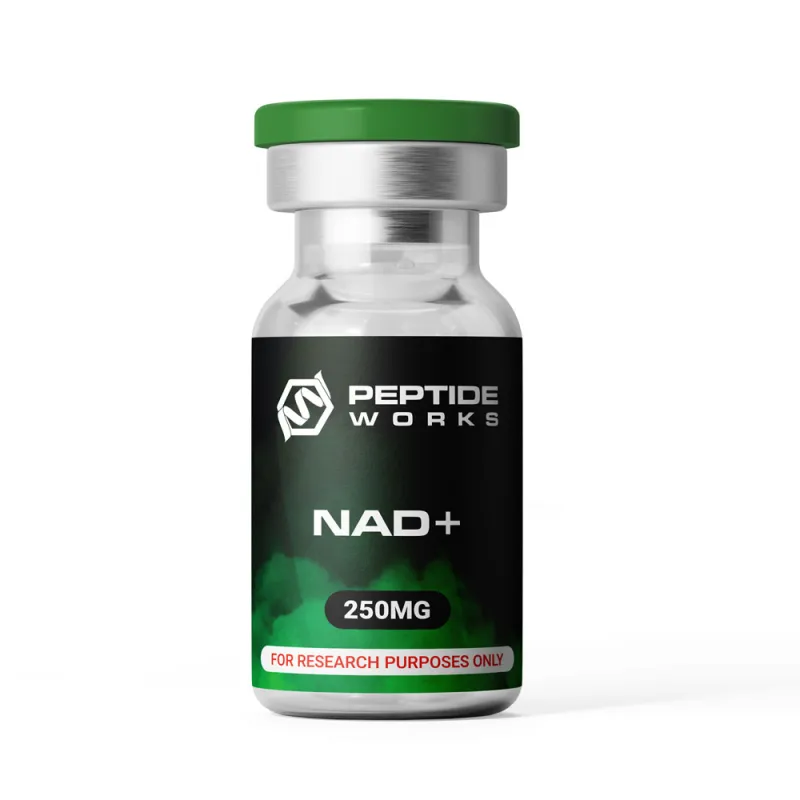
Explore NAD+ from Peptide Works, central to NAD therapy research on cellular energy, DNA repair, and cognitive performance.

NAD+ plays a key role in how the brain makes and uses energy. It supports mitochondrial function, which helps neurons produce the ATP needed to work efficiently. Healthy mitochondrial activity may also help reduce cellular stress and support normal brain function.
Studies suggest that NAD+ dependent pathways support synaptic plasticity. The process that helps brain cells form and strengthen their connections during learning and memory. These findings explain why NAD Therapy is being studied for its potential role in learning, focus, and overall cognitive performance.
Because synaptic connections are essential for learning and memory, researchers continue to study how changes in these pathways influence brain health and cognitive function.
Synaptic plasticity is how the brain changes the strength of its connections between nerve cells. When certain pathways are used often, they grow stronger. When they are not used, they weaken. This process is what makes memory, learning, and new skills possible.
Researchers are studying NAD Therapy for its potential role in supporting synaptic plasticity. NAD+ dependent pathways help support neuron health and healthy synaptic function. They also help cells respond to stress. This makes NAD+ an important area of brain research.
Cognitive Peptides such as Semax and P21 are also being studied for their potential roles in learning and memory. Together, these compounds continue to shape research on cognitive performance.
Healthy synapses need a steady supply of energy to work properly. Because of this, researchers are also studying how mitochondria help support brain function and cognitive resilience.
Check out Semax from Peptide Works, a peptide researched for boosting BDNF, supporting memory, and offering neuroprotective benefits.

Mitochondria produce ATP, the main source of energy that brain cells need to work. Neurons depend on this energy to send signals, maintain synapses and support normal brain function. When mitochondrial function declines, brain cells produce less energy and become less efficient. This can disrupt synaptic function and contribute to cognitive decline.
Research into Semax shows it boosts brain-derived neurotrophic factor (BDNF) and activates its receptor TrkB in the hippocampus, key steps for learning and synaptic health.
The P21 peptide, studied in Alzheimer’s models, has been shown to restore synaptic function, enhance neurogenesis, and reduce markers like beta-amyloid and tau that damage cognitive performance.
While mitochondria supply energy, another challenge for long-term brain clarity comes from oxidative stress, which can gradually damage neurons.
Discover P21 from Peptide Works, a peptide studied in Alzheimer’s models for restoring synaptic health and supporting neurogenesis.
Oxidative stress happens when reactive oxygen species (ROS) build up faster than the body’s natural defenses can remove them. The brain requires a large amount of energy to function properly. Because of this, it is especially vulnerable to oxidative stress. Too much ROS can damage DNA, proteins, and fats in brain cells. Over time, this damage may affect learning and memory. It may also contribute to age-related cognitive decline.
Researchers are studying whether NAD therapy may help protect brain cells from oxidative stress. NAD+ plays a crucial role in energy production, DNA repair and the body’s response to cellular stress. Maintaining healthy NAD+ levels may help support normal brain cell function during oxidative stress.
The brain also depends on DNA repair to stay healthy. Repairing damaged DNA helps brain cells continue to function normally over time.
Brain cells face DNA damage every day. Oxidative stress is one of the main causes. If this damage is not repaired, brain cells may not work as well over time. The brain relies on DNA repair systems, including PARP enzymes, to detect and repair damaged DNA.
Researchers are studying NAD therapy because NAD+ is required for PARP enzymes to repair DNA. Maintaining healthy NAD+ levels may help support these repair processes and normal brain cell function during oxidative stress. More research is needed to determine whether this can help protect cognitive function during aging.
PARP enzymes are an important part of the brain’s DNA repair system. However, they depend on adequate NAD+ to work properly, making NAD+ metabolism an active area of brain health research.
PARP enzymes, especially PARP-1, help neurons repair DNA damage caused by daily stress. They use NAD+ to repair damaged DNA and help maintain normal brain cell function. But when PARP-1 becomes overactive, it can drain NAD+ and ATP, leading to a form of cell death called parthanatos that has been linked to neurodegeneration.
Researchers are studying whether NAD therapy may help maintain the NAD+ needed for PARP-dependent DNA repair. Healthy NAD+ levels may help PARP enzymes repair damaged DNA and support normal brain cell function during cellular stress. Ongoing research is exploring how this process may contribute to brain health.
All of these findings highlight how NAD therapy and related compounds are being studied for their potential role in brain health, shaping the outlook for future research.
Research on NAD+ is growing in the field of brain health. Scientists are studying how NAD+ supports energy production, DNA repair, and cellular stress responses.
Early research also suggests that peptides like Semax and P021 are being studied for their possible roles in learning and memory. These studies are helping researchers explore new areas of cognitive performance research.
As research continues, scientists are investigating how NAD+ and related compounds may support brain health and cognitive function.
For access to research peptides, scientists and laboratories worldwide can explore options from Peptide Works, a trusted supplier offering worldwide shipping.
All peptides and compounds mentioned are strictly for research purposes only and not for human use.
(1) Zhao Y, Zhang J, Zheng Y, Zhang Y, et al. NAD+ improves cognitive function and reduces neuroinflammation by ameliorating mitochondrial damage and decreasing ROS production in chronic cerebral hypoperfusion models through Sirt1/PGC-1α pathway. J Neuroinflammation. 2021 Sep 16;18(1):207.
(2) Lautrup S, Sinclair DA, Mattson MP, Fang EF. NAD+ in Brain Aging and Neurodegenerative Disorders. Cell Metab. 2019 Oct 1;30(4):630-655.
(3) Campbell JM. Supplementation with NAD+ and Its Precursors to Prevent Cognitive Decline across Disease Contexts. Nutrients. 2022 Aug 7;14(15):3231.
(4) Dolotov OV, Karpenko EA, Seredenina TS, Inozemtseva LS, et al. Semax, an analogue of adrenocorticotropin (4-10), binds specifically and increases levels of brain-derived neurotrophic factor protein in rat basal forebrain. J Neurochem. 2006 Apr;97 Suppl 1:82-6.
(5) Zhao L, Ma QL, Calon F, Harris-White ME, et al. Role of p21-activated kinase pathway defects in the cognitive deficits of Alzheimer disease. Nat Neurosci. 2006 Feb;9(2):234-42.
ALL CONTENT AND PRODUCT INFORMATION AVAILABLE ON THIS WEBSITE IS FOR EDUCATIONAL PURPOSES ONLY.
DISCLAIMER: These products are intended solely as a research chemical only. This classification allows for their use only for research development and laboratory studies. The information available on our Peptide Works website: https://peptide-works.com/ is provided for educational purposes only. These products are not for human or animal use or consumption in any manner. Handling of these products should be limited to suitably qualified professionals. They are not to be classified as a drug, food, cosmetic, or medicinal product and must not be mislabelled or used as such.
Peptide Works
Related Articles
How can ARA-290 Peptide Help Diabetic Patients?
Diabetes affects millions of people around the world and leads to serious health problems. Research shows that the ARA-290 peptide

Can AICAR Peptide Improve Endurance?
AICAR peptide has shown promising results for improving endurance capacity in studies. Research shows that AICAR activates AMPK, increasing glucose

Enhancing Energy with NAD+ Supplements
Energy is the driving force behind focus, movement, and recovery. When cells have less energy to work with, the body