

PROMO!
First order? Get 10% OFF with this code: 1storder


Written by

Alzheimer’s disease remains one of the most complex conditions to study, as it slowly impacts memory, cognition, and daily function. Current research into the treatment for Alzheimer’s is exploring peptides, short chains of amino acids that influence cell signaling, energy balance, and neuron survival. These studies aim to investigate how peptides may slow down processes associated with cognitive decline.
Humanin is being studied for its potential role in protecting brain cells from oxidative stress and harmful protein buildup. P-21 is being researched for its effects on memory, learning, and connections between neurons. NAD+ is studied for its role in cellular energy metabolism and DNA repair. Together, these compounds are helping researchers explore new pathways in Alzheimer’s disease research.
Current peptide studies focus on how these molecules may support neuron health and improve understanding of processes involved in Treatment for Alzheimer’s disease.
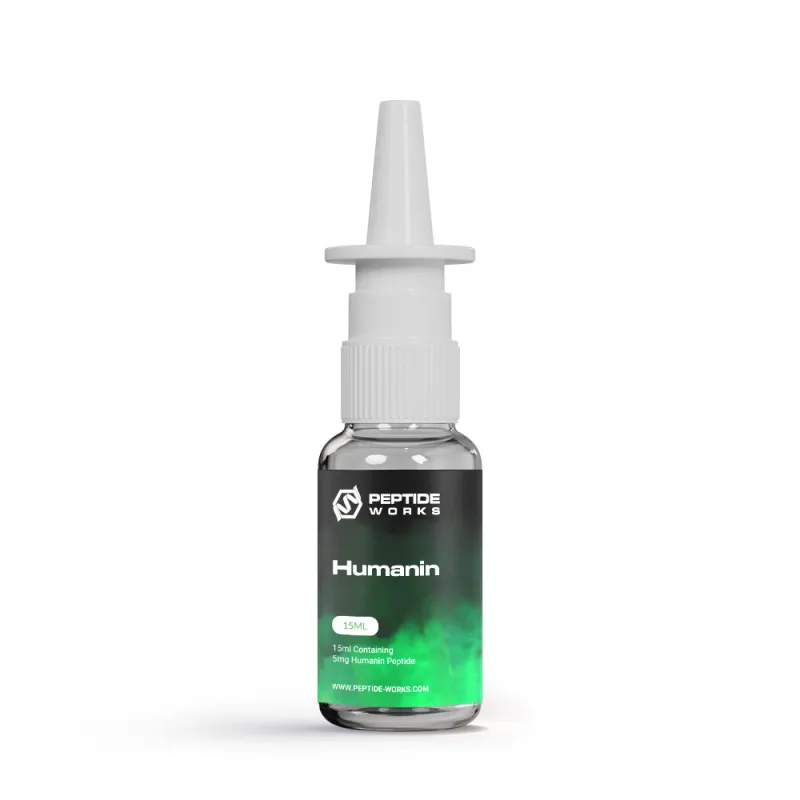
Explore Humanin from Peptide Works, a mitochondria-derived peptide studied for its role in protecting neurons from oxidative stress and toxic protein buildup in Alzheimer’s research.
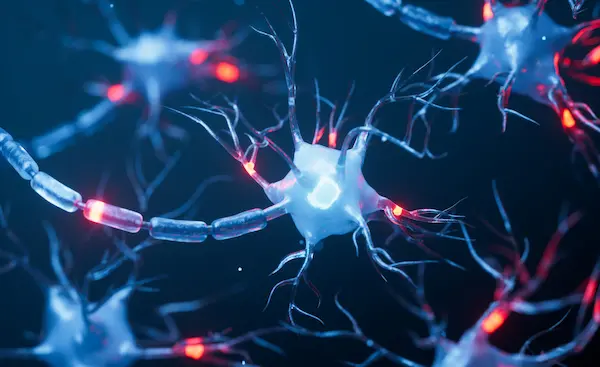
Peptides may support neuron survival by helping protect brain cells from stress linked to Alzheimer’s disease. Humanin is studied for its ability to support mitochondrial function, reduce oxidative stress, and protect neurons from amyloid-beta-related damage.
P-21 research suggests it may support pathways involved in neurogenesis, synaptic function and memory in preclinical Alzheimer’s models. NAD+ is studied for its role in cellular energy metabolism, mitochondrial health, and DNA repair.
Together, these compounds show how peptide research is exploring new ways to support neuron health in Alzheimer’s studies.
Because neuron survival is closely tied to cellular energy, mitochondrial health has become another major focus in Alzheimer’s research.
Mitochondria produce the energy that neurons need to function. In Alzheimer’s disease, mitochondrial dysfunction can reduce energy production and increase oxidative stress. This can damage brain cells and affect normal neuron activity.
Research shows that maintaining healthy mitochondria is an important focus in understanding Alzheimer’s disease. Humanin is a mitochondria-derived peptide studied for its role in protecting neurons from stress.
Research suggests Humanin may support mitochondrial function. reduce oxidative damage and help protect brain cells. These findings make mitochondrial health an important focus in Alzheimer’s disease research.
Humanin levels may decrease during aging. Studies suggest that lower Humanin levels are linked with age-related changes and have been reported in Alzheimer’s disease research. Humanin is a mitochondria-derived peptide that is studied for its role in protecting neurons, supporting mitochondrial function, and reducing cellular stress.
Research is studying how changes in Humanin levels affect brain health. Studies suggest Humanin may help protect neurons from oxidative stress and amyloid-beta damage.

NAD+ is a molecule that helps cells produce energy and maintain normal function. In Alzheimer’s disease research, NAD+ is studied for its role in mitochondrial function, cellular energy metabolism and DNA repair. Studies suggest that changes in NAD+ levels may affect how neurons respond to stress and maintain healthy activity.
Research shows that NAD+ pathways are linked to oxidative stress, mitochondrial dysfunction and age-related changes in brain cells. Scientists are studying NAD+ because supporting these pathways may help protect neurons and maintain cellular balance in Alzheimer’s research.
Shop NAD+ from Peptide Works, a cellular coenzyme researched for its role in restoring energy balance, enhancing mitochondrial health, and supporting repair processes relevant to Alzheimer’s studies.
Autophagy is a natural process that helps cells remove damaged proteins and old cell parts. In Alzheimer’s disease, this process may not work properly. This can allow harmful proteins to build up and increase stress on brain cells. Researchers are studying whether peptides can affect autophagy pathways and help support neuron health.
Humanin is studied for its ability to protect neurons, support mitochondrial function, and reduce cellular stress linked to Alzheimer’s disease. P-21 has been studied in animal models for its effects on neurogenesis, synaptic function and memory pathways. These findings show how peptides may influence different processes involved in Alzheimer’s research, including cellular protection and repair.

P-21 is a neurotrophic peptide studied for its effects on brain cells. Research shows that P-21 may support neurogenesis, which is the growth of new neurons. It may also help maintain synaptic function. Synapses are the connections that allow brain cells to communicate.
Studies in animal models show that P-21 can improve memory-related changes linked to Alzheimer’s disease. Research suggests it may increase BDNF signaling. This pathway helps support neuronal growth and plasticity. P-21 remains a research peptide and its effects are being studied mainly in preclinical Alzheimer’s models.
Discover P-21 from Peptide Works, a synthetic peptide investigated in preclinical studies for supporting neurogenesis, synaptic repair, and pathways linked to memory in Alzheimer’s models.
Peptide research is helping scientists better understand Alzheimer’s disease. Peptides like Humanin and P-21 are being studied for their roles in protecting neurons, supporting brain cell function and improving memory-related pathways. These studies may help researchers find new ways to understand and study Alzheimer’s disease.
At Peptide Works, we provide high-quality research compounds to support laboratory studies. As research continues, peptides may help scientists explore new ideas for protecting brain cells, supporting cellular health, and understanding the processes linked to Alzheimer’s disease.
All peptides and compounds mentioned are strictly for research purposes only and not for human use.
(1) Chai GS, Duan DX, Ma RH, Shen JY, et al. Humanin attenuates Alzheimer-like cognitive deficits and pathological changes induced by amyloid β-peptide in rats. Neurosci Bull. 2014 Dec;30(6):923-935.
(2) Alqahtani SM, Al-Kuraishy HM, Al-Gareeb AI, Alexiou A,et al. The neuroprotective role of Humanin in Alzheimer’s disease: The molecular effects. Eur J Pharmacol. 2025 Jul 5;998:177510.
(3) Coradduzza D, Congiargiu A, Chen Z, Cruciani S, et al. Humanin and Its Pathophysiological Roles in Aging: A Systematic Review. Biology (Basel). 2023 Apr 6;12(4):558.
(4) Zhao L, Ma QL, Calon F, Harris-White ME, et al. Role of p21-activated kinase pathway defects in the cognitive deficits of Alzheimer disease. Nat Neurosci. 2006 Feb;9(2):234-42.
(5) Wang X, He HJ, Xiong X, Zhou S, et al. NAD+ in Alzheimer’s Disease: Molecular Mechanisms and Systematic Therapeutic Evidence Obtained in vivo. Front Cell Dev Biol. 2021 Aug 3;9:668491.
ALL CONTENT AND PRODUCT INFORMATION AVAILABLE ON THIS WEBSITE IS FOR EDUCATIONAL PURPOSES ONLY.
DISCLAIMER: These products are intended solely as a research chemical only. This classification allows for their use only for research development and laboratory studies. The information available on our Peptide Works website: https://peptide-works.com/ is provided for educational purposes only. These products are not for human or animal use or consumption in any manner. Handling of these products should be limited to suitably qualified professionals. They are not to be classified as a drug, food, cosmetic, or medicinal product and must not be mislabelled or used as such.
Peptide Works
Related Articles

How can ARA-290 Peptide Help Diabetic Patients?
Diabetes affects millions of people around the world and leads to serious health problems. Research shows that the ARA-290 peptide

Can AICAR Peptide Improve Endurance?
AICAR peptide has shown promising results for improving endurance capacity in studies. Research shows that AICAR activates AMPK, increasing glucose

Enhancing Energy with NAD+ Supplements
Energy is the driving force behind focus, movement, and recovery. When cells have less energy to work with, the body