
PROMO!
First order? Get 10% OFF with this code: 1storder


Written by

Tendon injuries hurt millions of people each year. These injuries heal slowly and cause long-term pain. BPC-157 has demonstrated promising healing effects in preclinical studies, especially in animal tissue injury models.
This body-protection compound comes from proteins in human gastric juice in the gastrointestinal tract. Animal studies show significant acceleration in wound healing. Researchers study this synthetic peptide for its potential benefits on musculoskeletal injuries.
Current studies suggest BPC-157 peptide therapy may help tissue regeneration in labs. However, regulatory bodies say all research stays limited to controlled studies.
Understanding tissue regeneration becomes crucial when evaluating any healing treatment’s effectiveness.
Explore BPC-157 from Peptide Works, a synthetic peptide studied for its potential to accelerate tendon repair, angiogenesis, and tissue regeneration.

Tissue regeneration supports tendon repair by rebuilding damaged tissue after an injury. Growth factors activate fibroblasts and tenocytes at the injury site. These cells produce extracellular matrix that is rich in type III collagen. They deposit a temporary matrix that fills the injury site during the early stage of healing.
New blood vessels develop during healing. They deliver oxygen and nutrients to the repairing tissue. Preclinical studies suggest that TB-500 peptide may support cell migration during this stage and BPC-157 may support tendon healing processes.
As healing continues, type III collagen is gradually replaced by type I collagen. The collagen fibers become more organized. They align with the direction of mechanical loading.
However, studies show that adult tendons have limited regenerative capacity. Most tendon healing occurs through fibrotic scar formation rather than complete tissue regeneration. As a result, the repaired tendon usually remains structurally and mechanically different from the original tendon.
Discover TB-500 from Peptide Works, a research peptide shown to support cell migration, muscle healing, and improved recovery in preclinical models.
Collagen synthesis begins within the first few days after a tendon injury. During the early healing phase, fibroblasts produce mainly Type III collagen to form the first repair tissue. This process continues throughout the proliferative phase, which lasts for several weeks.
As healing progresses, Type I collagen gradually replaces Type III collagen during the remodeling phase. This phase usually begins about 6 to 8 weeks after injury and can continue for 12 months or longer. During this time, collagen fibers become more organized, cross-linked and stronger. This helps the tendon regain its tensile strength.
Check out GDF-8 from Peptide Works, a compound under study for its role in muscle growth regulation and potential tissue recovery support.
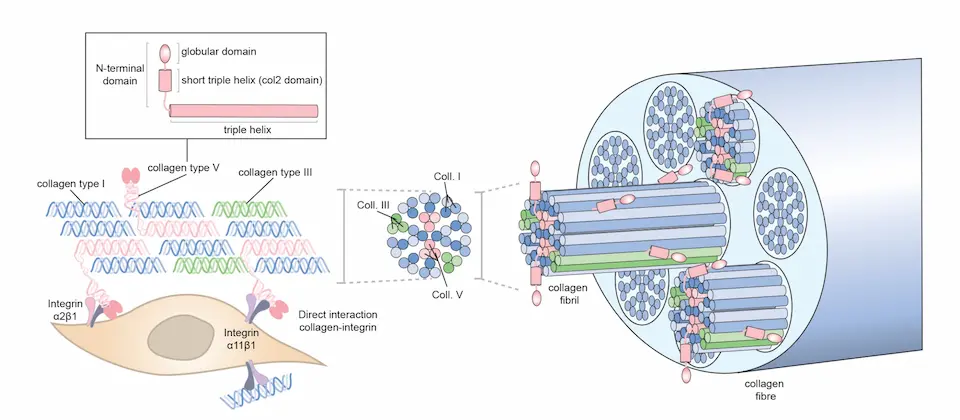
Type I collagen begins to replace Type III collagen during the remodeling phase of tendon healing. Most studies report that this phase starts about 6 to 8 weeks after injury. The replacement is gradual and continues for months to 1–2 years as the tendon matures.
During remodeling, the amount of type III collagen decreases while type I collagen becomes the main collagen in the healing tendon. The collagen fibers become more organized, align with the direction of mechanical loading, and develop more cross-links, which improve tensile strength. However, studies show that healed tendons rarely regain the structure or mechanical strength of an uninjured tendon.
Studies show that healed tendons do not usually regain their original mechanical strength or structure after injury. Instead, healing produces fibrotic scar tissue with altered collagen organization and inferior mechanical properties compared with healthy tendon. As a result, the repaired tendon remains more susceptible to reinjury even after the remodeling phase is complete.
Studies suggest that BPC-157 peptide therapy and TB-500 may support tendon healing by promoting cell migration, angiogenesis, collagen organization, and biomechanical recovery in animal models.
These findings have led researchers to investigate whether these peptides may improve tendon repair. However, no high-quality clinical studies have shown that BPC-157 peptide therapy or TB-500 restores a healed tendon to its original mechanical strength in humans.
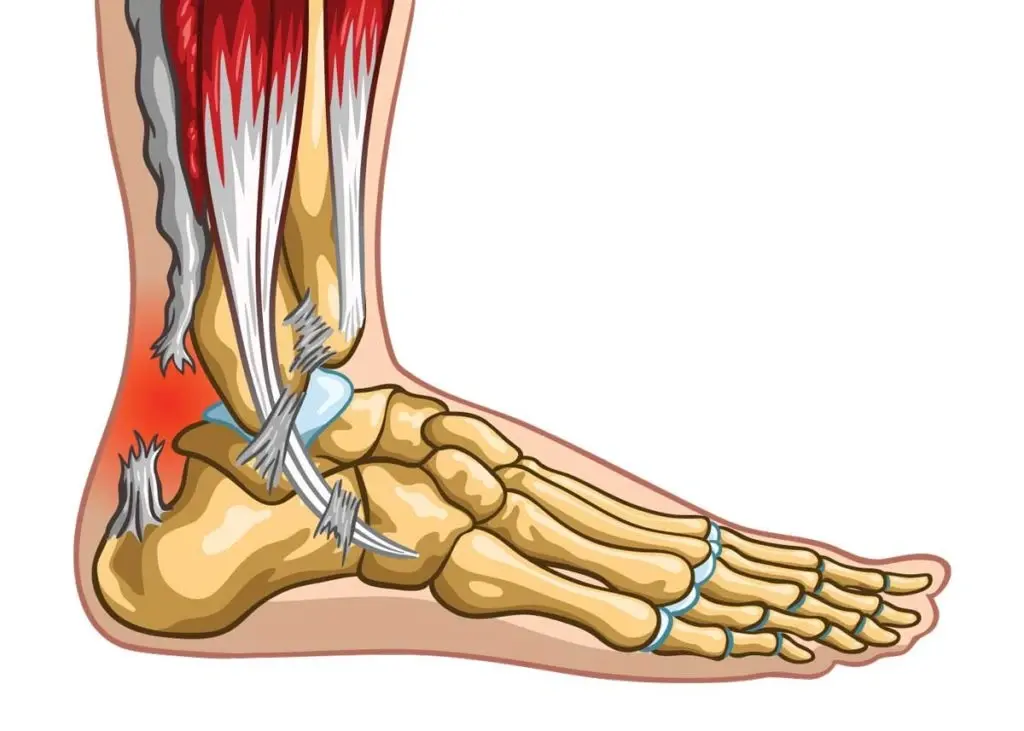
Studies show that functional recovery after tendon injury generally requires several months, while tendon remodeling continues for 6 to 12 months or longer, depending on the type and severity of the injury. Healing continues after symptoms improve because the tendon is still undergoing biological remodeling.
The body repairs a tendon through three overlapping phases:
However, healed tendons do not fully recover their original mechanical properties.
Current evidence on the potential side effects of BPC-157 peptide therapy is limited. Animal studies have generally reported no significant treatment-related adverse effects. However, human safety data remain very limited. The long-term safety profile has not been established.
Studies do not provide enough evidence to define the full safety profile of BPC-157 peptide therapy in humans. Researchers conclude that larger, well-designed clinical trials are needed to evaluate its safety, efficacy, and potential adverse effects before clinical use can be recommended.
Compounds like BPC-157 and TB500 show great promise for tendon healing in animal models. GDF-8’s role remains uncertain and may be more relevant in muscle regulation than tendon repair.
Current animal studies show faster recovery times and stronger tissue repair. Researchers expect preclinical research to advance before testing these peptides in humans. Peptide Works provides these research compounds for scientific study.
Some preclinical research suggests peptides may shorten healing time in animals, but this has not been validated in humans. This synthetic peptide technology may revolutionize how we approach Achilles tendons and other tendon injuries.
However, human clinical data remain limited. Additional clinical studies are needed to confirm its safety and effectiveness.
All peptides and compounds mentioned are strictly for research purposes only and not for human use.
(1) Chang CH, Tsai WC, Lin MS, Hsu YH, Pang JH. The promoting effect of pentadecapeptide BPC 157 on tendon healing involves tendon outgrowth, cell survival, and cell migration. J Appl Physiol (1985). 2011 Mar;110(3):774-80.
(2) Maar K, Hetenyi R, Maar S, Faskerti G, et al. Utilizing Developmentally Essential Secreted Peptides Such as Thymosin Beta-4 to Remind the Adult Organs of Their Embryonic State-New Directions in Anti-Aging Regenerative Therapies. Cells. 2021 May 28;10(6):1343.
(3) Elkasrawy MN, Hamrick MW. Myostatin (GDF-8) as a key factor linking muscle mass and bone structure. J Musculoskelet Neuronal Interact. 2010 Mar;10(1):56-63.
(4) Yang G, Rothrauff BB, Tuan RS. Tendon and ligament regeneration and repair: clinical relevance and developmental paradigm. Birth Defects Res C Embryo Today. 2013 Sep;99(3):203-222.
ALL CONTENT AND PRODUCT INFORMATION AVAILABLE ON THIS WEBSITE IS FOR EDUCATIONAL PURPOSES ONLY.
DISCLAIMER: These products are intended solely as a research chemical only. This classification allows for their use only for research development and laboratory studies. The information available on our Peptide Works website: https://peptide-works.com/ is provided for educational purposes only. These products are not for human or animal use or consumption in any manner. Handling of these products should be limited to suitably qualified professionals. They are not to be classified as a drug, food, cosmetic, or medicinal product and must not be mislabelled or used as such.
Peptide Works
Related Articles
How can ARA-290 Peptide Help Diabetic Patients?
Diabetes affects millions of people around the world and leads to serious health problems. Research shows that the ARA-290 peptide

Can AICAR Peptide Improve Endurance?
AICAR peptide has shown promising results for improving endurance capacity in studies. Research shows that AICAR activates AMPK, increasing glucose

Enhancing Energy with NAD+ Supplements
Energy is the driving force behind focus, movement, and recovery. When cells have less energy to work with, the body