

PROMO!
First order? Get 10% OFF with this code: 1storder


Written by

Metabolic health is one of the most widely studied areas in biology, focusing on how cells produce and use energy, store nutrients, and maintain metabolic balance.
Researchers are investigating many pathways that regulate metabolism, and peptides have become an important area of study. Among them, Tesamorelin has gained attention in studies for its effects on growth hormone release and its potential role in visceral fat reduction and metabolic processes related to lipid and glucose metabolism.
Understanding Tesamorelin starts with how it increases growth hormone release. This helps explain how it affects fat metabolism. It also provides a foundation for understanding its effects on visceral fat and overall metabolic health.
Explore Tesamorelin from Peptide Works, a synthetic peptide studied for its ability to reduce visceral fat and support healthier metabolic balance.

Studies show that Tesamorelin binds to growth hormone-releasing hormone (GHRH) receptors in the pituitary gland. This increases growth hormone release. Growth hormone then raises insulin-like growth factor 1 (IGF-1) levels. Together, these effects promote fat breakdown, also called lipolysis. They are linked to reductions in visceral fat, the deep fat around the organs.
Clinical studies consistently show that Tesamorelin reduces visceral adipose tissue. Some studies also found lower triglyceride levels and improvements in other blood lipid markers. Most studies found no significant changes in blood glucose during treatment.
Current evidence suggests that Tesamorelin works mainly by increasing growth hormone release. This helps promote lipolysis, or fat breakdown. It does not appear to directly change cellular energy pathways.
Visceral fat is not only a fat storage site. It is also an active endocrine tissue. It releases inflammatory cytokines such as tumor necrosis factor-alpha (TNF-α) and interleukin-6 (IL-6). It also releases free fatty acids into the bloodstream. These signals activate inflammatory pathways. They reduce insulin signaling in the liver, muscle, and fat tissue. This makes it harder for cells to take up glucose. It also promotes insulin resistance.
As visceral fat builds up, inflammation becomes chronic. Immune cells, especially macrophages, collect inside the fat tissue and release more inflammatory molecules. These molecules disrupt important metabolic pathways, including IRS-1 and PI3K/Akt signaling.
They also increase fat release from adipose tissue and raise blood lipid levels. Together, these changes impair glucose metabolism, disrupt lipid metabolism and increase the risk of metabolic disease.
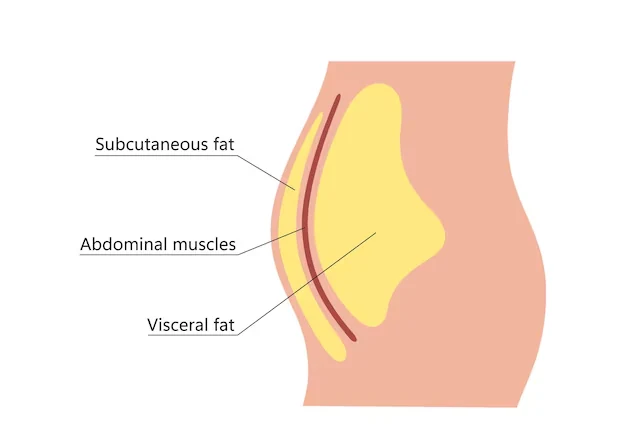
Clinical studies show that Tesamorelin reduces visceral adipose tissue (VAT) in adults with HIV-associated lipodystrophy. Phase III randomized, placebo-controlled trials reported an average 15% to 20% reduction in VAT after 26 weeks of treatment. The placebo group showed little or no change.
Studies found little or no change in subcutaneous fat or overall body weight. The reduction in visceral fat was maintained for up to 52 weeks with continued treatment. Multiple clinical studies have consistently reported these findings.
These results naturally lead to considering other mechanisms that support metabolic health, such as AMPK activation and its peptide modulators.
AMP activated protein kinase (AMPK) acts as a central regulator of cellular energy balance. When activated, AMPK promotes glucose uptake, enhances fatty acid oxidation, and reduces lipid synthesis processes that directly support metabolic health.
In research, AMPK activation has been linked to lower insulin resistance and improved mitochondrial efficiency. Peptides that stimulate the AMPK pathway are of particular interest because they may influence metabolism at the cellular level.
Unlike Tesamorelin, which works by increasing growth hormone release, AMPK-focused compounds work by shifting cells into a more energy-efficient state. This different mechanism helps explain why researchers study AMPK peptides alongside Tesamorelin when exploring new ways to manage visceral fat and metabolic disorders.
Understanding cellular energy regulation through AMPK helps explain how growth hormone pathways contribute in different but complementary ways to overall metabolic function.
Discover AMPK Peptide from Peptide Works, a key activator of cellular energy pathways that promotes fat oxidation, glucose uptake, and improved metabolic efficiency.

Growth hormone (GH) plays a major role in how the body uses and stores energy. It helps release fatty acids from fat tissue. It also helps protect lean muscle mass and supports protein synthesis. GH also affects how the body uses carbohydrates. In some cases, it can temporarily reduce insulin sensitivity. At the same time it helps the body rely more on fat for fuel.
Research using Tesamorelin provides a way to study these GH-driven effects in detail, particularly how changes in fat distribution and glucose handling relate to metabolic health.
When compared with AMPK-focused peptides like AICAR, which improve energy use through cellular signaling, GH pathways highlight a distinct but complementary mechanism in metabolic regulation. While hormones guide metabolism, mitochondria also play a critical role in keeping cellular energy balanced.
Mitochondria make most of the ATP that cells use for energy. They also help regulate how cells use fats and carbohydrates. Healthy mitochondria support normal energy production and fat oxidation. When mitochondrial function declines.
ATP production becomes less efficient. Oxidative stress can increase. Cells may also respond less effectively to metabolic signals. These changes are linked with insulin resistance and other metabolic disorders.
Researchers use different compounds to study these pathways. Tesamorelin helps scientists examine how reducing visceral fat may improve metabolic function through growth hormone activity. AICAR activates AMPK a key cellular energy sensor. This helps researchers study how AMPK regulates mitochondrial function and energy metabolism.
Studying these pathways helps researchers better understand metabolic health. It also supports the development of new approaches for future metabolic research.
Explore AICAR Peptide from Peptide Works, a research compound known to activate AMPK, enhancing glucose regulation and supporting insulin sensitivity in metabolic studies.
Tesamorelin is one of the most studied peptides for reducing visceral fat. Research shows it can lower visceral adipose tissue by increasing growth hormone release. Scientists also study its effects on metabolic health. AMPK-related peptides are being explored for how they influence cellular energy signaling.
AICAR, which is not a peptide but an AMPK activator, is widely used in research to study glucose metabolism, fat oxidation, and insulin sensitivity.
Together, these research tools help scientists understand metabolism from different angles. They show how changes in visceral fat, energy sensing and glucose regulation work together. This research continues to improve our understanding of metabolic health and may guide future therapies.
Tesamorelin continues to play an active but investigational role in metabolic-health research. Findings showing reductions in visceral adipose tissue and improvements in metabolic markers support its use as a useful model for studying how fat distribution affects insulin responsiveness, liver function and mitochondrial processes.
As researchers continue to define the links between hormonal signaling and cellular energy regulation, Tesamorelin may serve as a valuable comparison point alongside AMPK-targeting compounds and AICAR in advancing metabolic research.
At Peptide Works, we provide research peptides worldwide, supporting discoveries that shape the future of metabolic health.
All products discussed are supplied for research purposes only and are not intended for human use.
(1) Stanley TL, Feldpausch MN, Oh J, Branch KL, et al. Effect of tesamorelin on visceral fat and liver fat in HIV-infected patients with abdominal fat accumulation: a randomized clinical trial. JAMA. 2014 Jul 23-30;312(4):380-9.
(2) Fourman LT, Czerwonka N, Feldpausch MN, Weiss J, et al. Visceral fat reduction with tesamorelin is associated with improved liver enzymes in HIV. AIDS. 2017 Oct 23;31(16):2253-2259.
(3) Kim HI, Han Y, Park J. AMP-Activated Protein Kinases in Health and Disease. Int J Mol Sci. 2025 Aug 21;26(16):8075.
(4) Zhang Z, Svensson KJ. Discovery of peptides as key regulators of metabolic and cardiovascular crosstalk. Cell Rep. 2025 Jun 24;44(6):115836.
ALL CONTENT AND PRODUCT INFORMATION AVAILABLE ON THIS WEBSITE IS FOR EDUCATIONAL PURPOSES ONLY.
DISCLAIMER: These products are intended solely as a research chemical only. This classification allows for their use only for research development and laboratory studies. The information available on our Peptide Works website: https://peptide-works.com/ is provided for educational purposes only. These products are not for human or animal use or consumption in any manner. Handling of these products should be limited to suitably qualified professionals. They are not to be classified as a drug, food, cosmetic, or medicinal product and must not be mislabelled or used as such.
Peptide Works
Related Articles

How can ARA-290 Peptide Help Diabetic Patients?
Diabetes affects millions of people around the world and leads to serious health problems. Research shows that the ARA-290 peptide

Can AICAR Peptide Improve Endurance?
AICAR peptide has shown promising results for improving endurance capacity in studies. Research shows that AICAR activates AMPK, increasing glucose

Enhancing Energy with NAD+ Supplements
Energy is the driving force behind focus, movement, and recovery. When cells have less energy to work with, the body