

PROMO!
First order? Get 10% OFF with this code: 1storder


Written by

Fat burning peptides are studied for their potential to support fat loss through different biological mechanisms. Tesamorelin, AOD-9604, and FTPP (Adipotide) are among the most researched peptides for their effects on fat metabolism, body composition, and adipose tissue in laboratory and clinical studies.
Current research shows that these fat burning peptides differ in the amount of evidence available and the way they are investigated.
Scientists continue to study their potential roles in fat metabolism and body composition, but no single fat burning peptide has been established as the best option for weight loss.
Explore FTPP (Adipotide) from Peptide Works, a research peptide that targets blood vessels supplying fat cells to support studies on fat reduction and adipose tissue metabolism.

Fat burning peptides influence fat metabolism by increasing fat breakdown, reducing fat storage, or changing the way the body regulates lipid metabolism. Although these peptides act through different biological pathways, they are all studied for their effects on adipose tissue and body fat metabolism.
AOD-9604 is studied for its ability to stimulate lipolysis and inhibit lipogenesis without increasing growth hormone levels. FTPP (Adipotide) targets the blood vessels that supply white adipose tissue, leading to selective fat tissue loss in preclinical studies. Tesamorelin stimulates endogenous growth hormone release, which increases lipolysis and has been shown to reduce visceral adipose tissue in clinical studies.
Lipolysis breaks down fat stored in cells into fatty acids that the body uses as energy, which helps reduce fat. Fat burning peptides like AOD-9604 and Tesamorelin can increase lipolysis by activating enzymes that release fat from fat cells.
When lipolysis is higher, the body burns more stored fat instead of just water or muscle. Research shows these peptides support fat loss, keep muscle, and improve metabolism.
That is why researchers study fat burning peptides for weight management and fat loss research. Looking closer at the enzymes involved helps explain the next stage in the fat reduction process.
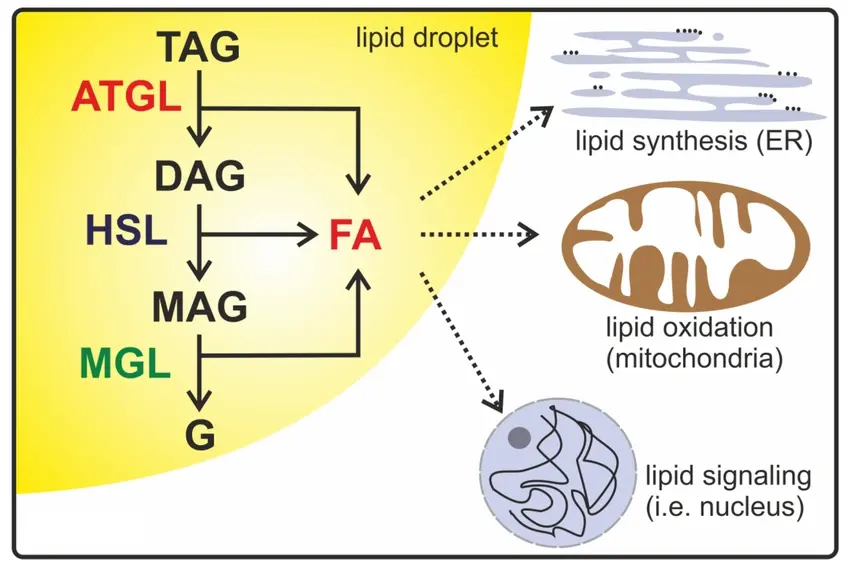
Fat burning peptides can help start lipolysis by switching on special enzymes in fat cells. The two main enzymes involved are adipose triglyceride lipase (ATGL) and hormone-sensitive lipase (HSL).
ATGL initiates triglyceride breakdown, releasing the first fatty acids from stored fat, while HSL continues fat hydrolysis by breaking down remaining fat molecules.
Some peptides in research boost ATGL to get the process going, while others increase HSL to keep fat breakdown going efficiently. Peptides like AOD-9604 and Tesamorelin may also target enzymes that manage how fat leaves fat cells.
Research into the way these peptides activate fat-burning enzymes is shedding light on new tools for managing body composition more effectively. Looking directly at how fat cells respond makes their effects even more compelling.
Fat burning peptides help break down fat cells by starting natural processes like lipolysis and fat cell death, also called apoptosis.
AOD-9604 and Tesamorelin target fat in several ways, making stored fat more available as energy for the body. Adipotide (FTPP) can trigger signals that break down specific unwanted fat cells.
These peptides may also help reduce new fat buildup, which is why many researchers study them for managing body fat.
Peptide Works is proud to support these kinds of research efforts by providing high-quality research peptides online. The process of fat cell death deserves a closer look to understand its impact on reducing body fat.
Discover AOD-9604 from Peptide Works, a modified fragment of human growth hormone under research for its potential role in stimulating fat metabolism and supporting lipolysis.
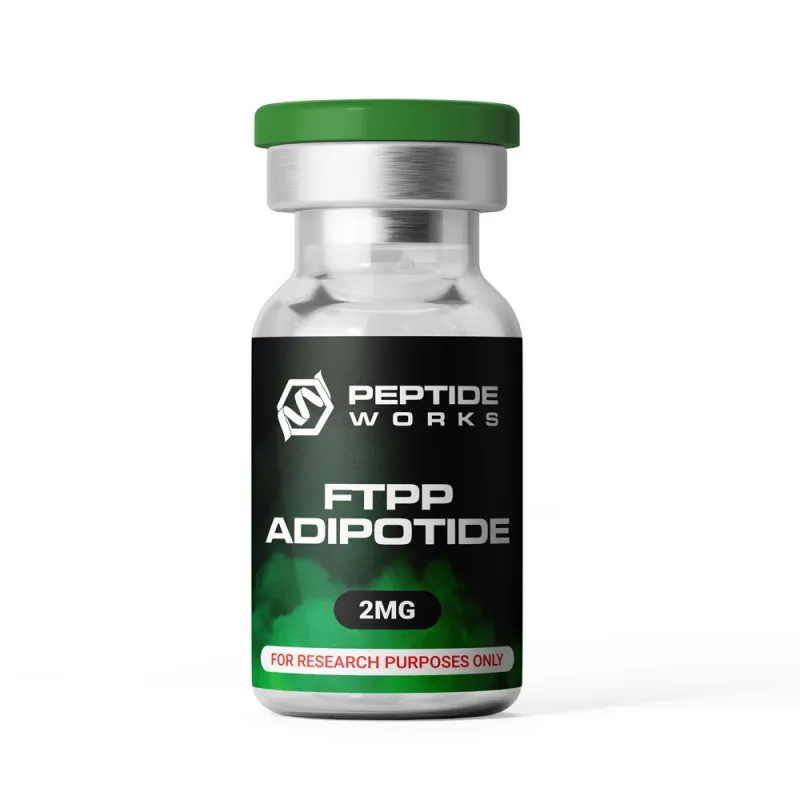
Fat cells can shrink when they go through a process called apoptosis, which means programmed cell death. Some peptides studied in labs help trigger this process indirectly, for example by cutting off the blood supply that supports fat cells.
For example, Adipotide (FTPP) targets the blood vessels that supply fat tissue, cutting off their blood flow and leading to fat cell death and tissue shrinkage.
This action helps reduce excess fat tissue by removing unwanted fat cells through biological processes. Research into these peptides gives scientists a clearer picture of new ways to control fat levels. Targeting fat cell death is especially relevant when considering hard-to-reduce fat areas.
Peptides may help reduce belly fat, particularly visceral fat, but the evidence varies by peptide. Tesamorelin has the strongest clinical evidence for reducing visceral abdominal fat in specific patient populations, while AOD-9604 has shown mixed results in human studies, and FTPP (Adipotide) has primarily been investigated in animal models.
Current research suggests that these peptides influence abdominal fat through different biological mechanisms, but no peptide has been proven to reduce all types of stubborn fat or work equally well across all populations.
Shop Tesamorelin from Peptide Works, a synthetic GHRH analogue that supports healthy fat metabolism and promotes lean muscle balance.
Research on fat loss peptides is advancing rapidly, with more studies focusing on how these compounds safely target stubborn fat.
Researchers hope these peptides will offer new ways to manage body composition, emphasizing targeted fat loss with fewer side effects.
Peptide Works provides high-quality research peptides online, strictly for laboratory use. We offer worldwide shipping and remain committed to advancing scientific research into fat metabolism and targeted weight management.
All products discussed are supplied for research purposes only and are not intended for human use.
(1) Barnhart KF, Christianson DR, Hanley PW, Driessen WH, et al. A peptidomimetic targeting white fat causes weight loss and improved insulin resistance in obese monkeys. Sci Transl Med. 2011 Nov 9;3(108):108ra112.
(2) Heffernan M, Summers RJ, Thorburn A, Ogru E, et al. The effects of human GH and its lipolytic fragment (AOD9604) on lipid metabolism following chronic treatment in obese mice and beta(3)-AR knock-out mice. Endocrinology. 2001 Dec;142(12):5182-9.
(3) Lake JE, La K, Erlandson KM, Adrian S, et al. Tesamorelin improves fat quality independent of changes in fat quantity. AIDS. 2021 Jul 15;35(9):1395-1402.
(4) Adrian S, Scherzinger A, Sanyal A, Lake JE, et al. The Growth Hormone Releasing Hormone Analogue, Tesamorelin, Decreases Muscle Fat and Increases Muscle Area in Adults with HIV. J Frailty Aging. 2019;8(3):154-159.
ALL CONTENT AND PRODUCT INFORMATION AVAILABLE ON THIS WEBSITE IS FOR EDUCATIONAL PURPOSES ONLY.
DISCLAIMER: These products are intended solely as a research chemical only. This classification allows for their use only for research development and laboratory studies. The information available on our Peptide Works website: https://peptide-works.com/ is provided for educational purposes only. These products are not for human or animal use or consumption in any manner. Handling of these products should be limited to suitably qualified professionals. They are not to be classified as a drug, food, cosmetic, or medicinal product and must not be mislabelled or used as such.
Peptide Works
Related Articles
How can ARA-290 Peptide Help Diabetic Patients?
Diabetes affects millions of people around the world and leads to serious health problems. Research shows that the ARA-290 peptide

Can AICAR Peptide Improve Endurance?
AICAR peptide has shown promising results for improving endurance capacity in studies. Research shows that AICAR activates AMPK, increasing glucose

Enhancing Energy with NAD+ Supplements
Energy is the driving force behind focus, movement, and recovery. When cells have less energy to work with, the body