

PROMO!
First order? Get 10% OFF with this code: 1storder


Written by
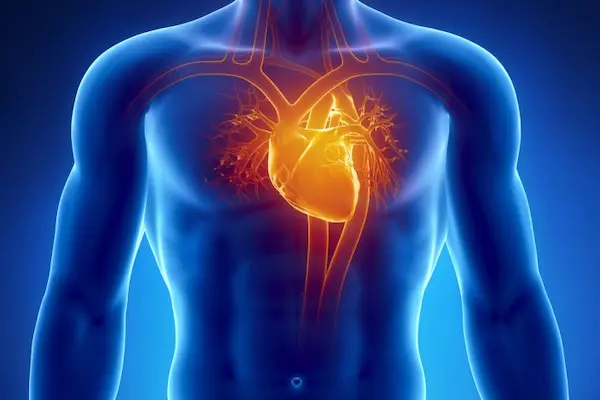
Hexarelin peptide may support heart health by improving cardiac function, protecting the heart from ischemia-reperfusion injury, and limiting pathological remodeling in studies. It is a synthetic growth hormone secretagogue that acts through GHSR1a and CD36, receptors involved in cardiovascular regulation.
Scientists are studying how Hexarelin peptide may improve recovery of cardiac contractility, protect the heart from ischemia-reperfusion injury, and preserve ventricular function.
Other peptides, such as B7-33 and GHRP-6, are also being studied for their effects on cardiac function and remodeling. Their findings continue to expand what scientists know about peptide signaling in the heart.
To understand these effects, it is helpful to examine how Hexarelin peptide may influence cardiac fibrosis and pathological remodeling. Both remain important targets in cardiovascular research.
Explore Hexarelin Peptide from Peptide Works, a growth hormone secretagogue studied for supporting heart strength, recovery, and antifibrotic effects in research.
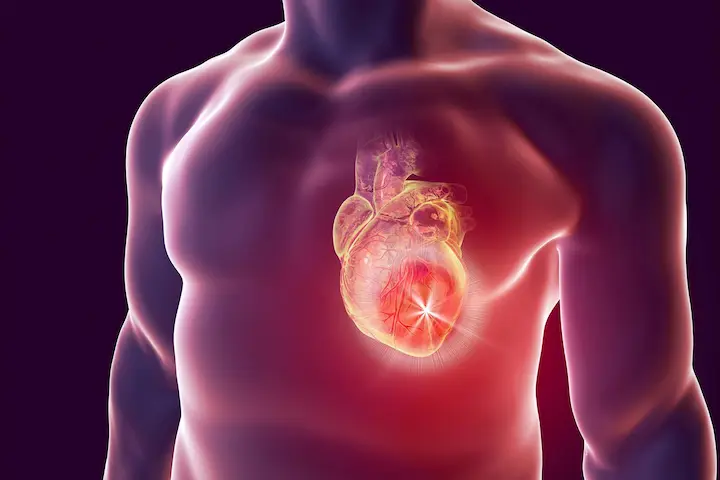
Studies suggest Hexarelin peptide may help reduce cardiac fibrosis by decreasing collagen synthesis and increasing collagen breakdown in the heart. Animal studies found lower collagen I and III expression, less collagen deposition, higher MMP-2 and MMP-9 activity, and lower TIMP-1 expression, which support normal collagen turnover.
Other studies also showed reduced TGF-β1 expression, lower IL-1β and TNF-α levels, and less cardiac fibroblast activity. Together, these changes were associated with reduced cardiac fibrosis and improved cardiac remodeling in experimental models.
Since fibrosis is directly tied to how collagen is regulated, researchers also focus on the enzyme systems that control this balance.
Discover B7-33 Peptide from Peptide Works, a relaxin-based peptide investigated for reducing cardiac fibrosis and improving ventricular compliance in studies.
Animal studies suggest Hexarelin peptide may influence the MMP-TIMP balance by increasing MMP-2 and MMP-9 activity while decreasing TIMP-1 expression in the heart. The researchers found that these changes promoted collagen degradation and reduced collagen synthesis through regulation of the MMP-TIMP system. This was associated with reduced cardiac fibrosis and improved cardiac remodeling in experimental models.
Since the MMP-TIMP system regulates collagen turnover, researchers continue to study how these changes may support heart function in cardiovascular disease models.
Because these enzymes regulate collagen, their activity connects directly to the broader question of how remodeling supports healthy heart function.

Collagen remodeling is important because it preserves the collagen network of the myocardium. This network maintains tissue architecture and chamber geometry. It supports myocyte alignment and force transmission. It is also a major determinant of myocardial stiffness. The myocardium contains mainly type I and type III fibrillar collagen.
Collagen turnover depends on a balance between collagen synthesis and degradation. When collagen synthesis exceeds degradation, collagen accumulates and increases myocardial stiffness. When collagen degradation exceeds synthesis, the collagen network is disrupted, leading to chamber dilation, wall thinning, and impaired myocardial function.
Since remodeling directly shapes how the ventricle stretches and fills, researchers also study how collagen changes connect to ventricular compliance.
Ventricular compliance is essential for normal heart function because it allows the ventricle to fill with blood during diastole without a large increase in filling pressure. Reduced ventricular compliance increases ventricular filling pressure and impairs diastolic filling.
Myocardial fibrosis and excess collagen deposition reduce ventricular compliance. Increased collagen also increases myocardial stiffness. Changes in collagen content and collagen cross-linking alter ventricular function and contribute to ventricular remodeling.
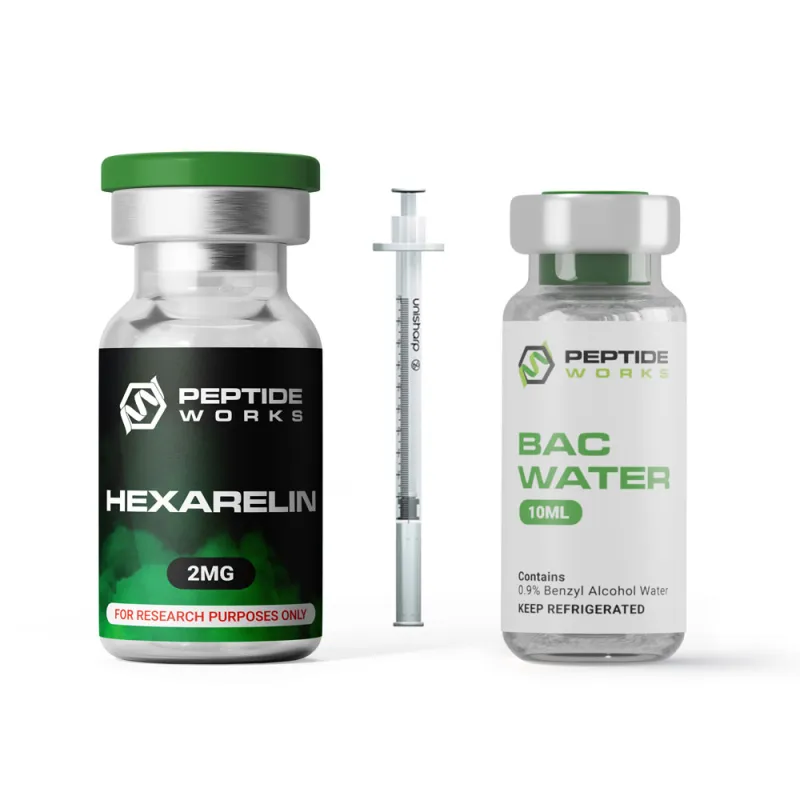
Reduced ventricular compliance triggers diastolic dysfunction because the ventricle requires higher filling pressure during diastole. As ventricular stiffness increases, the ventricle becomes less compliant. The pressure needed to reach the same end-diastolic volume also increases. Elevated filling pressure is a hallmark of diastolic dysfunction.
Myocardial fibrosis and excess collagen deposition reduce ventricular compliance. Increased collagen also increases myocardial stiffness. These changes impair diastolic function, and contribute to heart failure with preserved ejection fraction (HFpEF).
While structural changes explain much of the dysfunction, protecting the heart during episodes of stress or injury is another key area of research.
The heart is protected during stress and injury by limiting cardiac damage, reducing inflammation and fibrosis, and preserving cardiac function. The heart faces major challenges during stress, including oxidative damage and reduced blood supply.
Hexarelin peptide has shown potential to protect the heart from ischemia-reperfusion injury and enhance recovery of cardiac contractility. GHRP-6 is for preventing ventricular dilation and preserving left ventricular systolic function in injury models. Meanwhile, the B7-33 peptide has demonstrated antifibrotic effects and improved diastolic function in studies.
For this kind of research, access to reliable peptides is critical. Peptide Works, an online retailer of research peptides, provides scientists with research-grade materials to support discovery.
As research continues, scientists are investigating how peptide signaling influences myocardial injury, cardiac remodeling, and cardiovascular function.
Shop GHRP-6 Peptide from Peptide Works, a growth hormone releasing peptide researched for protecting heart function and preventing ventricular dilation under stress.
Research on the Hexarelin peptide shows that it may influence fibrosis, ventricular compliance, and even heart protection under stress. Studies on related compounds like B7-33 and GHRP-6 add to this picture. pointing to new ways peptides might support heart function in the future. While these findings are early, they highlight the growing role of peptide signaling in cardiovascular research and emphasize the benefits of hexarelin observed in experimental models.
At Peptide Works, we provide research-grade peptides for laboratories worldwide. Continued exploration of peptide signaling may open new doors in preventing fibrosis, improving compliance, and advancing cardioprotective therapies.
All peptides and compounds mentioned are strictly for research purposes only and not for human use.
(1) Mao Y, Tokudome T, Kishimoto I. The cardiovascular action of hexarelin. J Geriatr Cardiol. 2014 Sep;11(3):253-8.
(2) McDonald H, Peart J, Kurniawan N, Galloway G, et al. Hexarelin treatment preserves myocardial function and reduces cardiac fibrosis in a mouse model of acute myocardial infarction. Physiol Rep. 2018 May;6(9):e13699.
(3) Locatelli V, Rossoni G, Schweiger F, Torsello A, et al. Growth hormone-independent cardioprotective effects of hexarelin in the rat. Endocrinology. 1999 Sep;140(9):4024-31.
(4) Devarakonda T, Mauro AG, Guzman G, Hovsepian S, et al. B7-33, a Functionally Selective Relaxin Receptor 1 Agonist, Attenuates Myocardial Infarction-Related Adverse Cardiac Remodeling in Mice. J Am Heart Assoc. 2020 Apr 21;9(8):e015748.
(5) Berlanga-Acosta J, Cibrian D, Valiente-Mustelier J, Suárez-Alba J, et al. Growth hormone releasing peptide-6 (GHRP-6) prevents doxorubicin-induced myocardial and extra-myocardial damages by activating prosurvival mechanisms. Front Pharmacol. 2024 May 30;15:1402138.
ALL CONTENT AND PRODUCT INFORMATION AVAILABLE ON THIS WEBSITE IS FOR EDUCATIONAL PURPOSES ONLY.
DISCLAIMER: These products are intended solely as a research chemical only. This classification allows for their use only for research development and laboratory studies. The information available on our Peptide Works website: https://peptide-works.com/ is provided for educational purposes only. These products are not for human or animal use or consumption in any manner. Handling of these products should be limited to suitably qualified professionals. They are not to be classified as a drug, food, cosmetic, or medicinal product and must not be mislabelled or used as such.
Peptide Works
Related Articles

How can ARA-290 Peptide Help Diabetic Patients?
Diabetes affects millions of people around the world and leads to serious health problems. Research shows that the ARA-290 peptide

Can AICAR Peptide Improve Endurance?
AICAR peptide has shown promising results for improving endurance capacity in studies. Research shows that AICAR activates AMPK, increasing glucose

Enhancing Energy with NAD+ Supplements
Energy is the driving force behind focus, movement, and recovery. When cells have less energy to work with, the body