

PROMO!
First order? Get 10% OFF with this code: 1storder


Written by

Yes. Protirelin is the synthetic form of the TRH peptide, also known as thyrotropin-releasing hormone (TRH). It has the same structure as naturally occurring TRH and contains the same three amino acids: pyroglutamyl, histidyl, and proline amide. Because of this similarity, Protirelin interacts with the same receptors as endogenous TRH.
TRH is a natural tripeptide produced in the hypothalamus. It was one of the first hypothalamic peptides discovered and remains one of the smallest biologically active signaling peptides studied in research.
Due to their structural and functional similarities, Protirelin and TRH are often used interchangeably in scientific literature. This article explores Protirelin’s structure, receptor activity and growing research interest surrounding this peptide.
Explore Protirelin from Peptide Works, a TRH-based peptide studied for central nervous system signaling and fatigue-related research applications.
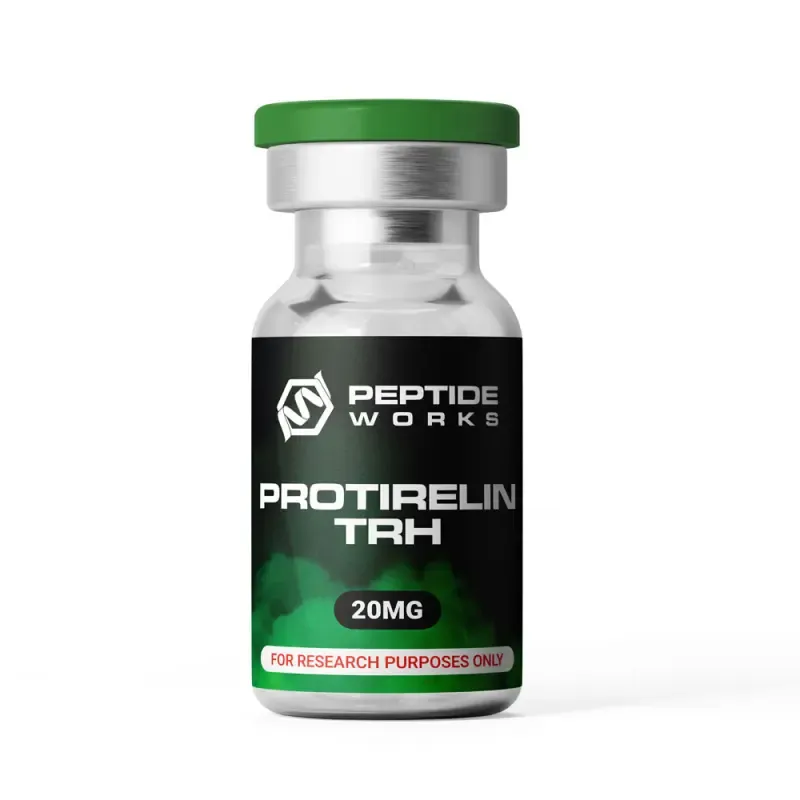
Protirelin attracts attention in neurology research because TRH has actions in the central nervous system. Studies describe TRH as a neuromodulator that can influence nerve activity.
Research has investigated Protirelin in conditions such as amyotrophic lateral sclerosis (ALS), upper motor neuron syndromes and other neurological disorders.
Research studies have explored Protirelin because of its effects on motor function and neural signaling. Clinical studies have examined whether TRH-related activity may affect muscle strength, spasticity and neurological symptoms. However, results have been mixed, and more research is needed to understand its role in neurological conditions.
Protirelin has gained interest in anti-fatigue research because it is a synthetic form of thyrotropin-releasing hormone (TRH). Clinical studies have investigated TRH for its effects on fatigue and energy. Small studies reported that TRH administration improved fatigue scores and energy-related measures in those with cancer-related fatigue.
Research also suggests that TRH signaling plays a role in central nervous system pathways linked to arousal and fatigue. Since Protirelin activates the same TRH receptors as natural TRH, researchers study it to better understand how TRH pathways may influence fatigue regulation.
RResearchers study several other peptides alongside Protirelin in neurology and fatigue-related research:
These peptides are studied for their roles in brain signaling, neuroprotection, and cellular energy pathways. Semax research focuses on nervous system activity and cognitive pathways. SS-31 research focuses on mitochondrial function and energy production.
Discover Semax at Peptide Works, a cognitive research peptide investigated for neurotrophic signaling, memory pathways, and neurological function.
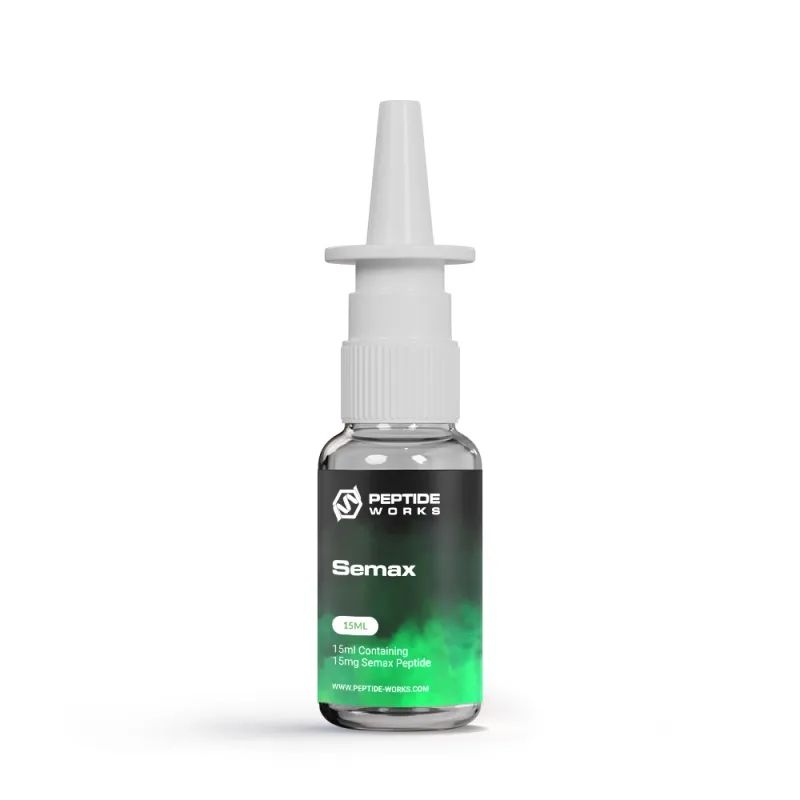
Semax is a synthetic peptide derived from the ACTH(4-10) fragment and is studied for its neuroprotective and cognitive modulating properties. As interest in nootropic peptides continues to grow, Semax has gained attention for its potential role in neuronal signaling and cognitive pathways.
Research shows that Semax influences brain-derived neurotrophic factor (BDNF) and related signaling pathways involved in synaptic plasticity and neuronal communication.
Studies report that Semax affects dopaminergic and serotonergic systems, which are linked to attention, memory and cognitive processing. Experimental data found that Semax improved learning, memory formation, and selective attention in both animal and limited human studies.
Further research describes Semax as having neuroprotective effects, with studies showing improved cognitive function and modulation of neurotrophic gene expression.
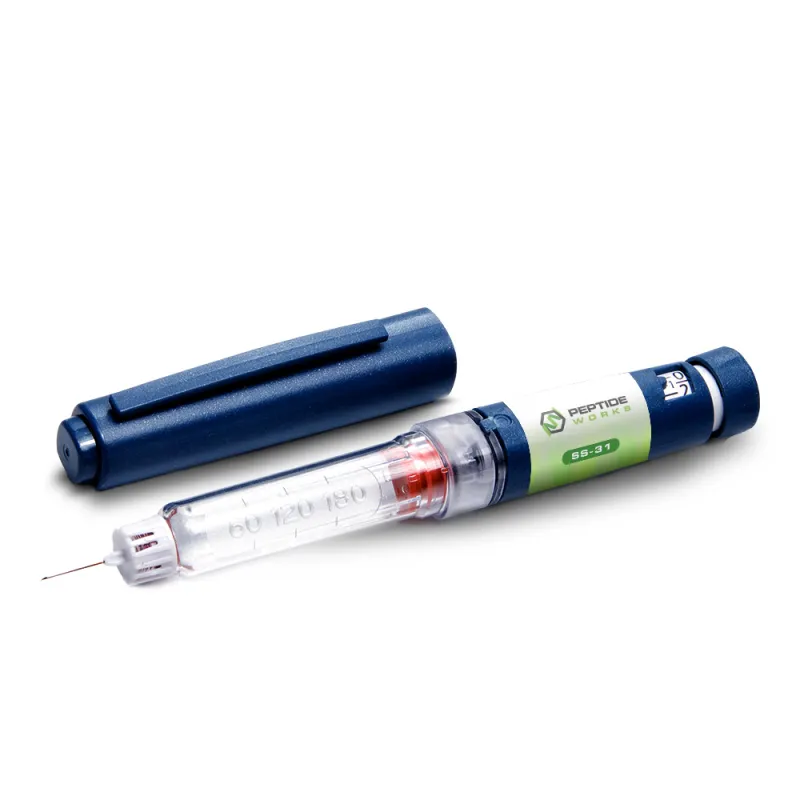
SS-31, also known as elamipretide, is a mitochondria-targeting peptide studied for its effects on brain energy and nerve cell function. Research shows that SS-31 binds to cardiolipin in the inner mitochondrial membrane. This may help maintain mitochondrial structure, reduce oxidative stress and support mitochondrial energy production.
Studies are exploring SS-31 in neurological models with mitochondrial problems. Animal studies suggest that SS-31 may support mitochondrial function, protect nerve cells and improve memory and synaptic activity. These findings support further research on SS-31 and its role in brain energy pathways.
Check out SS-31 from Peptide Works, a mitochondria-targeting peptide studied for cellular energy production and neuronal resilience research.
Protirelin continues to attract research interest because it is a synthetic form of thyrotropin-releasing hormone (TRH) and plays a role in central nervous system signaling. Researchers are studying how Protirelin affects neuronal communication, brain pathways, and fatigue-related mechanisms to better understand TRH activity in the nervous system.
Interest in peptide research is also expanding to include Protirelin alongside peptides studied for cognitive function and mitochondrial pathways. These studies help researchers explore how brain signaling, neural activity, and cellular energy systems interact.
As research continues, Protirelin remains a valuable tool for studying TRH-related pathways, central nervous system function, and fatigue-related signaling processes.
All products discussed are supplied for research purposes only and are not intended for human use.
(1) Alvarez-Salas E, García-Luna C, de Gortari P. New Efforts to Demonstrate the Successful Use of TRH as a Therapeutic Agent. Int J Mol Sci. 2023 Jul 4;24(13):11047.
(2) Daimon CM, Chirdon P, Maudsley S, Martin B. The role of Thyrotropin Releasing Hormone in aging and neurodegenerative diseases. Am J Alzheimers Dis (Columbia). 2013;1(1):10.7726/ajad.2013.1003.
(3) Kamath J, Feinn R, Winokur A. Thyrotropin-releasing hormone as a treatment for cancer-related fatigue: a randomized controlled study. Support Care Cancer. 2012 Aug;20(8):1745-53.
(4) Medvedeva EV, Dmitrieva VG, Povarova OV, Limborska SA, Skvortsova VI, Myasoedov NF, Dergunova LV. The peptide semax affects the expression of genes related to the immune and vascular systems in rat brain focal ischemia: genome-wide transcriptional analysis. BMC Genomics. 2014 Mar 24;15:228.
(5) Zhu Y, Luo M, Bai X, Li J, Nie P, Li B, Luo P. SS-31, a Mitochondria-Targeting Peptide, Ameliorates Kidney Disease. Oxid Med Cell Longev. 2022 Jun 6;2022:1295509.
ALL CONTENT AND PRODUCT INFORMATION AVAILABLE ON THIS WEBSITE IS FOR EDUCATIONAL PURPOSES ONLY.
DISCLAIMER: These products are intended solely as a research chemical only. This classification allows for their use only for research development and laboratory studies. The information available on our Peptide Works website: https://peptide-works.com/ is provided for educational purposes only. These products are not for human or animal use or consumption in any manner. Handling of these products should be limited to suitably qualified professionals. They are not to be classified as a drug, food, cosmetic, or medicinal product and must not be mislabelled or used as such.
Peptide Works
Related Articles

How can ARA-290 Peptide Help Diabetic Patients?
Diabetes affects millions of people around the world and leads to serious health problems. Research shows that the ARA-290 peptide

Can AICAR Peptide Improve Endurance?
AICAR peptide has shown promising results for improving endurance capacity in studies. Research shows that AICAR activates AMPK, increasing glucose

Enhancing Energy with NAD+ Supplements
Energy is the driving force behind focus, movement, and recovery. When cells have less energy to work with, the body