
PROMO!
First order? Get 10% OFF with this code: 1storder


Written by

Oxytocin has often been called the “love hormone.” But it’s role in childbirth is far more complex than just supporting emotional bonds. It is central to labor, recovery, and the way mothers and babies connect in the hours and days after birth. In hospitals, doctors may use a synthetic form of oxytocin to help start or support delivery, but this is a carefully controlled medical process under professional supervision.
Oxytocin supplements sold for research are very different. They are not the same as the medical-grade versions used in maternity care. At Peptide Works, our focus is on providing oxytocin peptides for scientific study. Researchers examine how oxytocin functions in the body, including its influence on bonding, stress, and emotional response.
One of the most important ways oxytocin shows its impact after childbirth is through the early bond between mother and baby.
Explore Oxytocin Peptide from Peptide Works, a hormone peptide that supports uterine contractions, bonding, and lactation in postpartum recovery studies.

Oxytocin rises sharply after childbirth and helps a mother connect with her baby a response that has led many to call it the “love hormone.” This is seen in the first hour after labor, when skin-to-skin contact lowers stress and builds trust between them. Many parents describe this early bonding as a powerful emotional moment.
Researchers use oxytocin supplements to study how this hormone shapes bonding. Findings show that oxytocin supports calm feelings, eye contact, and gentle touch. These responses make it clear why oxytocin is called the “bonding hormone” and why it is a focus of ongoing research on attachment and early development.
In addition to its role in bonding, oxytocin supplements also affect how mothers handle the stress and emotional changes that follow labor.
Oxytocin reduces the body’s stress response after childbirth by suppressing the release of stress hormones. Including adrenocorticotropic hormone (ACTH) and cortisol. It also decreases activity in the hypothalamic-pituitary-adrenal (HPA) axis. These changes help the body respond more calmly to physical and emotional stress.
Oxytocin also affects emotional response by acting on brain regions involved in emotion and social behavior. Human studies suggest it promotes calm feelings, reduces anxiety and supports maternal bonding with the newborn during the early postpartum period.
Beyond emotional support, oxytocin also takes on a key role in breastfeeding, where its effects are both physical and calming.

Oxytocin helps mothers with the milk let-down reflex after birth. When a baby begins to suckle, the hormone causes myoepithelial cells around the milk-producing glands to contract. This action pushes milk through the ducts and toward the nipple, making it easier for the infant to feed.
Because of this reflex, oxytocin is often called the “milk ejection hormone.” Breastfeeding also triggers oxytocin release, which may help lower stress and promote a sense of calm in many mothers. By supporting milk ejection during lactation. Oxytocin plays an essential role in breastfeeding after childbirth.
Its role extends beyond breastfeeding, as oxytocin also helps support a mother’s physical recovery after birth.
After birth, oxytocin’s primary role is to promote uterine involution, the process that restores the uterus to its pre-pregnancy size and function. It does this by stimulating strong uterine contractions, which restore uterine tone, shrink the uterus, and compress the blood vessels at the placental site to control bleeding. These actions help the uterus recover during the postpartum period and reduce the risk of postpartum hemorrhage.
Oxytocin supplements are studied for their ability to enhance uterine contractions and uterine tone. Researchers study whether these effects support normal uterine involution and postpartum uterine recovery.
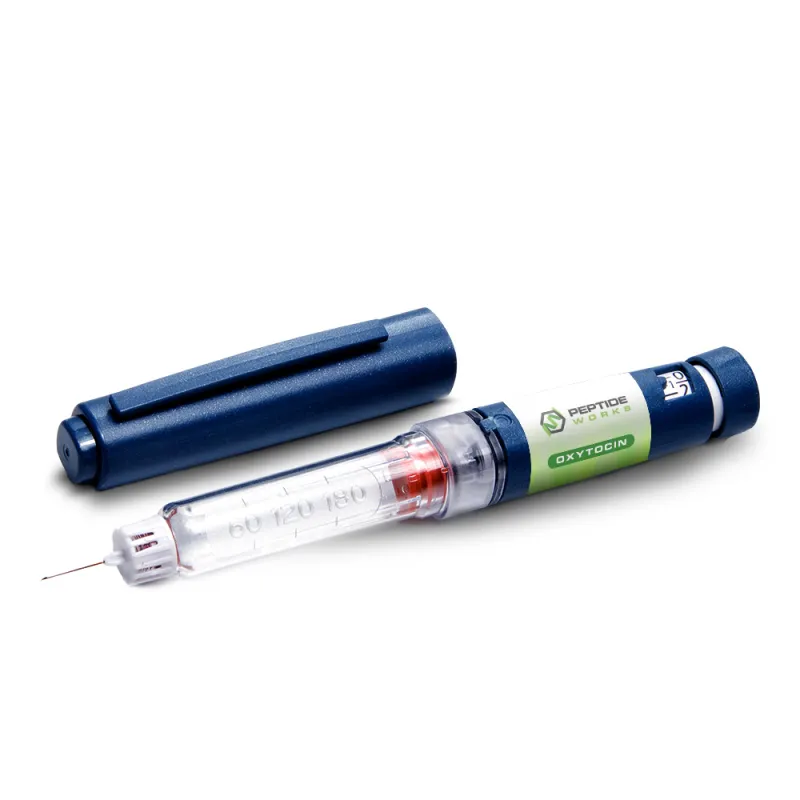
Oxytocin contracts the uterine muscle right after birth, which clamps blood vessels and reduces bleeding. This effect makes it the first-choice medicine to prevent postpartum hemorrhage, a leading cause of maternal complications worldwide. Clinical guidance recommends a standard dose of 10 IU given either through a vein or muscle to lower the risk of heavy bleeding.
Evidence shows that oxytocin given by IV may act faster and be more effective than IM injections, while both routes are considered safe. Oxytocin Supplements are studied to understand these uterine effects in greater depth, helping researchers explore ways to improve maternal safety during the postpartum period.
Even with its life-saving role in preventing hemorrhage, oxytocin also influences the everyday experiences of mothers during recovery, including how they manage postpartum pain.
Oxytocin plays a direct role in maternal pain after childbirth by stimulating the uterine contractions that cause afterpains. These contractions are part of normal uterine involution, the process that helps the uterus return to its pre-pregnancy size. Breastfeeding often makes afterpains more intense because nipple stimulation increases the body’s natural release of oxytocin, leading to stronger uterine contractions.
Although afterpains can be uncomfortable, the contractions help compress uterine blood vessels, reduce postpartum bleeding, and support uterine involution.
Researchers continue to investigate oxytocin to better understand its role in postpartum pain, uterine involution, and recovery after childbirth. At Peptide Works, we provide oxytocin supplements for laboratory research to support studies of these physiological processes.
Oxytocin influences many parts of childbirth, from bonding and stress relief to breastfeeding, uterine recovery, hemorrhage prevention, and postpartum pain. Its impact highlights why this hormone remains so important in maternal health.
At Peptide Works, we provide oxytocin supplements for research, supporting continued exploration into these vital areas. The future of oxytocin supplements holds promise. Ongoing studies may uncover new ways to improve recovery and safety for mothers and infants worldwide.
All peptides and compounds mentioned are strictly for research purposes only and not for human use.
(1) Oladapo OT, Okusanya BO, Abalos E, Gallos ID, Papadopoulou A. Intravenous versus intramuscular prophylactic oxytocin for the third stage of labour. Cochrane Database Syst Rev. 2020 Nov 9;11(11):CD009332.
(2) Walter MH, Abele H, Plappert CF. The Role of Oxytocin and the Effect of Stress During Childbirth: Neurobiological Basics and Implications for Mother and Child. Front Endocrinol (Lausanne). 2021 Oct 27;12:742236.
(3) Carter CS. Oxytocin and love: Myths, metaphors and mysteries. Compr Psychoneuroendocrinol. 2021 Dec 27;9:100107.
(4) Uvnäs Moberg K, Ekström-Bergström A, Buckley S, Massarotti C, et al. Maternal plasma levels of oxytocin during breastfeeding-A systematic review. PLoS One. 2020 Aug 5;15(8):e0235806.
ALL CONTENT AND PRODUCT INFORMATION AVAILABLE ON THIS WEBSITE IS FOR EDUCATIONAL PURPOSES ONLY.
DISCLAIMER: These products are intended solely as a research chemical only. This classification allows for their use only for research development and laboratory studies. The information available on our Peptide Works website: https://peptide-works.com/ is provided for educational purposes only. These products are not for human or animal use or consumption in any manner. Handling of these products should be limited to suitably qualified professionals. They are not to be classified as a drug, food, cosmetic, or medicinal product and must not be mislabelled or used as such.
Peptide Works
Related Articles
How can ARA-290 Peptide Help Diabetic Patients?
Diabetes affects millions of people around the world and leads to serious health problems. Research shows that the ARA-290 peptide

Can AICAR Peptide Improve Endurance?
AICAR peptide has shown promising results for improving endurance capacity in studies. Research shows that AICAR activates AMPK, increasing glucose

Enhancing Energy with NAD+ Supplements
Energy is the driving force behind focus, movement, and recovery. When cells have less energy to work with, the body