

PROMO!
First order? Get 10% OFF with this code: 1storder


Written by

Chronic neuropathic pain can last for months or even years after a nerve injury. Many available treatments help manage pain, but they do not always support the repair of damaged nerves. This has led researchers to study new therapies that may protect nerve tissue and improve nerve function.
ARA-290 is an investigational peptide that has gained attention for its role in tissue protection and nerve repair. Research suggests it activates the innate repair receptor, which may help reduce inflammation and support the body’s natural healing response after nerve injury. Early preclinical and clinical studies have also reported improvements in neuropathic symptoms, small nerve fiber health and quality of life, although larger clinical trials are still needed.
In this article, we explore how ARA-290 works, why it is being studied for chronic neuropathic pain, and what current research says about its potential to support nerve repair, reduce inflammation, and improve neuropathic symptoms.
Explore ARA-290 from Peptide Works, a research peptide that may support nerve repair and reduce chronic neuropathic pain at its source.
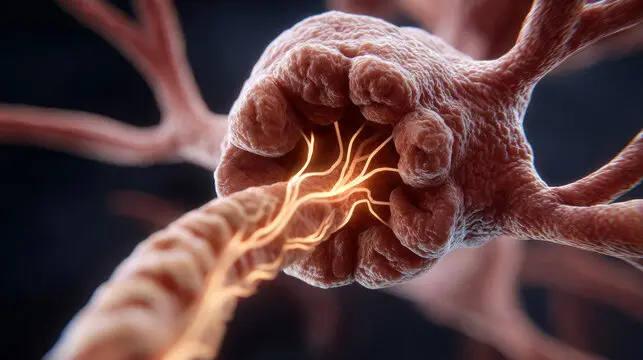
ARA-290 helps damaged nerve fibers by activating the innate repair receptor (IRR), which regulates the body’s natural tissue repair response. Research suggests this pathway reduces inflammation, protects injured nerve tissue, and supports nerve repair after peripheral nerve injury.
Animal studies also found that ARA-290 reduced neuropathic pain and promoted recovery by supporting tissue repair rather than blocking pain signals. Early clinical studies also reported improvements in neuropathic symptoms and small nerve fiber health.
Research found increased corneal nerve fiber density, improved sensory function and better measures of nerve regeneration after ARA-290 treatment. These findings suggest ARA-290 may help restore damaged nerve tissue by promoting tissue protection and repair.
The nerve fiber repair process involves complex cellular mechanisms, particularly around sodium channel function.
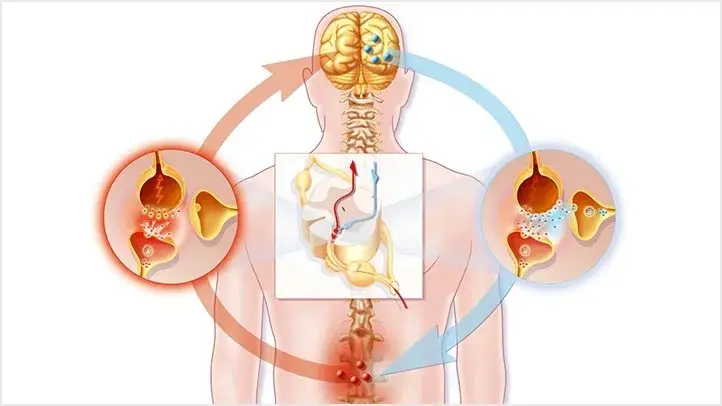
Sodium channels cause severe pain when they stay open too long in damaged nerves. ARA-290 stops these channels from sending chronic neuropathic pain signals to the brain. When nerves get hurt, sodium channels become overactive and create pain intensity that never stops.
This peptide fixes the causes of neuropathic pain by closing these problem channels. It helps with many conditions like trigeminal neuralgia and diabetic neuropathy.
Studies show it reduces central sensitization that makes pain worse over time. The peptide targets the exact spot where pain signals start, giving better relief than other treatments.
Among the various neuropathic conditions ARA-290 addresses, trigeminal neuralgia represents one of the most challenging pain disorders. Trigeminal neuralgia creates severe pain that feels like electric shocks in the face.
This condition causes chronic neuropathic pain that can strike without warning. The nerve fibers that control facial feeling get damaged and send wrong signals to the brain.
Pain intensity can be so strong that cannot eat, talk, or touch their faces. Research shows ARA-290 helps by fixing the underlying cause of nerve damage in lab studies. Studies prove it reduces spontaneous pain episodes that happen without triggers. This makes daily activities possible again for test subjects.
The unpredictable nature of trigeminal neuralgia highlights a broader challenge in neuropathic pain management: spontaneous pain episodes.
Spontaneous pain happens without any trigger or warning in chronic neuropathic pain. ARA-290 research shows it can reduce these sudden pain attacks by fixing damaged peripheral nerves.
This type of pain often causes loss of sensation mixed with sharp, burning feelings. Studies prove the peptide helps prevent phantom limb pain and other sudden nerve pain episodes.
It works by stopping painful stimulus signals from reaching the brain. Research subjects show fewer surprise pain attacks after treatment. The peptide also helps with postherpetic neuralgia and other conditions that cause unexpected pain flares.
Postherpetic neuralgia, another condition causing spontaneous pain, demonstrates how viral infections can create lasting nerve damage. Postherpetic neuralgia happens when the shingles virus damages nerves and leaves them sending wrong pain signals.
This condition causes chronic neuropathic pain that can last months or years after the rash heals. The virus attacks the central nervous system and creates central sensitization that makes normal touch feel painful.
ARA-290 research shows it can help heal the nerve damage left by the virus. Studies prove it reduces pain intensity and helps restore normal nerve function. The peptide works by fixing the underlying cause of viral nerve damage, not just masking symptoms.
While ARA-290 shows promise for various neuropathic conditions, other research peptides like BPC 157 offer complementary approaches through different mechanisms.
BPC 157 works differently than ARA-290 by targeting the central nervous system directly to heal nerve pathways. This peptide helps with chronic neuropathic pain by reducing inflammation in the brain and spinal cord.
Research shows it can help with spinal cord injury recovery and brain injury healing in lab studies. BPC 157 also helps with carpal tunnel syndrome and lower back pain by fixing damaged nerve connections.
Studies prove it reduces adverse effects from nerve damage and helps restore normal function. The peptide works on the health care system level by targeting multiple pain pathways at once.
Discover BPC 157 from Peptide Works, a regenerative peptide studied for healing nerve pathways, reducing inflammation, and supporting CNS recovery.
In addition to using the peptide treatment alone, ARA-290 might also be used with conventional rehabilitation to improve overall effects. Physiotherapy improves movement and relieves pain in chronic neuropathic pain.
During treatment, ARA-290 speeds up nerve repair and recovery in treatment regimens. Experiments show that ARA-290 results in superior performance only when combined with physical therapy compared to therapy alone.
Such a peptide decreases undesired sidelining effects, like muscle weakness and numbing, which would impede the progress of therapy. It also reduces side effects associated with tricyclic antidepressants. Other nerve active drugs (eg norepinephrine reuptake inhibitors) may have greater efficacy in the context of therapeutic interventions with ARA-290.
Research on peptides is helping scientists better understand chronic neuropathic pain. Peptides such as ARA-290 and BPC 157 are being studied for their ability to support tissue repair, reduce inflammation, and improve nerve function. These studies are expanding the understanding of how nerve damage develops and how it may be repaired.
As research moves forward, these peptides may help guide new approaches for studying diabetic neuropathy, small fiber neuropathy and other nerve disorders. Ongoing preclinical and clinical research continues to explore their mechanisms and their potential role in supporting nerve repair and long-term nerve health.
All products discussed are supplied for research purposes only and are not intended for human use.
References:
(1) Steingrímsdóttir ÓA, Landmark T, Macfarlane GJ, Nielsen CS. Defining chronic pain in epidemiological studies: a systematic review and meta-analysis. Pain. 2017 Nov;158(11):2092-2107.
(2) Scholz J, Finnerup NB, Attal N, Aziz Q, et al; Classification Committee of the Neuropathic Pain Special Interest Group (NeuPSIG). The IASP classification of chronic pain for ICD-11: chronic neuropathic pain. Pain. 2019 Jan;160(1):53-59.
(3) Szewczyk AK, Jamroz-Wiśniewska A, Haratym N, Rejdak K. Neuropathic pain and chronic pain as an underestimated interdisciplinary problem. Int J Occup Med Environ Health. 2022 Jun 8;35(3):249-264.
(4) Torrance N, Ferguson JA, Afolabi E, Bennett MI, Serpell MG, Dunn KM, Smith BH. Neuropathic pain in the community: more under-treated than refractory? Pain. 2013 May;154(5):690-699.
(5) Szok D, Tajti J, Nyári A, Vécsei L. Therapeutic Approaches for Peripheral and Central Neuropathic Pain. Behav Neurol. 2019 Nov 21;2019:8685954.
(6) Dworkin RH, O’Connor AB, Kent J, Mackey SC, Raja SN, Stacey BR, Levy RM, Backonja M, Baron R, Harke H, Loeser JD, Treede RD, Turk DC, Wells CD. Interventional management of neuropathic pain: NeuPSIG recommendations. Pain. 2013 Nov;154(11):2249-2261.
(7) van Hecke O, Austin SK, Khan RA, Smith BH, Torrance N. Neuropathic pain in the general population: a systematic review of epidemiological studies. Pain. 2014 Apr;155(4):654-662.
ALL CONTENT AND PRODUCT INFORMATION AVAILABLE ON THIS WEBSITE IS FOR EDUCATIONAL PURPOSES ONLY.
DISCLAIMER: These products are intended solely as a research chemical only. This classification allows for their use only for research development and laboratory studies. The information available on our Peptide Works website: https://peptide-works.com/ is provided for educational purposes only. These products are not for human or animal use or consumption in any manner. Handling of these products should be limited to suitably qualified professionals. They are not to be classified as a drug, food, cosmetic, or medicinal product and must not be mislabelled or used as such.
Peptide Works
Related Articles

How can ARA-290 Peptide Help Diabetic Patients?
Diabetes affects millions of people around the world and leads to serious health problems. Research shows that the ARA-290 peptide

Can AICAR Peptide Improve Endurance?
AICAR peptide has shown promising results for improving endurance capacity in studies. Research shows that AICAR activates AMPK, increasing glucose

Enhancing Energy with NAD+ Supplements
Energy is the driving force behind focus, movement, and recovery. When cells have less energy to work with, the body