

PROMO!
First order? Get 10% OFF with this code: 1storder


Written by

GHRP-6 is a peptide linked to muscle growth and bulking in research. It stimulates growth hormone release, which supports muscle development and increases appetite in lab studies.
GHRP-6 is for research use only and not intended for humans. Research shows it may aid body composition and muscle repair under controlled conditions.
Peptide Works supplies GHRP-6 strictly for research purposes, helping scientists worldwide access trusted bulking peptides.
To understand why GHRP-6 stands out as a potential bulking peptide, it’s essential to first examine how growth hormone operates within the muscle-building process.
Explore GHRP-6 from Peptide Works, a bulking peptide known to support growth hormone release and appetite regulation for enhanced muscle development.

Growth hormone release affects bulking by increasing protein synthesis, stimulating IGF-1 production, increasing lean body mass, and promoting fat breakdown. These effects change body composition by increasing lean mass and reducing fat mass.
Some peptides, such as GHRP-6, stimulate growth hormone release. Researchers study these peptides for their effects on growth hormone signaling, body composition, and muscle metabolism.
Muscle recovery is important during bulking because it allows skeletal muscle to repair and remodel after resistance training. Muscle protein synthesis drives this process. Over time, repeated cycles of training and recovery increase muscle size and strength. Adequate rest, protein intake, and sufficient energy intake help support muscle recovery and promote muscle growth during a bulking phase.
Some peptides, including Ipamorelin, MK-677, and GHRP-6, are studied for their effects on growth hormone signaling. MK-677 also increases IGF-1 levels and has increased lean body mass in clinical studies.
These findings show effects on the growth hormone and IGF-1 pathway, which plays a role in normal muscle growth and repair.
Discover MK677 from Peptide Works, a powerful growth hormone secretagogue that promotes IGF-1 levels to aid lean muscle gain and tissue repair.
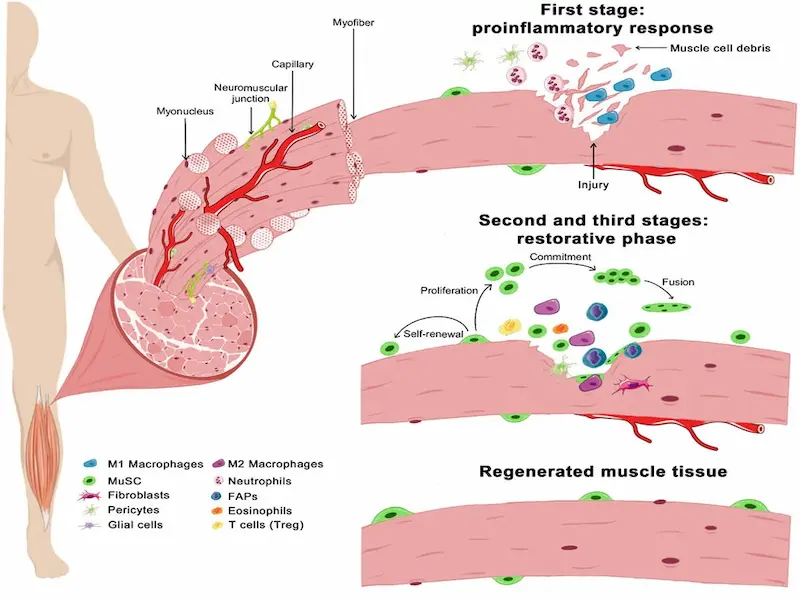
Tissue repair influences bulking results by restoring muscle fibers and supporting the remodeling process after resistance training. Muscle protein synthesis first helps repair exercise-induced damage. As training continues and muscle damage decreases, more of that protein synthesis supports true muscle hypertrophy. This leads to greater increases in muscle size over time.
Tissue repair also remodels the extracellular matrix that surrounds muscle fibers. This structural remodeling supports force transmission, satellite cell activity, and muscle fiber growth during resistance training. Studies also show that healthy tissue repair and extracellular matrix remodeling are important parts of long-term muscle adaptation and bulking.
Explore Ipamorelin from Peptide Works, a selective peptide that stimulates natural growth hormone release to support recovery and muscle regeneration.
Metabolic functions impact bulking by controlling how the body uses energy and nutrients for muscle growth.
Research shows that a calorie surplus increases energy availability, which supports anabolic processes and helps the body build new tissue.
Protein metabolism provides the amino acids needed for muscle protein synthesis. Studies show that a positive muscle protein balance supports increases in lean muscle mass.
Metabolic pathways also control how carbohydrates, fats, and proteins are stored and used for energy. This helps maintain the fuel needed during a bulking phase.
Studies on growth hormone and IGF-1 pathways show that these metabolic signals can affect body composition. Studies with MK-677 found increases in growth hormone, IGF-1, and fat-free mass.
Overall, metabolic functions support bulking by regulating energy supply, nutrient use, and muscle protein balance, which are key processes involved in muscle gain.

Protein synthesis drives muscle growth by making new muscle proteins. These proteins repair and enlarge muscle fibers. Muscle growth occurs when muscle protein synthesis stays higher than muscle protein breakdown over time. This positive protein balance is required for skeletal muscle hypertrophy.
Studies show that the IGF-1/PI3K/Akt/mTOR pathway is the main regulator of muscle protein synthesis. Activation of this pathway increases muscle protein production. It also promotes muscle fiber growth. During bulking, repeated increases in muscle protein synthesis help build lean muscle mass over time.
Anabolic responses support effective bulking by increasing muscle protein synthesis and improving muscle protein balance. Studies show that resistance exercise and protein intake stimulate anabolic processes that help repair muscle tissue and support lean mass growth. A sustained increase in muscle protein synthesis over time is important for gaining muscle during a bulking phase.
Research also shows that anabolic hormones, including growth hormone and IGF-1, are involved in muscle growth pathways. Studies on MK-677 show increases in growth hormone and IGF-1 levels, as well as fat-free mass, but more research is needed to confirm its long-term effects on muscle hypertrophy.
The future of bulking peptides depends on continued research into their effects on muscle growth, recovery, and body composition.
GHRP-6, MK-677, and Ipamorelin are being studied for their roles in growth hormone signaling, anabolic pathways, and muscle adaptation.
Although current research is still developing, future studies may help clarify how these peptides influence muscle development when combined with proper nutrition and resistance training.
As science advances, bulking peptide research may provide new insights into the biological processes that control muscle growth and recovery.
All products discussed are supplied for research purposes only and are not intended for human use.
(1) Micic D, Popovic V, Kendereski A, Macut D, et al. Growth hormone secretion after the administration of GHRP-6 or GHRH combined with GHRP-6 does not decline in late adulthood. Clin Endocrinol (Oxf). 1995 Feb;42(2):191-4.
(2) Lei T, Buchfelder M, Fahlbusch R, Adams EF. Growth hormone releasing peptide (GHRP-6) stimulates phosphatidylinositol (PI) turnover in human pituitary somatotroph cells. J Mol Endocrinol. 1995 Feb;14(1):135-8.
(3) Raun K, Hansen BS, Johansen NL, Thøgersen H, et al. Ipamorelin, the first selective growth hormone secretagogue. Eur J Endocrinol. 1998 Nov;139(5):552-61.
(4) Murphy MG, Plunkett LM, Gertz BJ, He W, et al. MK-677, an orally active growth hormone secretagogue, reverses diet-induced catabolism. J Clin Endocrinol Metab. 1998 Feb;83(2):320-5.
ALL CONTENT AND PRODUCT INFORMATION AVAILABLE ON THIS WEBSITE IS FOR EDUCATIONAL PURPOSES ONLY.
DISCLAIMER: These products are intended solely as a research chemical only. This classification allows for their use only for research development and laboratory studies. The information available on our Peptide Works website: https://peptide-works.com/ is provided for educational purposes only. These products are not for human or animal use or consumption in any manner. Handling of these products should be limited to suitably qualified professionals. They are not to be classified as a drug, food, cosmetic, or medicinal product and must not be mislabelled or used as such.
Peptide Works
Related Articles

How can ARA-290 Peptide Help Diabetic Patients?
Diabetes affects millions of people around the world and leads to serious health problems. Research shows that the ARA-290 peptide

Can AICAR Peptide Improve Endurance?
AICAR peptide has shown promising results for improving endurance capacity in studies. Research shows that AICAR activates AMPK, increasing glucose

Enhancing Energy with NAD+ Supplements
Energy is the driving force behind focus, movement, and recovery. When cells have less energy to work with, the body