

PROMO!
First order? Get 10% OFF with this code: 1storder


Written by
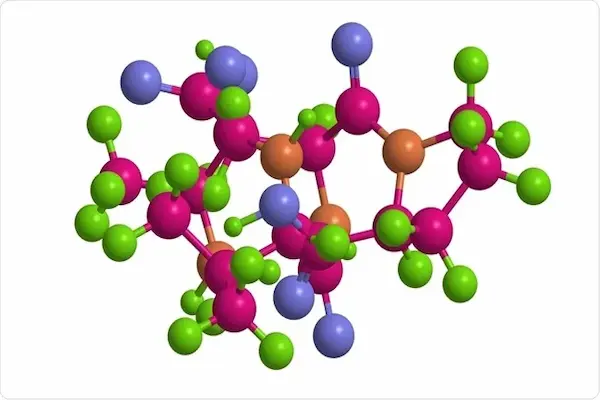
The Melanotan peptide is a research compound studied for its interaction with the body’s melanocortin system, which plays a role in skin pigmentation, energy balance, and other biological pathways. Research on Melanotan 1 (MT-1) and Melanotan 2 (MT-2) has explored their effects on melanin production, receptor activity, and related signaling processes.
While these studies provide insight into how Melanotan peptides work, their safety profile is still under investigation. Current research helps scientists understand their biological effects, potential limitations and areas that require further study.
To understand safety considerations, it is important to first explore how the melanocortin system works in the body.
Discover Melanotan 1 from Peptide Works, a peptide researched for its potential to promote melanin production and enhance UV protection through MC1R activation.

The melanocortin system is made up of receptors that respond to natural signaling peptides. Among these, two receptors are most often studied with the Melanotan peptide: MC1R and MC4R.
When activated, MC1R encourages melanin production, which can lead to a stronger tanning response and added protection against UV exposure. MC4R, in contrast is linked to appetite and energy balance, showing how this system affects more than just skin pigmentation. Researchers use the Melanotan peptide in lab tests to explore how it influences both tanning and metabolism.
With this foundation in place, it becomes easier to understand why MT-1 and MT-2, though related, are studied for different purposes.
Melanotan 1 (MT-1) and Melanotan 2 (MT-2) are both research peptides, but they act in different ways. MT-1 binds mainly to the MC1R receptor, which drives melanin production. Because of this, research often examines its role in pigmentation and UV protection, along with possible use in light-sensitive conditions.
MT-2 has a wider range, binding not only to MC1R but also to MC4R. This broader activity explains why studies explore MT-2 not only for tanning but also for effects on appetite, metabolism, and even sexual function. These differences make MT-1 and MT-2 valuable for distinct areas of peptide research.
By comparing their properties side by side, researchers can better see how each peptide serves unique study goals.
| Feature | Melanotan 1 (MT-1) | Melanotan 2 (MT-2) |
|---|---|---|
| Main receptor target | Primarily MC1R | MC1R + MC4R (broader range) |
| Research focus | Pigmentation, UV protection | Pigmentation, metabolism, sexual health |
| Duration in body | Longer half-life | Shorter half-life |
| Reported effects in studies | Steady tanning, photoprotection | Tanning, appetite changes, libido effects |
These receptor targets, MC1R and MC4R, play very different roles in the body. To see how Melanotan research connects to metabolism and skin pigmentation, it helps to examine each receptor more closely.
Explore Melanotan 2 from Peptide Works, a multifunctional peptide studied for its effects on pigmentation, metabolism, and appetite regulation via MC1R and MC4R pathways.
MC4R, or melanocortin 4 receptor, helps control appetite and energy balance. It works in the brain to reduce hunger and regulate how the body uses and stores energy. Because of this, MC4R plays a key role in body weight control and normal metabolism.
The Melanotan peptide, especially MT-2, has been studied because it can activate MC4R. This receptor activity helps explain why researchers also study MT-2 for its effects on appetite and metabolic signaling as well as its role in pigmentation research.
Having looked at metabolism, the next step is to see how MC1R differs in its role and why it remains the core focus of pigmentation studies.

MC1R, or melanocortin 1 receptor, is a key part of how the body produces melanin, the pigment that gives skin its color. When MC1R is active, it signals skin cells to make more melanin, which can darken skin tone and provide extra protection against UV rays. Variations in the MC1R gene explain why some people tan easily while others burn more quickly.
The Melanotan peptide, especially MT-1, is studied because it activates MC1R to increase melanin production. This connection is one reason MC1R remains a major focus of tanning and pigmentation research.
From pigmentation, it naturally follows to consider UV protection, since melanin also plays a defensive role for the skin.
Melanin acts as the body’s natural shield against UV rays by absorbing and scattering harmful radiation before it can damage skin cells. People with higher melanin levels often tan more easily and experience less sunburn, while those with lower levels may be more vulnerable to UV damage. This protective effect is why the role of melanin in skin safety is studied so closely.
The Melanotan peptide, especially MT-1 is studied because it can increase melanin production through the MC1R pathway. By increasing melanin in controlled studies, it may improve the skin’s natural protection against UV rays. However, these findings are still limited to research.
Beyond protective effects, another area of study compares how long MT-1 and MT-2 remain active in the body.
One of the key differences between Melanotan 1 (MT-1) and Melanotan 2 (MT-2) is how long they remain active after use in lab studies. MT-1 has a longer half-life, meaning its effects on pigmentation and UV protection can be sustained for a greater period of time. This makes it the peptide more often linked to steady tanning outcomes in controlled research.
MT-2, by contrast, has a shorter half-life and leaves the body more quickly. Its effects may appear sooner, but they do not last as long. Because of these differences, researchers often study MT-1 and MT-2 for slightly different purposes within Melanotan research.
Taken together, these insights highlight the growing importance of Melanotan peptides in ongoing peptide studies.
Melanotan peptides are of growing interest in studies of tanning, UV protection, and metabolism. MT-1 is noted for its steady pigmentation and longer-lasting effects, while MT-2 is explored for its quicker action and broader impact on appetite and energy balance. These differences make both peptides important for understanding the melanocortin system and its role in the body.
At Peptide Works, we provide trusted Melanotan peptides to researchers worldwide. We focus on consistent quality and reliable service making it easy to source the compounds needed for research with confidence.
All products discussed are supplied for research purposes only and are not intended for human use.
(1) Dorr RT, Ertl G, Levine N, Brooks C, et al. Effects of a superpotent melanotropic peptide in combination with solar UV radiation on tanning of the skin in human volunteers. Arch Dermatol. 2004 Jul;140(7):827-35.
(2) Ugwu SO, Blanchard J, Dorr RT, Levine N,et al. Skin pigmentation and pharmacokinetics of melanotan-I in humans. Biopharm Drug Dispos. 1997 Apr;18(3):259-69.
(3) Côté I, Sakarya Y, Kirichenko N, Morgan D, et al. Activation of the central melanocortin system chronically reduces body mass without the necessity of long-term caloric restriction. Can J Physiol Pharmacol. 2017 Feb;95(2):206-214.
(4) Mun Y, Kim W, Shin D. Melanocortin 1 Receptor (MC1R): Pharmacological and Therapeutic Aspects. Int J Mol Sci. 2023 Jul 29;24(15):12152.
(5) Wessells H, Levine N, Hadley ME, Dorr R, Hruby V. Melanocortin receptor agonists, penile erection, and sexual motivation: human studies with Melanotan II. Int J Impot Res. 2000 Oct;12 Suppl 4:S74-9.
ALL CONTENT AND PRODUCT INFORMATION AVAILABLE ON THIS WEBSITE IS FOR EDUCATIONAL PURPOSES ONLY.
DISCLAIMER: These products are intended solely as a research chemical only. This classification allows for their use only for research development and laboratory studies. The information available on our Peptide Works website: https://peptide-works.com/ is provided for educational purposes only. These products are not for human or animal use or consumption in any manner. Handling of these products should be limited to suitably qualified professionals. They are not to be classified as a drug, food, cosmetic, or medicinal product and must not be mislabelled or used as such.
Peptide Works
Related Articles
How can ARA-290 Peptide Help Diabetic Patients?
Diabetes affects millions of people around the world and leads to serious health problems. Research shows that the ARA-290 peptide

Can AICAR Peptide Improve Endurance?
AICAR peptide has shown promising results for improving endurance capacity in studies. Research shows that AICAR activates AMPK, increasing glucose

Enhancing Energy with NAD+ Supplements
Energy is the driving force behind focus, movement, and recovery. When cells have less energy to work with, the body