

PROMO!
First order? Get 10% OFF with this code: 1storder


Written by

Research has demonstrated that Melanotan peptides can increase skin pigmentation with reduced sun exposure. Two commonly studied options, Melanotan 1 and Melanotan 2, are available, each shown to stimulate melanin production and induce melanogenesis.
While both induce pigmentation, they differ in receptor activity, biological effects, and potential side effects. These peptides show promising results in research on how the body regulates skin color through melanocortin receptor signaling and related biological responses.
This article explores the key differences between Melanotan 1 vs 2, helping clarify which peptide may be more suitable for specific research goals.
Explore Melanotan 1 from Peptide Works, a peptide that promotes gradual tanning with more uniform pigmentation effects.
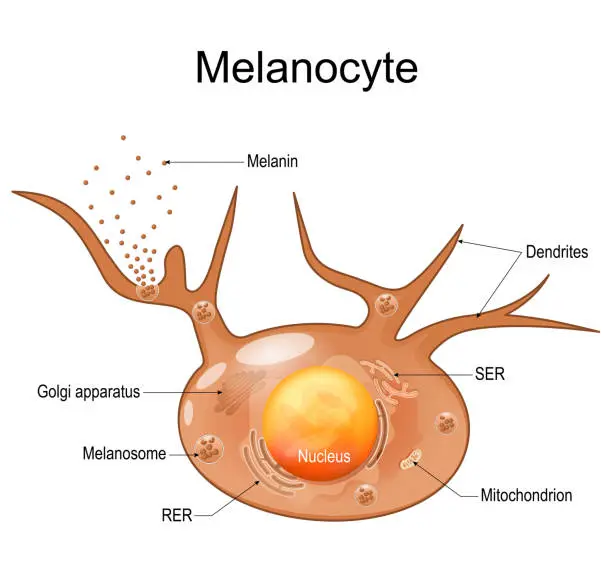
Melanocortin receptors play a key role in how Melanotan 1 vs 2 behaves in research studies. MT-1 (Melanotan I) acts as a non-selective melanocortin receptor agonist and stimulates pigmentation primarily through MC1R activation in melanocytes, which regulates melanin synthesis and increases eumelanin production.
MT-2 acts as a non-selective agonist at MC1R, MC3R, MC4R, and MC5R, receptors linked to pigmentation, metabolism, appetite, and sexual function. PT-141, another related peptide, acts as an agonist at MC1R and MC4R, with its sexual function effects primarily associated with MC4R activation.
This receptor profile explains why these peptides show different outcomes in laboratory studies. MC1R activation drives pigmentation, while broader receptor activity contributes to systemic effects.

The MC1R receptor plays a key role in skin pigmentation. When it is activated, it triggers cell signals that increase melanin production, which darkens the skin.
In Melanotan 1 vs 2 comparisons, Melanotan 1 (afamelanotide) binds to MC1R and increases melanin production. It is better described as more active at MC1R, rather than fully selective, since most melanocortin peptides can act on multiple receptors.
Melanotan 2 also activates MC1R but works as a non-selective melanocortin agonist. It binds to several receptors, including MC1R, MC3R, MC4R, and MC5R. These extra receptor effects are linked to changes beyond pigmentation, such as appetite and sexual function.
Researchers study how MC1R activity affects how dark the skin becomes and how long the effect lasts. Melanotan 1 shows strong activity at MC1R, while Melanotan 2 acts on many receptors. This difference helps explain why Melanotan 1 mainly affects pigmentation, while Melanotan 2 has broader effects.
Melanotan 2 affects more than pigmentation because it activates several melanocortin receptors, not just MC1R. It acts on MC1R, MC3R, MC4R, and MC5R, which control different functions in the body.
When MT-2 activates MC3R and MC4R, it can affect appetite and energy balance, so it is studied in metabolism research. MC4R activity is also linked to sexual function, which explains why related peptides like PT-141 focus more on this pathway.
These wider receptor effects explain why Melanotan 2 shows results beyond skin tone. In contrast, Melanotan 1 mainly affects pigmentation because it works strongly through MC1R, the receptor that controls melanin production.
This receptor difference explains why Melanotan 1 vs 2 have different roles in research. Broader receptor activity can also lead to more systemic effects, which is why safety and side effects are often studied.
Explore PT-141 from Peptide Works, a peptide derived from MT2 that targets MC4R pathways without triggering skin tanning.
Melanotan 1 vs 2 shows different side-effect patterns. Melanotan 1 is mostly linked with skin darkening (expected effect) and mild reactions like temporary flushing, as it mainly acts on MC1R.
Melanotan 2 interacts with more receptors and may cause broader effects such as nausea, reduced appetite and changes in sexual function. Some studies also report headaches, fatigue and flushing.
These contrasts explain why Melanotan 1 is studied for targeted pigmentation, while Melanotan 2 is explored beyond skin tone. Broader receptor activity may also lead to more systemic side effects.
Understanding their safety profiles is important when comparing Melanotan 1 vs 2, as these differences help explain their potency and overall effects.
Discover Melanotan 2 from Peptide Works, a peptide known for faster tanning outcomes and stronger receptor activity.

When comparing strength, Melanotan 2 is often seen as the more powerful option. Studies note that it produces visible effects at lower amounts, showing faster and deeper tanning changes than Melanotan 1. This is linked to its ability to act on more than one receptor, giving it a wider reach in the body.
Melanotan 1, while effective, usually works in a slower and more controlled way, with changes focused mainly on pigmentation. Because of these differences, MT-1 is preferred for steady results, while MT-2 is explored in cases where a stronger and quicker response is desired.
Feature Comparison
| Feature | Melanotan 1 | Melanotan 2 |
|---|---|---|
| Potency | Moderate | Higher |
| Onset of Effect | Slower | Faster |
| Main Focus | Pigmentation | Pigmentation + broader effects |
| Receptor Action | Primarily MC1R | MC1R, MC3R, MC4R |
This comparison illustrates the practical differences in application and expected outcomes between the two peptides.
The tanning effects of Melanotan 1 vs 2 differ in intensity and duration. Melanotan 1 produces gradual pigmentation that can last several weeks or longer, as it primarily acts through MC1R to increase melanin production.
Melanotan 2 develops pigment faster and often more intensely. The tan typically lasts a few weeks to a couple of months, but it may require UV exposure to maintain strong results.
Because MT-2 acts on multiple receptors, its effects appear faster. However, how long the tan lasts mainly depends on skin cell turnover and UV exposure, not just receptor activity. This understanding of duration is essential when selecting a peptide for research or specific study outcomes.
Melanotan 1 and Melanotan 2 are both melanocortin analogs, but they work in noticeably different ways. MT-1 mainly targets MC1R receptors, leading to slow, steady, and long-lasting changes in skin tone. MT-2, on the other hand, affects a broader range of receptors, producing quicker and more intense tanning, while also having effects on appetite, metabolism, and sexual function.
Side-effect trends mirror this split MT-1 reactions stay skin-focused, whereas MT-2 extends into systemic responses. Understanding each peptide’s receptor action, potency, and duration lets researchers pick the compound that fits their study goals.
Peptide Works supplies high-quality Melanotan 1 and Melanotan 2 for research use only, ensuring dependable access for labs worldwide.
All products discussed are supplied for research purposes only and are not intended for human use.
(1) Sivyer GW. Changes of melanocytic lesions inducedby Melanotan injections and sun bed use ina teenage patient with FAMMM syndrome. Dermatol Pract Concept. 2012 Jul 31;2(3):203a10.
(2) Callaghan Iii DJ. A glimpse into the underground market of melanotan. Dermatol Online J. 2018 May 15;24(5):13030/qt2gz9f9jk.
(3) Mun Y, Kim W, Shin D. Melanocortin 1 Receptor (MC1R): Pharmacological and Therapeutic Aspects. Int J Mol Sci. 2023 Jul 29;24(15):12152.
(4) Legros C, Devavry S, Caignard S, Tessier C, et al. Melatonin MT₁ and MT₂ receptors display different molecular pharmacologies only in the G-protein coupled state. Br J Pharmacol. 2014 Jan;171(1):186-201.
ALL CONTENT AND PRODUCT INFORMATION AVAILABLE ON THIS WEBSITE IS FOR EDUCATIONAL PURPOSES ONLY.
DISCLAIMER: These products are intended solely as a research chemical only. This classification allows for their use only for research development and laboratory studies. The information available on our Peptide Works website: https://peptide-works.com/ is provided for educational purposes only. These products are not for human or animal use or consumption in any manner. Handling of these products should be limited to suitably qualified professionals. They are not to be classified as a drug, food, cosmetic, or medicinal product and must not be mislabelled or used as such.
Peptide Works
Related Articles

How can ARA-290 Peptide Help Diabetic Patients?
Diabetes affects millions of people around the world and leads to serious health problems. Research shows that the ARA-290 peptide

Can AICAR Peptide Improve Endurance?
AICAR peptide has shown promising results for improving endurance capacity in studies. Research shows that AICAR activates AMPK, increasing glucose

Enhancing Energy with NAD+ Supplements
Energy is the driving force behind focus, movement, and recovery. When cells have less energy to work with, the body