

PROMO!
First order? Get 10% OFF with this code: 1storder


Written by

Melanotan 2 peptide is a synthetic analog of a natural hormone called alpha-melanocyte-stimulating hormone. Researchers have studied it for a wide range of biological effects. Early research focused on skin pigmentation. More recently, scientists have been asking a bigger question: might it influence the brain systems that govern emotion and behavior?
Oxytocin, often called the “bonding hormone,” helps regulate trust, social bonding and stress. Studies suggest that Melanotan 2 peptide may also affect some of these brain pathways. This suggests a possible link between Melanotan 2 activity and emotional responses.
To understand this potential relationship, we first need to examine the mechanisms behind how Melanotan 2 peptide works within the body’s hormone systems.
Explore Melanotan 2 Peptide from Peptide Works, a synthetic analog that influences skin pigmentation, sexual function, and neuroendocrine pathways for research into behavior and stress response.

Melanotan 2 peptide binds to melanocortin receptors. These receptors help regulate appetite, sexual function, and stress response. When they’re activated, other hormones may be released or adjusted.
Oxytocin peptide also appears to be part of these pathways. The exact mechanism is still being studied. Research suggests there is overlap between melanocortin and oxytocin signaling in the brain. This may affect how neuroendocrine signaling pathways communicate.
To see how this works in practice, it helps to look more closely at the receptors where Melanotan 2 attaches.
Discover Oxytocin Peptide from Peptide Works, the “bonding hormone” that helps regulate social behavior, trust, and stress responses for laboratory studies on emotion and social function.
Melanotan 2 peptide binds to four melanocortin receptors: MC1R, MC3R, MC4R, and MC5R. These receptors are found in the brain and other tissues. When Melanotan 2 binds to them, it activates intracellular signaling through cyclic AMP (cAMP). This signaling helps regulate appetite, stress responses, sexual function, and other neuroendocrine processes.
MC4R is found near oxytocin-producing neurons in the hypothalamus. MC3R is also present in this brain region. Animal studies suggest that activating MC4R with Melanotan 2 can increase the activity of oxytocin neurons.
However, the exact mechanism is still being studied. The next section looks at whether this receptor activity directly affects oxytocin release.

Studies suggest that Melanotan 2 peptide activates MC3R and MC4R receptors in the hypothalamus. These receptors are found near oxytocin-producing neurons.
Activation increases intracellular cyclic AMP (cAMP). This signaling may affect oxytocin neuron activity under certain conditions.
Research also suggests these effects depend on the biological context. They are not seen all the time. Scientists continue to study how melanocortin and oxytocin signaling work together. This research may help explain how these neuroendocrine pathways interact.
Melanotan 2 has been shown in animal studies to influence behavior, though results are mixed and highly dependent on model and context. It acts through brain regions that connect to oxytocin release. Some studies report improved stress control and mood when certain receptors are activated. These effects occur in the same brain areas where oxytocin neurons sit close to MC4R receptors.
Current research is exploring whether Melanotan 2 peptide could impact autism-related behaviors, social recognition, and stress relief. The effects, however, appear to depend heavily on dose and situation. This fits with the growing scientific interest in peptides as potential tools for brain and behavior research.
Because oxytocin plays a key role in social bonding, researchers are investigating whether Melanotan 2 might improve social behaviors affected by autism.
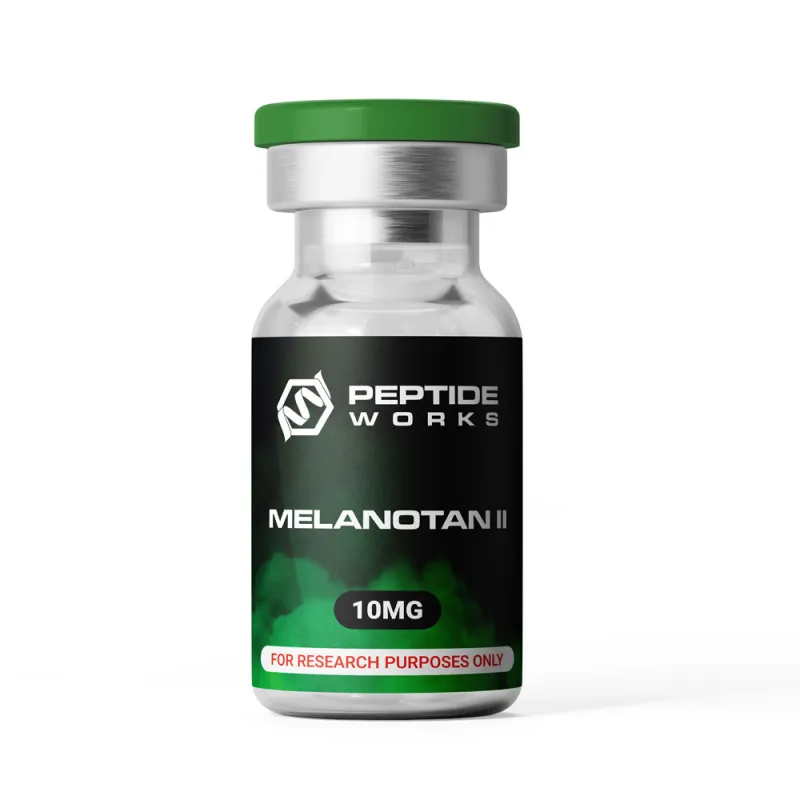
Animal studies suggest that Melanotan 2 may improve social behavior in autism models. Some studies found more social interaction and fewer repetitive behaviors. These effects were linked to activation of melanocortin receptors and changes in oxytocin signaling.
The peptide works through MC4R receptors in regions of the brain that control bonding and social recognition. In effect, it seems to restore certain social functions that autism can disrupt. Again, outcomes depend on timing and dosage.
Researchers are now asking whether Melanotan 2 peptide could support social functioning in autism. This is part of a broader effort to study how peptide pathways might provide new approaches for brain and behavior research.
In preclinical work, melanocortin agonists can engage oxytocin circuitry within hours after central administration. Continuous infusion of Melanotan 2 peptide, on the other hand, has been shown to produce behavioral changes over several days in disease models.
The timing of these effects depends on the dose, delivery method, and length of treatment. Studies suggest that longer Melanotan 2 treatment may change stress responses and social behavior. These effects may result from activation of melanocortin receptors that interact with oxytocin signaling.
At this stage, it’s worth noting: Peptide Works supplies high-quality peptides for authorized laboratory studies investigating these exact timing effects and pathways.
These timing insights pave the way for exploring Melanotan 2’s potential in wider neurobehavioral research.
Melanotan 2 peptide may influence brain pathways involved in social behavior through oxytocin signaling. Animal studies suggest that activating MC3R and MC4R receptors near oxytocin neurons may affect stress responses, social bonding and autism-related behaviors. More research is needed to better understand these effects.
Both Melanotan 2 and oxytocin peptide are being used as tools to better understand brain and social function. Timing and dosing are key, with effects appearing within hours to days of treatment.
Future studies may open doors to new therapeutic insights. At Peptide Works, we remain committed to supporting this progress by providing research-grade peptides for authorized scientific studies exploring these pathways.
All products discussed are supplied for research purposes only and are not intended for human use.
(1) Paiva L, Sabatier N, Leng G, Ludwig M. Effect of Melanotan-II on Brain Fos Immunoreactivity and Oxytocin Neuronal Activity and Secretion in Rats. J Neuroendocrinol. 2017 Feb;29(2).
(2) Raposinho PD, White RB, Aubert ML. The melanocortin agonist Melanotan-II reduces the orexigenic and adipogenic effects of neuropeptide Y (NPY) but does not affect the NPY-driven suppressive effects on the gonadotropic and somatotropic axes in the male rat. J Neuroendocrinol. 2003 Feb;15(2):173-81.
(3) Yuan XC, Tao YX. Ligands for Melanocortin Receptors: Beyond Melanocyte-Stimulating Hormones and Adrenocorticotropin. Biomolecules. 2022 Oct 1;12(10):1407.
(4) Minakova E, Lang J, Medel-Matus JS, Gould GG, et al. Melanotan-II reverses autistic features in a maternal immune activation mouse model of autism. PLoS One. 2019 Jan 10;14(1):e0210389.
(5) Baribeau DA, Anagnostou E. Oxytocin and vasopressin: linking pituitary neuropeptides and their receptors to social neurocircuits. Front Neurosci. 2015 Sep 24;9:335.
ALL CONTENT AND PRODUCT INFORMATION AVAILABLE ON THIS WEBSITE IS FOR EDUCATIONAL PURPOSES ONLY.
DISCLAIMER: These products are intended solely as a research chemical only. This classification allows for their use only for research development and laboratory studies. The information available on our Peptide Works website: https://peptide-works.com/ is provided for educational purposes only. These products are not for human or animal use or consumption in any manner. Handling of these products should be limited to suitably qualified professionals. They are not to be classified as a drug, food, cosmetic, or medicinal product and must not be mislabelled or used as such.
Peptide Works
Related Articles

How can ARA-290 Peptide Help Diabetic Patients?
Diabetes affects millions of people around the world and leads to serious health problems. Research shows that the ARA-290 peptide

Can AICAR Peptide Improve Endurance?
AICAR peptide has shown promising results for improving endurance capacity in studies. Research shows that AICAR activates AMPK, increasing glucose

Enhancing Energy with NAD+ Supplements
Energy is the driving force behind focus, movement, and recovery. When cells have less energy to work with, the body