

PROMO!
First order? Get 10% OFF with this code: 1storder


Written by

Building muscle takes more than lifting weights. The body also relies on growth hormone, IGF-1, and protein synthesis to build and repair muscle tissue. Researchers study muscle building peptides to better understand how these biological pathways work.
Ipamorelin, CJC-1295, MGF, and MK-677 are among the most studied muscle building peptides. Each one works in a different way. Some increase growth hormone release. Others support IGF-1 activity or local muscle repair. Together, they help researchers explore the biological processes involved in muscle growth and recovery.
At Peptide Works, we supply high-quality research peptides to scientists and researchers worldwide. We support research that investigates the biological pathways involved in muscle growth and regeneration.
Before exploring these peptides in more detail, it helps to understand how they stimulate growth hormone release. Growth hormone is one of the key signals that help regulate muscle growth and recovery.
Discover MGF from Peptide Works, a research peptide that enhances local growth factor activity to support targeted muscle tissue recovery.
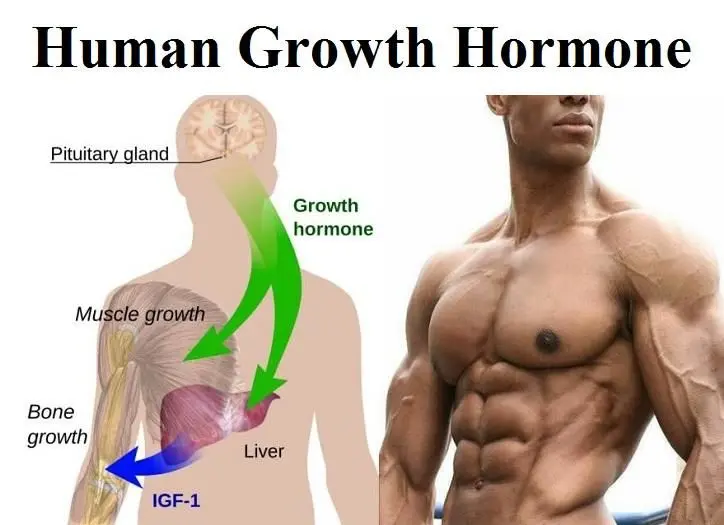
Muscle building peptides boost growth hormone release by activating the body’s natural growth hormone pathway. They act on receptors in the hypothalamus and pituitary gland that regulate growth hormone secretion. This increases the release of growth hormone in a pulsatile pattern.
After growth hormone enters the bloodstream. It stimulates the liver to produce insulin-like growth factor-1 (IGF-1). IGF-1 then carries the growth signal to muscle tissue. It supports muscle protein synthesis, tissue repair, and muscle growth.
Explore CJC-1295 from Peptide Works, a research compound that maintains elevated growth hormone levels to support faster muscle recovery and stronger regeneration.
IGF-1 regulates muscle protein synthesis and activates satellite cells, which repair damaged muscle fibers and support muscle growth. Research shows IGF-1 stimulates protein synthesis and satellite cell proliferation, leading to muscle hypertrophy and improved recovery.
Higher IGF-1 levels support muscle fiber enlargement and improve adaptation to training. Studies link IGF-1 to increased muscle mass, regeneration, and strength development.
Muscle building peptides contribute indirectly. Ipamorelin and CJC-1295 elevate growth hormone, which stimulates IGF-1 production, while IGF-1 drives the local anabolic effects in muscle tissue.
Once IGF-1 rises, muscle protein synthesis determines whether repaired fibers become stronger and thicker.
Check out Ipamorelin from Peptide Works, a muscle building peptide that stimulates natural growth hormone release to support lean muscle development.
Muscle protein synthesis is maximized by combining resistance exercise with adequate essential amino acids, especially leucine. Resistance exercise and essential amino acids each stimulate muscle protein synthesis, but the response is greater when they are combined.
Leucine activates mTORC1, a key regulator of muscle protein synthesis. Adequate essential amino acids provide the building blocks needed to produce new muscle proteins and support muscle growth.
Explore MK-677 from Peptide Works, a ghrelin mimetic that gradually boosts growth hormone levels to aid in muscle growth studies.
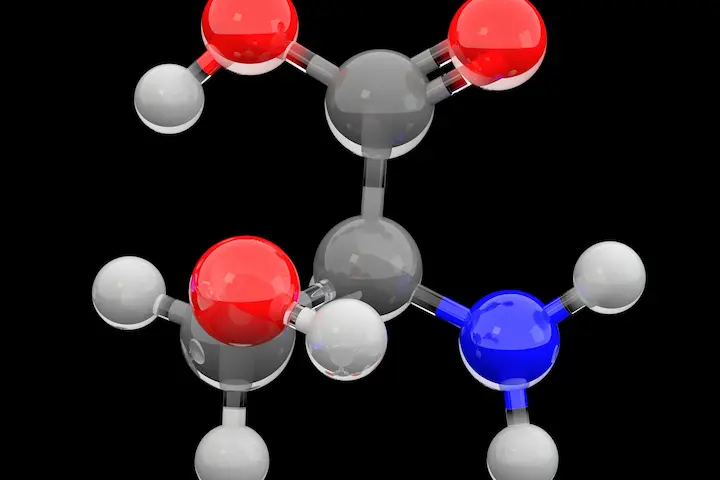
Branched-chain amino acids (BCAAs), leucine, isoleucine, and valine are important amino acids for muscle building. While leucine activates the mTOR pathway to stimulate muscle protein synthesis, isoleucine and valine support energy metabolism and contribute to overall protein metabolism.
These amino acids are essential for sustaining prolonged training and recovery cycles. When adequate BCAAs are available alongside anabolic signals such as GH/IGF-1, they help support the muscle protein synthesis and recovery processes involved in muscle growth.
With amino acids supplying the building blocks, it’s critical to understand how mTOR integrates all these signals to control growth at the molecular level.
mTOR acts as a central regulator of muscle growth. When IGF-1 or leucine activates mTORC1, it increases ribosome activity and stimulates muscle protein synthesis, leading to muscle fiber growth.
Research-grade peptides amplify upstream signals by increasing GH and IGF-1, but these signals ultimately converge on mTOR, which controls the rate of muscle hypertrophy. mTOR activation increases translation initiation and protein synthesis, driving muscle expansion.
Mechanical tension also plays a critical role. Resistance training activates mTOR signaling and increases protein synthesis, making physical load essential for muscle adaptation and growth.

Mechanical tension triggers muscle hypertrophy by placing force on muscle fibers during resistance training. Muscle cells detect this force through mechanotransduction pathways. These signals activate mTORC1. This pathway increases muscle protein synthesis. It helps build new muscle proteins. This causes muscle fibers to grow larger over time.
Repeated mechanical tension creates further growth adaptations. It increases ribosome production. It can support satellite cell activity and muscle repair. These processes improve the muscle’s ability to adapt to training. Progressive resistance training with enough mechanical tension leads to muscle hypertrophy.
Muscle growth now follows a simple map: tension starts the signal, mTOR flips the switch, amino acids build new tissue, and growth-hormone pathways keep progress steady.
Muscle building peptides like Ipamorelin, CJC-1295, MGF, and MK-677 sold online by Peptide Works allow scientists to fine-tune each step of this process.
Early data indicate these muscle building peptides may support faster recovery, stronger fibers, and potential future therapies for sport, rehabilitation, and age-related muscle loss.
All products discussed are supplied for research purposes only and are not intended for human use.
(1) Sinha DK, Balasubramanian A, Tatem AJ, Rivera-Mirabal J, et al. Beyond the androgen receptor: the role of growth hormone secretagogues in the modern management of body composition in hypogonadal males. Transl Androl Urol. 2020 Mar;9(Suppl 2):S149-S159.
(2) Teichman SL, Neale A, Lawrence B, Gagnon C, et al. Prolonged stimulation of growth hormone (GH) and insulin-like growth factor I secretion by CJC-1295, a long-acting analog of GH-releasing hormone, in healthy adults. J Clin Endocrinol Metab. 2006 Mar;91(3):799-805.
(3) Nass R, Pezzoli SS, Oliveri MC, Patrie JT, et al. Effects of an oral ghrelin mimetic on body composition and clinical outcomes in healthy older adults: a randomized trial. Ann Intern Med. 2008 Nov 4;149(9):601-11.
(4) Iida K, Itoh E, Kim DS, del Rincon JP, et al. Muscle mechano growth factor is preferentially induced by growth hormone in growth hormone-deficient lit/lit mice. J Physiol. 2004 Oct 15;560(Pt 2):341-9.
(5) Kandalla PK, Goldspink G, Butler-Browne G, Mouly V. Mechano Growth Factor E peptide (MGF-E), derived from an isoform of IGF-1, activates human muscle progenitor cells and induces an increase in their fusion potential at different ages. Mech Ageing Dev. 2011 Apr;132(4):154-62.
ALL CONTENT AND PRODUCT INFORMATION AVAILABLE ON THIS WEBSITE IS FOR EDUCATIONAL PURPOSES ONLY.
DISCLAIMER: These products are intended solely as a research chemical only. This classification allows for their use only for research development and laboratory studies. The information available on our Peptide Works website: https://peptide-works.com/ is provided for educational purposes only. These products are not for human or animal use or consumption in any manner. Handling of these products should be limited to suitably qualified professionals. They are not to be classified as a drug, food, cosmetic, or medicinal product and must not be mislabelled or used as such.
Peptide Works
Related Articles

How can ARA-290 Peptide Help Diabetic Patients?
Diabetes affects millions of people around the world and leads to serious health problems. Research shows that the ARA-290 peptide

Can AICAR Peptide Improve Endurance?
AICAR peptide has shown promising results for improving endurance capacity in studies. Research shows that AICAR activates AMPK, increasing glucose

Enhancing Energy with NAD+ Supplements
Energy is the driving force behind focus, movement, and recovery. When cells have less energy to work with, the body